|
|
|||
|
||||
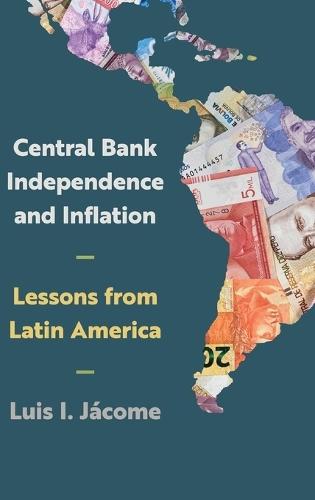
OverviewA history of the institutional reform of monetary policy in Latin America, with lessons for today After years of macroeconomic instability, central bank independence (CBI) is playing a pivotal role in achieving low inflation worldwide. But in some nations—including Brazil, Colombia, Hungary, India, Mexico, Türkiye, and the United States— central banks have been blamed for focusing only on fighting inflation at the expense of economic growth. Central Bank Independence and Inflation argues that countries must continue supporting the independence of central banks to keep inflation in check and hence promote long-run economic growth. Jácome analyzes the evolution of CBI in Latin America from its creation in the 1920s to the present day. He warns against requiring central banks to print money to finance fiscal deficits, because it hinders economic growth. He creates a database of central bank independence to track its evolution and provides empirical evidence of a negative correlation with inflation. Deeply grounded in history, Central Bank Independence and Inflation warns against the consequences of weakening this institutional arrangement. It is the first book to provide a historical account of Latin America's CBI and will be a valuable resource for those interested in monetary policy. Full Product DetailsAuthor: Luis I. JácomePublisher: Georgetown University Press Imprint: Georgetown University Press Weight: 0.635kg ISBN: 9781647126872ISBN 10: 1647126878 Pages: 380 Publication Date: 05 May 2026 Audience: Professional and scholarly , Professional & Vocational Format: Hardback Publisher's Status: Forthcoming Availability: Not yet available This item is yet to be released. You can pre-order this item and we will dispatch it to you upon its release. Table of ContentsPreface Contributions of this Book Acknowledgments 1 Money Is a Social Convention 1.1 Why Study Central Bank Independence in Latin America? 1.2 Defining Central Bank Independence 1.3 The CBI Index Annex 1.1: The CBI Index and Codification Annex 1.2: Accountability and Codification Part One The Early Years 2 We Have Gold Because We Cannot Trust Governments 2.1 Monetary System in the Pre-Central Bank Years 2.2 The First Central Banks in Latin America 2.3 Were Central Banks Independent? 2.4 Monetary Policy Under the Gold Exchange Standard 2.5 Was Monetary Policy Endogenous? 2.6 The Collapse of the Gold Exchange Standard Annex 2.1: Latin American Central Banks' Balance Sheets in the Run-Up to the Great Depression 3 Central Banks Become the Only Game in Town 3.1 The New Monetary and Exchange Rate Policy 3.2 Central Banks and the Great Depression 3.3 Economic Recovery 3.4 Tensions with the Government 3.5 New Central Banks 3.6 Return to Normalcy 3.7 The Decline of Central Banks Independence Part Two Developmental Phase 4 New Central Bank Paradigm 4.1 Central Banks as Development Banks 4.2 Expanded Fiscal Dominance 4.3 Declining Central Bank Independence and Rising Inflation Annex 4.1: Reserve Requirements During the Bretton Woods Period Annex 4.2: Capital Controls in Selected Latin American Countries in 1955 5 Boom and Bust 5.1 The 1970s Boom 5.2 The 1980s Bust 5.3 Further Decline of Central Bank Independence 5.4 The Limits of Fiat Money Annex 5.1: BCRP Financing the Public Sector in Peru During the 1970s and 1980s Part Three The Rise of Central Bank Independence 6 Politics at Arms' Length from Central Banks' Decisions 6.1 Foundations of Central Bank Independence 6.2 Map of the Central Bank Reform in Latin America 6.3 Measuring Central Bank Independence and Accountability 7 Stabilization at Last 7.1 Stopping Chronic Inflation 7.2 Defeating Hyperinflation 7.3 In Search of a New Monetary Policy Framework 8 A New Wave of Banking Crises 8.1 Boom and Bust Once Again 8.2 Central Banks' Response 8.3 Macroeconomic Repercussions 8.4 Distilling Lessons Annex 8.1: Banking Crises in Latin America During the Mid-1990s and Early 2000s Annex 8.2: Banking Crises and Balance-of-Payments Crises Annex 8.3: Monetizing Banking Crises and the Exchange Rate—Empirical Analysis Part Four Price Stability Years 9 Central Bank Independence as the Linchpin of Inflation Targeting 9.1 Central Bank Independence—Consolidation and Some Reversals 9.2 The Rise of Inflation Targeting 9.3 Institutional Features of Inflation Targeting 9.4 Inflation Targeting and Inflation Performance Annex 9.1: Inflation Targeting in Argentina—Premature, Ambitious? Annex 9.2: Key Institutional and Policy Provisions in Inflation Targeting Central Banks 10 Testing Central Bank Independence 10.1 Surge in Commodity and Food Prices 10.2 The Collapse of Lehman Brothers 10.3 The Aftermath of the GFC and Monetary Policy Autonomy from the United States 10.4 Central Banks' Response to the Covid Pandemic 10.5 Monetary Policy Independence and the Highest Inflation in Twenty-Five Years Part Five The Way Forward 11 An Empirical Analysis of Central Bank Independence and Inflation 11.1 One Hundred Years of Central Bank Independenceand Inflation 11.2 Empirical Assessment Annex 11.1: The Empirical Model 12 Risks and Challenges Ahead 12.1 The Risks of Delegitimizing Central Bank Independence in Latin America 12.2 Enhancing the Effectiveness of Macroprudential Policy 12.3 A Final Cautionary Note Annex 12.1: Institutional Arrangements for Systemic Financial Stability in Latin America Annex 12.2: The Use of Macroprudential Instruments in Latin America Notes References Index About the Book and AuthorReviewsAuthor InformationLuis I. Jácome, PhD, is a faculty member at the Walsh School of Foreign Service of Georgetown University and an international consultant on central banking policies. He was previously governor of the Central Bank of Ecuador and is co-author of Challenges for Central Banking: Perspectives from Latin America (2016). Tab Content 6Author Website:Countries AvailableAll regions |
||||