Overview
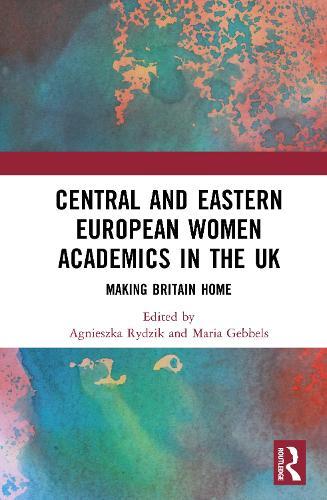
Central and Eastern European Women Academics in the UK: Making Britain Home brings together creative, reflexive and conceptually-rich contributions from 30 women academics of Central and Eastern European heritage who have established careers in UK higher education. Through essays, poetry, soundscapes and visual storytelling, the volume explores their migration trajectories and academic working lives, and the ways in which they negotiate identities and construct spaces of belonging within their communities and workplaces. The book situates these widely resonant and universal narratives within the socio-political and economic transformations of post-2004 Britain, including the 2008 financial crisis, the 2016 EU referendum, the COVID-19 pandemic, and the ongoing marketisation of higher education. It critically examines the evolving nature of academic labour and the challenges faced by migrant academics in navigating these shifting landscapes. Central and Eastern European Women Academics in the UK: Making Britain Home is key reading for academics in the UK, Europe and beyond who are navigating the challenging landscape of higher education, as well as scholars in sociology researching migration, identity and belonging.
Full Product Details
Author: Agnieszka Rydzik ,
Maria Gebbels
Publisher: Taylor & Francis Ltd
Imprint: Routledge
Weight: 0.570kg
ISBN: 9781032987880
ISBN 10: 103298788
Pages: 202
Publication Date: 20 March 2026
Audience:
College/higher education
,
Tertiary & Higher Education
Format: Hardback
Publisher's Status: Active
Availability: Manufactured on demand

We will order this item for you from a manufactured on demand supplier.
Reviews
Migrant women’s search for their place and a new sense of self is particularly relevant in the context of the world today. I could see myself in this book. It really resonated with me and my experiences as a PhD student back in 2004-2010 in the UK. This is a very important collection sharing reflective, personal stories of women academics set against a backdrop of international politics. Making Britain Home is a necessary read, especially when academia is being challenged to meaningfully implement inclusivity and equal opportunities. - Karolina Zioło-Pużuk, Assistant Professor, The Cardinal Stefan Wyszyński University in Warsaw, Secretary of State, Ministry of Science and Higher Education, Poland Stories of migration and mobility, of the search for belonging and (re)making of the self within academic as well as wider contexts of exclusion and othering are brought to life through personal-political reflections about work/life that are powerful, sometimes disturbing, but ultimately uplifting. - Sundari Anitha, Chair in Sociological Studies, University of Sheffield, UK This ground-breaking collection of reflexive narratives encompasses themes of identity, belonging and placemaking. Told by Central and Eastern European women migrants in academia in Britain, the essays are a triumphant manifestation of resistance, resilience and joy. These women’s stories of ‘making Britain home’ will connect with you on a visceral level – they will make you cry but you will also laugh out loud with delight. These women’s stories emphasise that the personal is indeed political. Donna Chambers, Professor of Critical Cultural Studies, Northumbria University, UK
Author Information
Agnieszka Rydzik is Associate Professor at the University of Lincoln. She has published widely on gender, migration and work. She is currently leading a major British Academy-funded study into technological change and the future of hospitality work. Maria Gebbels is Associate Professor at the University of Greenwich. She publishes on gender, career perceptions and critical hospitality; her research explores belonging, inclusion and unconventional applications of hospitality, including in carceral spaces and adventure tourism.