Overview
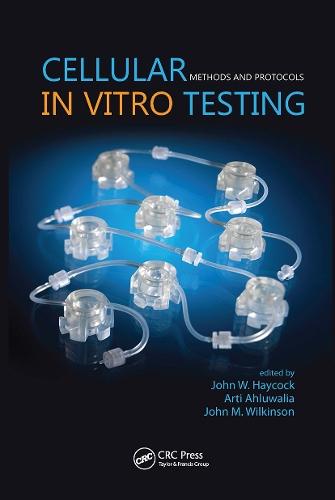
Growing cells in 2D under static conditions has long been the gold standard of cell culture, despite this method not being representative of the complex in vivo environment. Focusing on new 3D in vitro methods now available to researchers, this book brings together examples of leading-edge work being conducted internationally for improving in vitro cell culture methods, in particular the use of systems for enabling cell culture under laminar flow and the use of 3D scaffolds for providing cells with a structure which replicates the function of the extracellular matrix and encouraging interactions more akin to an in vivo environment.
Full Product Details
Author: John Haycock (University of Sheffield, UK) ,
Arti Ahluwalia (University of Pisa, Italy) ,
J. Malcolm Wilkinson (Kirkstall Ltd, Sheffield, UK)
Publisher: Pan Stanford Publishing Pte Ltd
Imprint: Pan Stanford Publishing Pte Ltd
Dimensions:
Width: 15.60cm
, Height: 1.50cm
, Length: 23.40cm
Weight: 0.520kg
ISBN: 9789814364973
ISBN 10: 9814364975
Pages: 192
Publication Date: 27 August 2014
Audience:
College/higher education
,
Professional and scholarly
,
Tertiary & Higher Education
,
Professional & Vocational
Format: Hardback
Publisher's Status: Active
Availability: Manufactured on demand

We will order this item for you from a manufactured on demand supplier.
Author Information
John W. Haycock is director of the Centre for Biomaterials and Tissue Engineering and associate director of the Kroto Research Institute, University of Sheffield, UK. He has a PhD in neuroscience from Newcastle University, UK. His key areas of work include scaffolds for nerve injury repair, 3D nerve models as alternatives for animal testing, and 3D imaging. Prof. Haycock is a member of the EPSRC Peer Review College, UK, and internationally has served on grant-awarding panels and examination bodies in Canada (CFI), Finland, and Sweden. Arti Ahluwalia is associate professor of bioengineering at the Department of Information Engineering, Faculty of Engineering; vice director of Interdepartmental Research Center ""E. Piaggio""; and head of the MCB Group, University of Pisa, Italy. She is currently affiliated with National Council of Research Institute of Clinical Physiology (CNR-IFC), Italy, and is director of its NanoBioScopy Lab. Dr. Ahluwalia has a PhD in bioengineering from the Polytechnic of Milan, Italy. Her research is mainly centered on the interactions between biological systems and man-made materials devices or structures for the creation of organ and system models in vitro, tissue engineering, biosensing, robots for autism, bioreactors, and in vitro models. John M. Wilkinson is the founder and managing director of Kirkstall Ltd., UK. Prior to founding Kirkstall, he had been managing a high-technology consulting company in Cambridge, UK, following a career in high-technology product development in both large corporations and startups. Dr. Wilkinson earned his PhD from Middlesex University, UK. He is a fellow of the Institute of Nanotechnology, UK, and has been a visiting lecturer for FSRM, Neuchatel, Switzerland, on the subject of micro- and nanotechnology in biomedical engineering for over ten years.