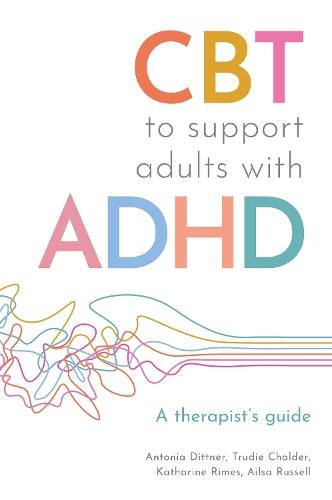
Full Product Details
Author: Antonia Dittner ,
Ailsa Russell ,
Trudie Chalder ,
Katharine Rimes
Publisher: Jessica Kingsley Publishers
Imprint: Jessica Kingsley Publishers
Dimensions:
Width: 15.20cm
, Height: 2.00cm
, Length: 22.60cm
Weight: 0.340kg
ISBN: 9781805017646
ISBN 10: 1805017640
Pages: 240
Publication Date: 18 December 2025
Audience:
Professional and scholarly
,
College/higher education
,
Professional and scholarly
,
Professional & Vocational
,
Tertiary & Higher Education
Format: Paperback
Publisher's Status: Active
Availability: Not yet available

This item is yet to be released. You can pre-order this item and we will dispatch it to you upon its release.
Reviews
CBT to Support Adults with ADHD: A Therapist's Guide is an important, complementary addition to the evidence-based adult ADHD treatment manuals already on the market. The conceptualization-based CBT approach outlined by Dittner, Chalder, Rimes, and Russell offers a full range of skills but in a manner exquisitely tailored to the needs of adults with ADHD and furthermore to each client. This rich and valuable resource provides all the materials and guidance that practicing clinicians need to provide top-flight adult ADHD care. -- J. Russell Ramsay, Ph.D., licensed psychologist and author of The Adult ADHD & Anxiety Workbook; Rethinking Adult ADHD; and The Adult ADHD Tool Kit
CBT to Support Adults with ADHD: A Therapist's Guide is an important, complementary addition to the evidence-based adult ADHD treatment manuals already on the market. The conceptualization-based CBT approach outlined by Dittner, Chalder, Rimes, and Russell offers a full range of skills but in a manner exquisitely tailored to the needs of adults with ADHD and furthermore to each client. This rich and valuable resource provides all the materials and guidance that practicing clinicians need to provide top-flight adult ADHD care. -- J. Russell Ramsay, Ph.D., licensed psychologist and author of The Adult ADHD & Anxiety Workbook; Rethinking Adult ADHD; and The Adult ADHD Tool Kit As a clinician who works with people with depression and anxiety disorders rather than directly on ADHD, I found this book really useful in providing information and ideas and ways that I could include aspects of the ADHD in my formulations along aside the mental health problem. The worksheets are great at gathering information and helping the therapist and patient make sense of how their experience of ADHD fits with everything else that is going on. Really helpful! -- Dr Richard Thwaites, NHS CBT Therapist and Consultant Clinical Psychologist
CBT to Support Adults with ADHD: A Therapist's Guide is an important, complementary addition to the evidence-based adult ADHD treatment manuals already on the market. The conceptualization-based CBT approach outlined by Dittner, Chalder, Rimes, and Russell offers a full range of skills but in a manner exquisitely tailored to the needs of adults with ADHD and furthermore to each client. This rich and valuable resource provides all the materials and guidance that practicing clinicians need to provide top-flight adult ADHD care. -- J. Russell Ramsay, Ph.D., licensed psychologist and author of The Adult ADHD & Anxiety Workbook; Rethinking Adult ADHD; and The Adult ADHD Tool Kit As a clinician who works with people with depression and anxiety disorders rather than directly on ADHD, I found this book really useful in providing information and ideas and ways that I could include aspects of the ADHD in my formulations along aside the mental health problem. The worksheets are great at gathering information and helping the therapist and patient make sense of how their experience of ADHD fits with everything else that is going on. Really helpful! -- Dr Richard Thwaites, NHS CBT Therapist and Consultant Clinical Psychologist Many clinicians lack confidence in their skills to help neurodivergent people. This clear, accessible guide adopts a neuro-affirmative approach, reminding us that people with ADHD have strengths and many ways of coping that they can build on with the help of CBT. Similarly therapists will discover that they already have many of the skills they need to work with this client group and it is more a matter of adaptation than learning a new set of techniques. This often means thinking more about ""how"" interventions are introduced and supported when clients have difficulties with attention and time management, as much as the ""what"" techniques are used. The formulation-based approach described here allows for neruodevelopmental and emotional problems to be integrated into a manageable conceptualisation that will be acceptable to clients, guide treatment and foster confidence in therapists. -- Stirling Moorey, BABCP President and CBT therapist
CBT to Support Adults with ADHD: A Therapist's Guide is an important, complementary addition to the evidence-based adult ADHD treatment manuals already on the market. The conceptualization-based CBT approach outlined by Dittner, Chalder, Rimes, and Russell offers a full range of skills but in a manner exquisitely tailored to the needs of adults with ADHD and furthermore to each client. This rich and valuable resource provides all the materials and guidance that practicing clinicians need to provide top-flight adult ADHD care. -- J. Russell Ramsay, Ph.D., licensed psychologist and author of The Adult ADHD & Anxiety Workbook; Rethinking Adult ADHD; and The Adult ADHD Tool Kit As a clinician who works with people with depression and anxiety disorders rather than directly on ADHD, I found this book really useful in providing information and ideas and ways that I could include aspects of the ADHD in my formulations along aside the mental health problem. The worksheets are great at gathering information and helping the therapist and patient make sense of how their experience of ADHD fits with everything else that is going on. Really helpful! -- Dr Richard Thwaites, NHS CBT Therapist and Consultant Clinical Psychologist Many clinicians lack confidence in their skills to help neurodivergent people. This clear, accessible guide adopts a neuro-affirmative approach, reminding us that people with ADHD have strengths and many ways of coping that they can build on with the help of CBT. Similarly therapists will discover that they already have many of the skills they need to work with this client group and it is more a matter of adaptation than learning a new set of techniques. This often means thinking more about ""how"" interventions are introduced and supported when clients have difficulties with attention and time management, as much as the ""what"" techniques are used. The formulation-based approach described here allows for neruodevelopmental and emotional problems to be integrated into a manageable conceptualisation that will be acceptable to clients, guide treatment and foster confidence in therapists. -- Stirling Moorey, BABCP President This important book is a highly useful and excellent resource for therapists working with adult clients with ADHD. What sets it apart from other works on how to treat adults with ADHD is that it addresses the heterogeneity of case presentations, which this diagnosis is known for, and provides concrete guidance for tailoring a treatment based on case conceptualization / formulation. I highly recommend it to clinicians working with this population. -- Steven Safren, Ph.D., ABPP, Professor of Psychology at University of Miami
Author Information
Dr Antonia Dittner, Consultant Clinical Psychologist at South London and Maudsley NHS Foundation Trust. Professor Trudie Chalder, cognitive behavioural psychotherapist with a joint appointment with the Department of Psychological Medicine, Institute of Psychiatry, Psychology and Neuroscience, King's College London, and the South London and Maudsley NHS Foundation Trust. Professor Katharine Rimes, Professor of Clinical Psychology at University of Plymouth Professor Ailsa Russell, clinical psychologist and researcher based at the University of Bath.