Overview
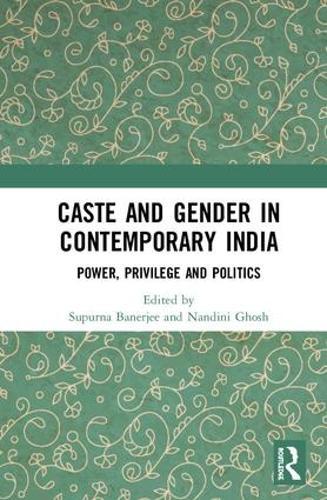
This book explores the intersectional aspects of caste and gender in India that contribute to the multiple marginalities and oppressions of lower castes, with particular reference to Dalits, Muslims and women. It moves beyond the conventional accounts of experiences of women in unequal social and political relationships to examine how caste as a system and ideology shapes hegemonic masculinity and feminization of work, and thus contributes to the violence against women. The volume looks at their everyday lived realities within and across diverse social and political contexts — families, education systems, labour, communities, political parties, power, social organisations, the politics of representation and the writing of the subaltern women. With a range of empirical work, it brings forth the complexities of identity politics and further analyses its limits in regional and historical frameworks. This book will be of interest to students, scholars and specialists in caste and gender studies, exclusion and discrimination studies, sociology and social anthropology, history and political science. It will also be useful to Dalit writers and people working in the development sector in India.
Full Product Details
Author: Supurna Banerjee ,
Nandini Ghosh
Publisher: Taylor & Francis Ltd
Imprint: Routledge India
Weight: 0.612kg
ISBN: 9781138062344
ISBN 10: 1138062340
Pages: 242
Publication Date: 18 October 2018
Audience:
College/higher education
,
Tertiary & Higher Education
Format: Hardback
Publisher's Status: Active
Availability: In Print

This item will be ordered in for you from one of our suppliers. Upon receipt, we will promptly dispatch it out to you. For in store availability, please contact us.
Author Information
Supurna Banerjee is Assistant Professor of Political Science at the Institute of Development Studies, Kolkata, West Bengal, India. She completed her PhD in 2014 from the University of Edinburgh in Sociology. Her monograph, based largely on the PhD work,Activism and Agency in India: Nurturing Resistance in Tea Plantations was published in 2017. She has also published in journals such as the International Law Journal, Journal of South Asian Development and in edited collections. She has co-edited a special issue in SAMAJ on ‘Debates on Caste-Gender Intersectionality’. Her primary research interests are gender, work, intersectionality, caste, migration and cities. Nandini Ghosh is Assistant Professor of Sociology at Institute of Development Studies, Kolkata, West Bengal, India. She obtained her PhD degree in Social Sciences from the Tata Institute of Social Sciences Mumbai in 2008. She has published a monograph,Impaired Bodies Gendered Lives: Everyday Realities of Disabled Womenin 2016. She has edited Interrogating Disability in India: Theory and Practice (2016) and Pratyaha — Everyday Lifeworlds: Dilemmas, Contestations and Negotiations (co-edited with Prasanta Ray, 2015). Her other publications include ‘Bhalo Meye: Cultural Construction of Gender and Disability in Bengal’ in Renu Adlakha (ed.), Disability Studies in India: Global Discourses, Local Realities (2013) and ‘Sites of Oppression: Dominant Ideologies and Women with Disabilities in India’ in Tom Shakespeare (ed.), The Disability Research Reader: New Voices (2015). She has also co-authored a chapter entitled ‘Girls with Disabilities in India: Living Contradictions of Care and Negation’ published in the India Social Development Report entitled Disability Rights Perspectives (2016). Her areas of interest are qualitative research methodology, sociology of gender, marginalisation and social exclusion and social movements.