Full Product Details
Author: Jenifer Jasinski Schneider
Publisher: Peter Lang Publishing Inc
Imprint: Peter Lang Publishing Inc
Edition: New edition
Volume: 7
Dimensions:
Width: 15.00cm
, Height: 1.30cm
, Length: 22.50cm
Weight: 0.380kg
ISBN: 9781433127175
ISBN 10: 1433127172
Pages: 249
Publication Date: 29 September 2014
Audience:
Professional and scholarly
,
Professional & Vocational
Format: Paperback
Publisher's Status: Active
Availability: Manufactured on demand

We will order this item for you from a manufactured on demand supplier.
Reviews
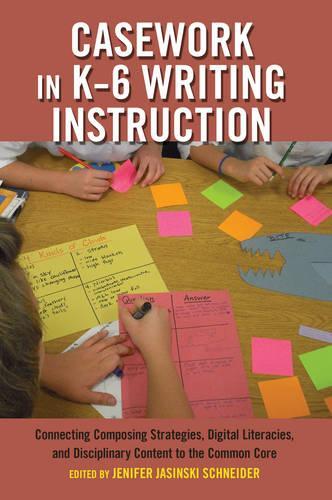
"""Jenifer Jasinski Schneider presents instructional writing scenarios in a no-nonsense, straightforward approach to address writing using a model of gradual release. This is critical to promote the necessity for students taking ownership of their own learning. These scenarios demonstrate prime examples of students thinking critically, engaging in discussion to shape their ideas, and writing to cement their thoughts. Educators will find great value as they pore through the pages of this resource."" (Kerry Padrick, Assistant Superintendent for Curriculum, Instruction, and Communication, St. Lucie Public Schools) ""'Casework in K-6 Writing Instruction' offers a unique collection of classroom examples which can be used as instructional models (or non-examples) for teachers. The analytic reflections following each case are helpful in identifying hot topics that would stimulate discussions and heated debate ... This is the first methods text I have found which illustrates various models and instructional strategies for teaching writing. I truly appreciate the eclectic approach which represents the reality of teaching writing in schools."" (Christine Reilly, Assistant Professor of Reading, Georgia Gwinnett College) ""'Casework in K-6 Writing Instruction' provides a much-needed resource for teachers, administrators, coaches, and curriculum specialists who are navigating the sometimes rough waters of our new standards implementation. Schneider's book offers wonderful stories of how teachers help students to become the kind of writers these new standards require: writers who are thoughtful about the messages they want to communicate. Whether looking for a resource to help a beginning teacher or one that provides rich next steps in supporting a writing curriculum, this book would be a valuable addition to an educator's professional library."" (Sherry Moser, Elementary Literacy Curriculum Specialist, Polk County Public Schools)"
Jenifer Jasinski Schneider presents instructional writing scenarios in a no-nonsense, straightforward approach to address writing using a model of gradual release. This is critical to promote the necessity for students taking ownership of their own learning. These scenarios demonstrate prime examples of students thinking critically, engaging in discussion to shape their ideas, and writing to cement their thoughts. Educators will find great value as they pore through the pages of this resource. (Kerry Padrick, Assistant Superintendent for Curriculum, Instruction, and Communication, St. Lucie Public Schools) 'Casework in K-6 Writing Instruction' offers a unique collection of classroom examples which can be used as instructional models (or non-examples) for teachers. The analytic reflections following each case are helpful in identifying hot topics that would stimulate discussions and heated debate ... This is the first methods text I have found which illustrates various models and instructional strategies for teaching writing. I truly appreciate the eclectic approach which represents the reality of teaching writing in schools. (Christine Reilly, Assistant Professor of Reading, Georgia Gwinnett College) 'Casework in K-6 Writing Instruction' provides a much-needed resource for teachers, administrators, coaches, and curriculum specialists who are navigating the sometimes rough waters of our new standards implementation. Schneider's book offers wonderful stories of how teachers help students to become the kind of writers these new standards require: writers who are thoughtful about the messages they want to communicate. Whether looking for a resource to help a beginning teacher or one that provides rich next steps in supporting a writing curriculum, this book would be a valuable addition to an educator's professional library. (Sherry Moser, Elementary Literacy Curriculum Specialist, Polk County Public Schools)
Jenifer Jasinski Schneider presents instructional writing scenarios in a no-nonsense, straightforward approach to address writing using a model of gradual release. This is critical to promote the necessity for students taking ownership of their own learning. These scenarios demonstrate prime examples of students thinking critically, engaging in discussion to shape their ideas, and writing to cement their thoughts. Educators will find great value as they pore through the pages of this resource. (Kerry Padrick, Assistant Superintendent for Curriculum, Instruction, and Communication, St. Lucie Public Schools) 'Casework in K-6 Writing Instruction' offers a unique collection of classroom examples which can be used as instructional models (or non-examples) for teachers. The analytic reflections following each case are helpful in identifying hot topics that would stimulate discussions and heated debate ... This is the first methods text I have found which illustrates various models and instructional strategies for teaching writing. I truly appreciate the eclectic approach which represents the reality of teaching writing in schools. (Christine Reilly, Assistant Professor of Reading, Georgia Gwinnett College) 'Casework in K-6 Writing Instruction' provides a much-needed resource for teachers, administrators, coaches, and curriculum specialists who are navigating the sometimes rough waters of our new standards implementation. Schneider's book offers wonderful stories of how teachers help students to become the kind of writers these new standards require: writers who are thoughtful about the messages they want to communicate. Whether looking for a resource to help a beginning teacher or one that provides rich next steps in supporting a writing curriculum, this book would be a valuable addition to an educator's professional library. (Sherry Moser, Elementary Literacy Curriculum Specialist, Polk County Public Schools)
Author Information
Jenifer Jasinski Schneider (PhD, The Ohio State University) is an associate professor at the University of South Florida. A winner of several teaching awards, Dr. Schneider is recognized for her work in writing instruction and multimedia composition. She is published in major literacy research journals.