Overview
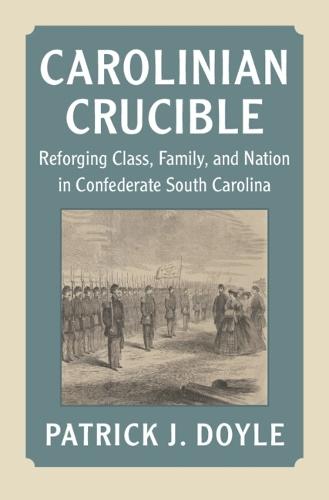
Carolinian Crucible tells the story of South Carolina – particularly its upcountry region – at war. A state notorious for its political radicalism before the Civil War, this book avoids caricaturing the Palmetto State's inhabitants as unflinching Confederate zealots, and instead provides a more fine-grained appraisal of their relationship with the new nation that their state's political elite played a leading role in birthing. It does so by considering the outlook and actions of both civilians and soldiers, with special attention given to those who were lower-class 'common whites.' In this richly detailed account, Patrick J. Doyle reveals how a region that was insulated from Federal invasion was not insulated from the disruptions of war; how social class profoundly shaped the worldview of ordinary folk, yet did not lead to a rejection of the slaveholders' republic; and how people in the Civil War South forged meaningful bonds with the Confederate nation, but buckled at times under the demands of diehard nationalism.
Full Product Details
Author: Patrick J. Doyle (Royal Holloway, University of London)
Publisher: Cambridge University Press
Imprint: Cambridge University Press
Weight: 0.485kg
ISBN: 9781009550499
ISBN 10: 1009550497
Pages: 256
Publication Date: 13 November 2025
Audience:
General/trade
,
General
Format: Hardback
Publisher's Status: Active
Availability: Manufactured on demand

We will order this item for you from a manufactured on demand supplier.
Reviews
'This bold reconsideration of class and family in civil war South Carolina offers an assessment of the economy and society particularly in the upcountry. Drawing on extensive research, Doyle examines the role of 'common whites' and contextualizes the intricacies—and perplexities- of white cohesion during wartime.' Orville Vernon Burton, Clemson University, and author of Justice Deferred: Race and the Supreme Court 'In this careful study of Civil War South Carolina, Patrick Doyle offers an incisive portrait of political loyalty, one that reveals both ardent and lukewarm nationalists. Doyle's sophisticated analysis exposes the real-class tensions and war weariness of many South Carolinians and their persistent support for the Confederacy. His study offers a nuanced view of the conflict and reminds us that even the most unequal societies can remain surprisingly durable during, and sometimes because of, great crises.' Aaron Sheehan Dean, editor of The Cambridge History of the American Civil War 'Patrick Doyle's careful analysis of the words and actions of upcountry South Carolina residents, both civilians and soldiers, adds depth and nuance to our broader understanding of Confederate nationalism. This is a valuable study for scholars and general readers alike.' Lesley J. Gordon, author of Dread Danger: Cowardice and Combat in the American Civil War 'Carolinian Crucible delves deep into the Civil War experiences of upcountry South Carolina. With careful research and insightful analysis, Patrick Doyle artfully illuminates non-elite white people's struggles to balance self, family, and nation amid the turmoil of war. Doyle reveals more clearly than ever that the Civil War fostered consensus and discord, loyalty and disaffection, at one and the same time.' Paul Quigley, Virginia Tech
'This bold reconsideration of class and family in civil war South Carolina offers an assessment of the economy and society particularly in the upcountry. Drawing on extensive research, Doyle examines the role of 'common whites' and contextualizes the intricacies - and perplexities - of white cohesion during wartime.' Orville Vernon Burton, the Judge Matthew J. Perry Distinguished Professor History Clemson University, Emeritus University Distinguished Teacher/Scholar University of Illinois, author The Age of Lincoln 'Carolinian Crucible delves deep into the Civil War experiences of upcountry South Carolina. With careful research and insightful analysis, Patrick Doyle artfully illuminates non-elite white people's struggles to balance self, family, and nation amid the turmoil of war. Doyle reveals more clearly than ever that the Civil War fostered consensus and discord, loyalty and disaffection, at one and the same time.' Paul Quigley, Virginia Tech
Author Information
Patrick J. Doyle teaches US History at Royal Holloway, University of London. His research has been published in the Journal of the Civil War Era, Journal of Social History, and Civil War History.