Overview
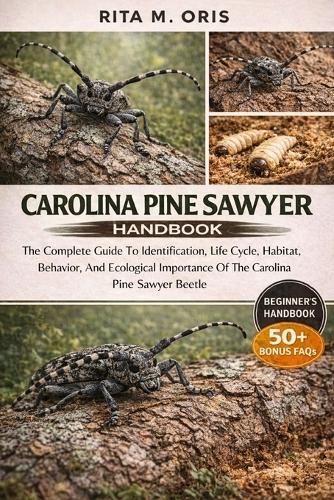
INTRODUCTION Meet the Carolina Pine Sawyer A beetle with a lumberjack name The Carolina Pine Sawyer is one of those insects whose common name sounds like a job title, and in a way it is. This beetle ""works"" wood, not by cutting it like a person with a saw, but by using a life cycle designed around pine trees that are weakened, freshly dead, or recently cut. When beginners first hear ""pine sawyer,"" they often imagine a pest that destroys healthy forests overnight. The truth is more interesting and more balanced: the Carolina Pine Sawyer is best understood as a specialist of change-an insect that shows up when pine wood is transitioning from living tree to dead wood, and then helps move that wood along the long road back into the soil. What it looks like at first glance If you meet one in real life, the first thing you notice is size and shape. This is not a tiny beetle that vanishes into a crack the moment you blink. It is a longhorn beetle, which means it has a stretched, athletic body and antennae that can look almost comically long, especially in males. Those antennae are not decoration. They are sensory tools, tuned for smelling, feeling airflow, and reading the chemical signature of a landscape full of pine resin and stressed wood. Many people describe the Carolina Pine Sawyer as ""handsome in a rugged way,"" because it carries the classic longhorn beetle look: long, strong legs; a firm, armored body; and a pattern of browns and grays that blends into bark and weathered wood. The coloration is usually a camouflage mix rather than bright warning colors. On pine bark, it can look like a moving knot of wood grain. That camouflage matters because adult sawyers spend time on exposed surfaces-logs, stumps, trunks-where birds and other predators are watching. A beginner mistake is expecting every ""important"" insect to be bright and flashy. The Carolina Pine Sawyer survives by being hard to notice until it moves. The name behind the insect The ""Carolina"" in the name points to its association with the southeastern United States, especially areas where pines are common and the climate supports long seasons of insect activity. ""Pine"" is the key, because its life is closely tied to pine wood and pine conditions. ""Sawyer"" is an old term used for several longhorn beetles whose larvae tunnel through wood and whose adults are often seen walking over recently dead pines or fresh-cut logs. So the name is less about a single dramatic act and more about a lifestyle: this is a beetle that lives in and around pine wood that is no longer thriving the way it used to. Not a random ""bug,"" but a wood-and-resin specialist To really meet the Carolina Pine Sawyer, it helps to see it as a pine-environment specialist rather than as a general backyard insect. Its world is not flowerbeds and kitchen windows. Its world is pine resin, bark texture, and the invisible chemical messages released by trees under stress. Pines produce resin as a defense, and stressed or damaged pines often smell ""louder"" to insects than healthy pines do. The Carolina Pine Sawyer is one of the insects that can read those signals. This doesn't mean it magically detects a tree from miles away like a superhero, but it does mean the adult beetle can use smell to find the right kind of wood for the next generation. Beginners often ask, ""Does it attack healthy trees?"" The honest answer is that these sawyers are far more associated with weakened, dying, recently dead, or cut pine material than with vigorous, healthy pines. Think of them as opportunists of the in-between stage. They are most at home where the pine's defenses are fading or where the tree is already down. That's why people often notice them after storms, during logging activity, around stacked pine firewood, or near pines that have recently died.
Full Product Details
Author: Rita M Oris
Publisher: Independently Published
Imprint: Independently Published
Dimensions:
Width: 15.20cm
, Height: 1.00cm
, Length: 22.90cm
Weight: 0.254kg
ISBN: 9798245074511
Pages: 184
Publication Date: 23 January 2026
Audience:
General/trade
,
General
Format: Paperback
Publisher's Status: Active
Availability: Available To Order

We have confirmation that this item is in stock with the supplier. It will be ordered in for you and dispatched immediately.