Overview
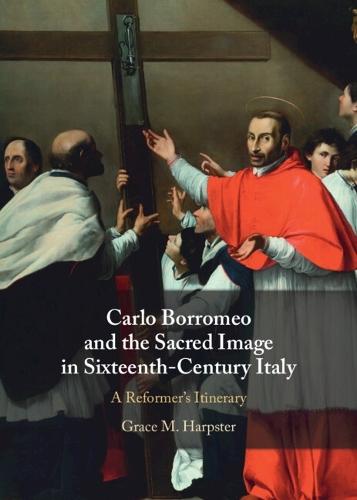
Scholars have long acknowledged that reforms after the Catholic Council of Trent (1545–63) represent a watershed in art history, yet they have failed to agree on whether, and how, they had any effect on art. In this study, Grace Harpster offers new insights on the impact of Catholic reform on early modern art. Exploring the social roles of images in late sixteenth-century Italy, she demonstrates that the pressures of Catholic reform increased, rather than limited, the authority of the image. Harpster approaches the topic through a focus on the zealous, peripatetic reformer Carlo Borromeo (1538–84), who implemented new ways to police and pray to sacred images after Trent. His actions demonstrate that Catholic reformers endorsed the image as a powerful object, truthteller, and miracle-worker. The diverse corpus of images on his itinerary, moreover, reveals the critical role of the sacred image in a formative religious and art historical moment.
Full Product Details
Author: Grace M. Harpster (Georgia State University)
Publisher: Cambridge University Press
Imprint: Cambridge University Press
Dimensions:
Width: 17.80cm
, Height: 1.90cm
, Length: 25.40cm
Weight: 0.749kg
ISBN: 9781009664134
ISBN 10: 1009664131
Pages: 306
Publication Date: 19 February 2026
Audience:
College/higher education
,
Postgraduate, Research & Scholarly
Format: Hardback
Publisher's Status: Active
Availability: Manufactured on demand

We will order this item for you from a manufactured on demand supplier.
Reviews
'This is a marvelous, engagingly written, and transformative book that shatters the interpretive narratives and negative stereotypes typically associated with the art of the Catholic Reform in Italy, in the decades following the death of Michelangelo. Harpster establishes a compelling new historical framework anchored to the figure of Carlo Borromeo, inviting readers to follow in the footsteps of the influential Milanese reforming archbishop during his church visitations and to attend carefully to his image acts and assessments. What emerges is a vibrant religious image culture that attributed extraordinary sacred presence, authority, and evidentiary value to the material work of art; that embraced both Christian tradition and contemporary artistic envisioning; that was sensitive to the status and role of the artist; and that was intricately enmeshed with artistic practices and conceptions like life-likeness, discernment and emulation, antiquarianism, collecting, and conservation. The art historical canon expands, too, with a revaluation of miracle-working images, sacred narratives, and saints' portraits, and the critical role of copies and prints. Harpster characterizes the implementation of the Tridentine reforms as 'messy' and masterfully presents fluid, complex, and often contradictory period views about religious art that serve as important counterpoints to Giorgio Vasari's influential Lives of the Artists emphasizing style and artistic biography.' Megan Holmes, Professor Emerita, University of Michigan 'Grace Harpster makes a landmark contribution to a body of scholarship that has failed to reach a consensus on the impact of Catholic reform on art. Thoroughly researched yet argued with nuance and conviction, this book establishes a new reading of the status – and even definition – of the sacred image by examining actions and attitudes towards them by one of the period's most important theologians. The images Borromeo used, promoted, and inspired are laden with the power to convey doctrinal truth, channel miracles, and demand proper upkeep and care in order to function in social networks of devotion and belief.' Andrew Casper, Professor, Miami University 'Across the sixteenth century, the role of images in Catholic devotion came under harsh scrutiny, first in response to the Reformation and subsequently as Catholicism expanded around the globe. Carlo Borromeo and the Sacred Image in Sixteenth-Century Italy makes a convincing case that that the studious approach to the power of images undertaken in Borromeo's home diocese of Milan helped set the trajectory for the use of images in Catholic worship. Reconstructing San Carlo's interactions with different types of sacred images, this book meticulously reveals the intellectual and spiritual foundations of the image theory that held sway after the Council of Trent.' Christopher Nygren, Associate Professor, University of Pittsburgh
Author Information
Grace M. Harpster is Associate Professor of Art History at Georgia State University in Atlanta. Her research, which examines the stakes of the image in early modern Catholicism, has been published in Oxford Art Journal, Religions, and the Journal of Jesuit Studies, among other venues.