Overview
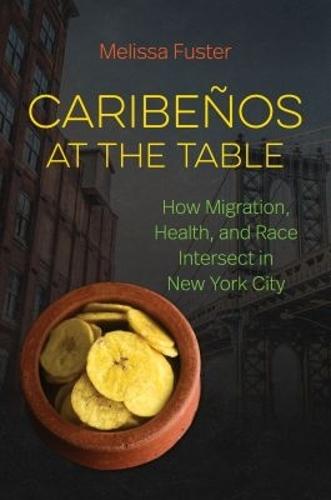
Melissa Fuster thinks expansively about the multiple meanings of comida, food, from something as simple as a meal to something as complex as one's identity. She listens intently to the voices of New York City residents with Cuban, Dominican, or Puerto Rican backgrounds, as well as to those of the nutritionists and health professionals who serve them. She argues with sensitivity that the migrants' health depends not only on food culture but also on important structural factors that underlie their access to food, employment, and high-quality healthcare. People in Hispanic Caribbean communities in the United States present high rates of obesity, diabetes, and other diet-related diseases, conditions painfully highlighted during the COVID-19 pandemic. Both eaters and dietitians may blame these diseases on the shedding of traditional diets in favor of highly processed foods. Or, conversely, they may blame these on the traditional diets of fatty meat, starchy root vegetables, and rice. Applying a much needed intersectional approach, Fuster shows that nutritionists and eaters often misrepresent, and even racialize or pathologize, a cuisine's healthfulness or unhealthfulness if they overlook the kinds of economic and racial inequities that exist within the global migration experience.
Full Product Details
Author: Melissa Fuster
Publisher: The University of North Carolina Press
Imprint: The University of North Carolina Press
Dimensions:
Width: 15.50cm
, Height: 1.10cm
, Length: 23.30cm
Weight: 0.301kg
ISBN: 9781469664576
ISBN 10: 1469664577
Pages: 200
Publication Date: 30 October 2021
Audience:
Professional and scholarly
,
Professional & Vocational
Format: Paperback
Publisher's Status: Active
Availability: Manufactured on demand

We will order this item for you from a manufactured on demand supplier.
Reviews
Expands the field of food studies by bringing forward an interdisciplinary approach that combines public health, food policy, anthropology, and sociology focused on the understudied communities of Puerto Ricans, Dominicans, and Cubans in NYC.--Intervenxions
""Combining perspectives from her training in biology, social sciences, food policy, and nutrition, Fuster challenges conventional wisdom that privileges cultural and socioeconomic factors to explain health inequalities . . . [A] remarkably researched book describing alimentary practices for some of the city's largest Latinx populations.""--Gastronomica ""Expands the field of food studies by bringing forward an interdisciplinary approach that combines public health, food policy, anthropology, and sociology focused on the understudied communities of Puerto Ricans, Dominicans, and Cubans in NYC.""--Intervenxions ""Fuster expands the field of food studies by bringing forward an interdisciplinary approach that combines public health, food policy, anthropology, and sociology focused on the understudied communities of Puerto Ricans, Dominicans, and Cubans in NYC. . . . A necessary book in Latinx Studies and Caribbean Cultural Studies.""Latinex Project ""Fuster has interesting things to say about how dietitians view the traditional diets of the Caribbean--as unhealthy and unsophisticated. . . . And she urges us to think about migrant eating patterns in the broader context of everyone's eating patterns.""--Marion Nestle, Food Politics ""This book offers a new lens through which practioners can become culturally competent. It would be of great use to anyone studying and working with diet-related health outcomes in migrant communities, particularly undergraduate students studying nutrition, public health, political science, social sciences, and immigration.""--NACLA Report
Expands the field of food studies by bringing forward an interdisciplinary approach that combines public health, food policy, anthropology, and sociology focused on the understudied communities of Puerto Ricans, Dominicans, and Cubans in NYC. --Intervenxions
Expands the field of food studies by bringing forward an interdisciplinary approach that combines public health, food policy, anthropology, and sociology focused on the understudied communities of Puerto Ricans, Dominicans, and Cubans in NYC. --Intervenxions Fuster expands the field of food studies by bringing forward an interdisciplinary approach that combines public health, food policy, anthropology, and sociology focused on the understudied communities of Puerto Ricans, Dominicans, and Cubans in NYC. . . . A necessary book in Latinx Studies and Caribbean Cultural Studies. Latinex Project Fuster has interesting things to say about how dietitians view the traditional diets of the Caribbean--as unhealthy and unsophisticated. . . . And she urges us to think about migrant eating patterns in the broader context of everyone's eating patterns. --Marion Nestle, Food Politics This book offers a new lens through which practioners can become culturally competent. It would be of great use to anyone studying and working with diet-related health outcomes in migrant communities, particularly undergraduate students studying nutrition, public health, political science, social sciences, and immigration. --NACLA Report
Expands the field of food studies by bringing forward an interdisciplinary approach that combines public health, food policy, anthropology, and sociology focused on the understudied communities of Puerto Ricans, Dominicans, and Cubans in NYC.--Intervenxions Fuster has interesting things to say about how dietitians view the traditional diets of the Caribbean--as unhealthy and unsophisticated. . . . And she urges us to think about migrant eating patterns in the broader context of everyone's eating patterns.--Marion Nestle, Food Politics
Author Information
Melissa Fuster is associate professor of public health nutrition at Tulane University.