|
|
|||
|
||||
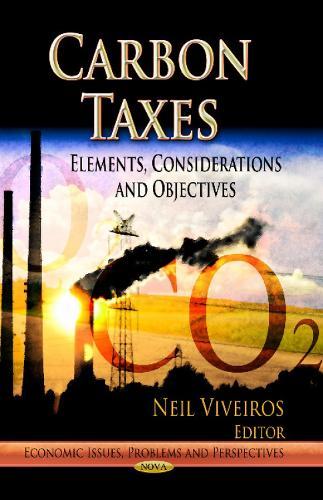
OverviewThe federal budget deficit has exceeded $1 trillion annually in each fiscal year since 2009, and deficits are projected to continue. Over time, unsustainable deficits can lead to reduced savings for investment, higher interest rates, and higher levels of inflation. Restoring fiscal balance would require spending reductions, revenue increases, or some combination of the two. Policy-makers have considered a number of options for raising additional federal revenues, including a carbon tax. A carbon tax could apply directly to carbon dioxide (CO2) and other greenhouse gas (GHG) emissions, or to the inputs (e.g., fossil fuels) that lead to the emissions. Unlike a tax on the energy content of each fuel, a carbon tax would vary with a fuel's carbon content, as there is a direct correlation between a fuel's carbon content and its CO2 emissions. This book examines the carbon tax debate as a deficit reduction tool with a focus on policy design considerations. Full Product DetailsAuthor: Neil ViveirosPublisher: Nova Science Publishers Inc Imprint: Nova Science Publishers Inc Weight: 0.390kg ISBN: 9781626181489ISBN 10: 1626181489 Pages: 133 Publication Date: 10 May 2013 Audience: College/higher education , Professional and scholarly , Postgraduate, Research & Scholarly , Professional & Vocational Format: Hardback Publisher's Status: Active Availability: Available To Order We have confirmation that this item is in stock with the supplier. It will be ordered in for you and dispatched immediately. Table of ContentsReviewsAuthor InformationTab Content 6Author Website:Countries AvailableAll regions |
||||