Overview
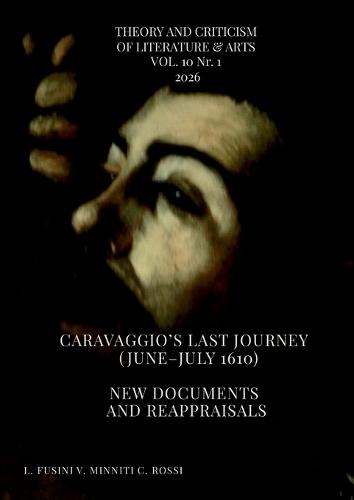
The studies gathered in this issue reshape scholarship on the final days of Michelangelo Merisi da Caravaggio by reassembling, contextualising and cross-reading documentary evidence that has too often been treated in isolation. Diplomatic correspondence, administrative papers, military records and notarial material are integrated within a single analytical framework, yielding a reconstruction that departs decisively from centuries of biographical simplification and narrative accretion. The enquiry begins with Carla Rossi's annotated critical edition of the letter sent on 29 July 1610 by Deodato Gentile, Apostolic Nuncio in Naples, to the Papal Secretariat of State. Long known yet never subjected to rigorous philological and palaeographical scrutiny, this earliest contemporary testimony is reassessed in its evidentiary status: imprecise readings are corrected, indirect reports are distinguished from verifiable facts, and the document's cautious formulations are restored to their institutional meaning. Rossi's analysis demonstrates that the letter is not a summary note, but a politically situated administrative text, presupposing procedures, local expertise and an official reconstruction of events. Within this sequence, the episode of the ""restato pregione"" emerges as a decisive junction. A further advance comes from the documentation concerning the Fortress of Palo, including the identification of the captain named by the nuncio, which anchors Merisi's arrest within a defined network of responsibilities and coastal controls, with concrete implications for timing, physical condition and subsequent mobility. The issue then reconstructs the painter's last movements through documented itineraries of the Colonna household, while L. Fusini's topographical and cartographic study of Porto Ercole redefines the constraints of a rigorously monitored military space. The dossier is completed by V. Minniti's discovery of the late-August purchase of crespone by the Marchesa of Caravaggio, confirming the formal elaboration of mourning. Beyond new findings, the core novelty lies in method: documents read within their administrative context, networks reconstructed, events restored to their historical density.
Full Product Details
Author: Carla Rossi ,
Vittoria Minniti ,
Lorenzo Fusini
Publisher: Bibliotheque de L
Imprint: Bibliotheque de L
Dimensions:
Width: 21.00cm
, Height: 0.60cm
, Length: 29.70cm
Weight: 0.277kg
ISBN: 9782488512015
ISBN 10: 248851201
Pages: 106
Publication Date: 07 February 2026
Audience:
General/trade
,
General
Format: Paperback
Publisher's Status: Active
Availability: Available To Order

We have confirmation that this item is in stock with the supplier. It will be ordered in for you and dispatched immediately.
Author Information
Carla Rossi is an art historian, palaeographer, and philologist with three decades of university teaching. Her work is grounded in the close reading of primary sources and in the critical editing of early modern documents, with particular attention to textual transmission, documentary reliability, and evidentiary status. She has an established profile in archival research and applies philological and palaeographical methods to questions of attribution, chronology, and historical context.