|
|
|||
|
||||
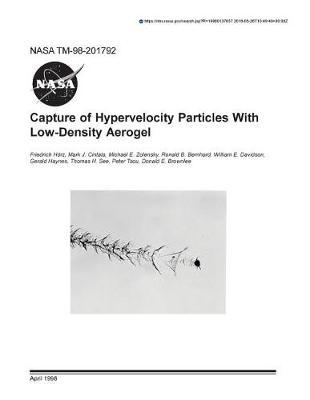
OverviewRecent impact experiments conducted at Johnson Space Center supported a space-exposed flight instrument called the orbital debris collector (ODC) to see whether SiO2 acrogel performed adequately as a collector to capture cosmic dust particles and/or manmade debris, or whether additional development is needed. The first ODC was flown aboard the Mir for 18 months, while the second will be flown aboard a spacecraft (Stardust, to be launched in 1999) that will encounter the comet Wild 2 and return to Earth. Aerogels are highly porous materials that decelerate high-velocity particles without substantial melting or modifications to the particles' components; in other denser materials, these particles would melt or vaporize upon impact. The experimental data in this report must be considered somewhat qualitative because they are characterized by substantial, if not intolerable, scatter, possibly due to experimental difficulties in duplicating given sets of initial impact conditions. Therefore, this report is a chronological guide of the experimenters' attempts, difficulties, progress, and evaluations for future tests. Hoerz, Friedrich and Cintala, Mark J. and Zolensky, Michael E. and Bernhard, Ronald B. and Haynes, Gerald and See, Thomas H. and Tsou, Peter and Brownlee, Donald E. Jet Propulsion Laboratory; Johnson Space Center... Full Product DetailsAuthor: National Aeronaut Administration (Nasa)Publisher: Createspace Independent Publishing Platform Imprint: Createspace Independent Publishing Platform Dimensions: Width: 21.60cm , Height: 0.40cm , Length: 27.90cm Weight: 0.191kg ISBN: 9781722294403ISBN 10: 172229440 Pages: 72 Publication Date: 06 July 2018 Audience: General/trade , General Format: Paperback Publisher's Status: Active Availability: Available To Order We have confirmation that this item is in stock with the supplier. It will be ordered in for you and dispatched immediately. Table of ContentsReviewsAuthor InformationTab Content 6Author Website:Countries AvailableAll regions |
||||