Overview
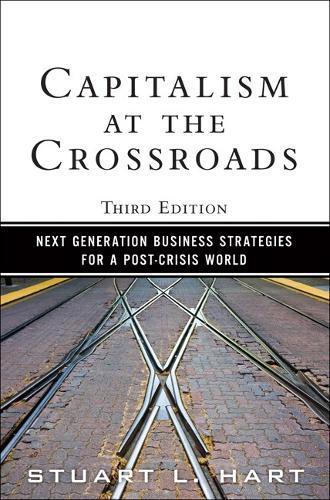
The multiple economic crises of the past two years demonstrate more clearly than ever that the age of ""mercenary"" capitalism is over: we must finally embark on a new age of sustainable, stakeholder-based capitalism. While enlightened executives and policymakers understand the critical need for change, few have tangible plans for making it happen. Stuart L. Hart, one of the world's leading experts on sustainable capitalism, presents clear roadmaps and strategies for identifying sustainable products and technologies that can drive new growth while also helping to solve today's key social and environmental problems. This edition contains Thoroughly updated case studies and examples Extensive coverage of incubating clean, green technologies at the ""base of the pyramid"" and ""trickling them up"" to the top A new Preface demonstrating how recent economic crises stem from unsustainable policies and strategies and what can be done about it New analyses of oil price spikes and the sub-prime crisis through the lens of sustainable capitalism Updates on breakthrough ""bottom of the pyramid"" initiatives in the U.S. and beyond Drawing on his experience consulting with leading companies and NGOs worldwide, Hart shows how to overcome the pitfalls of traditional 'greening' and 'sustainability' strategies, and recharge innovation, growth, and profitability in your enterprise.
Full Product Details
Author: Stuart Hart
Publisher: Pearson Education (US)
Imprint: Addison Wesley
Edition: 3rd edition
Dimensions:
Width: 15.20cm
, Height: 2.40cm
, Length: 22.70cm
Weight: 0.440kg
ISBN: 9780137042326
ISBN 10: 0137042329
Pages: 352
Publication Date: 05 August 2010
Audience:
Professional and scholarly
,
Professional & Vocational
Format: Paperback
Publisher's Status: Active
Availability: In Print 
This item will be ordered in for you from one of our suppliers. Upon receipt, we will promptly dispatch it out to you. For in store availability, please contact us.
Table of Contents
About the Author . . . xi Acknowledgments . . . xii Preface: Al Gore, Former Vice President of the United States . . . xxiii Foreword: Fisk Johnson, Chairman and CEO, S. C. Johnson & Son, Inc. . . . xxvi PART ONE: MAPPING THE TERRAIN 1 Prologue: Reinventing Capitalism for the Post-Crisis World . . . 3 The Great Disruption . . . 4 The Best of Times, The Worst of Times . . . 5 Environmental Meltdown? . . . 8 The Demise of Development . . . 10 Implications for Corporations . . . 13 The Fork in the Road . . . 15 Chapter 1: From Obligation to Opportunity . . . 19 The Great Trade-Off Illusion . . . 21 The Greening Revolution . . . 23 Shattering the Trade-Off Myth. . . . 25 Breaking Free of Command-and-Control . . . 26 Beyond Greening . . . 30 Raging Against the Machine . . . 33 Smart Mobs Versus Smart Globalization . . . 35 Becoming Indigenous . . . 38 The Road Ahead . . . 41 Overview of the Book . . . 43 Chapter 2: Worlds in Collision . . . 51 The Three Economies . . . 53 Collision Course . . . 60 New Lenses on the Global Market . . . 62 Developed Markets: Reducing Corporate Footprint . . . 65 Emerging Markets: Avoiding the Collision . . . 68 Traditional Markets: Serving Real Needs . . . 72 The Value Proposition . . . 76 Chapter 3: The Sustainable Value Portfolio . . . 79 Sustainability Buzzwords . . . 80 Elements of Shareholder Value . . . 81 The Buzzword Sort . . . 84 Connecting the Dots: The Sustainable Value Portfolio . . . 87 Charting the Sustainable Value Portfolio . . . 97 The Road to Sustainability . . . 99 Pursuing the White Space. . . . 104 PART TWO: BEYOND GREENING 109 Chapter 4: Clean Technology and Creative Destruction . . . 111 Continuous Improvement Versus Creative Destruction . . . 112 From Textile Dyes to Biomaterials . . . 118 Using Carbon Dioxide to Change the World . . . 120 Developing an Ecomagination . . . 122 Whole-Systems Thinking . . . 124 Reinventing the Wheels . . . 128 Technologies of Liberation . . . 131 Eating Your Own Lunch . . . 133 Chapter 5: Innovation from the Bottom-Up . . . 137 On the Horns of a Dilemma . . . 138 Birth of BoP. . . 139 The Tip of the Iceberg . . . 141 Creative Creation . . . 146 Driving Innovation from the Base of the Pyramid . . . 149 Connecting the World. . . 151 Food, Health, and Hope? . . . 155 Power to the People . . . 158 The Great Convergence . . . 162 A New Development Paradigm . . . 165 Taking the Great Leap . . . 167 Chapter 6: Raising the Base of the Pyramid . . . 171 BoP Pioneers . . . 172 It’s the Business Model, Stupid . . . 173 Assessing Sustainability Impact . . . 189 Village Phones: The Triple Bottom Line . . . 192 The MNC Advantage . . . 196 A Common Cause . . . 197 PART THREE: BECOMING INDIGENOUS 201 Chapter 7: Broadening the Corporate Bandwidth . . . 203 Learning from Ladakh . . . 204 The Post-Development Challenge . . . 207 Radical Transactiveness. . . 211 Fanning Out: Extending the Scope of the Firm . . . 213 Fanning In: Integrating Diverse and Disconfirming Information . . . 217 Expanding Our Concept of the Global Economy . . . 222 From Alien to Native . . . 224 Chapter 8: Developing Native Capability . . . 227 Next Generation Strategies and Skills . . . 229 Engage First, Design Second . . . 230 Coinvent Custom Solutions . . . 234 Fail Small, Learn Big . . . 237 Fly Under the Radar . . . 239 Work with Nontraditional Partners . . . 242 Build Social, Not Legal, Contracts . . . 244 Moving Beyond the Multinational Model . . . 248 Chapter 9: Re-Embedding Innovation Strategy . . . 253 Comparing Apples and Oranges . . . 254 Toward a Base of the Pyramid Protocol . . . 257 Learning by Doing . . . 262 Taking the Initiative on Water . . . 267 The Three Big Challenges . . . 273 Leading the Next Great Transformation . . . 276 Chapter 10: Building the Sustainable Global Enterprise . . . 281 Making It Happen in the Real World . . . 283 Aligning the Organization . . . 293 Building the Cathedral . . . 300 Postscript . . . 302 Epilogue: Looking Forward . . . 307 Draining the Swamp . . . 308 The Next Tsunami . . . 310 Who Will Be the Twenty-First Century Watchdog? . . . 312 Index . . . 315
Reviews
@lt;P style= MARGIN: 0px @gt; @lt;/P@gt;
Author Information
Stuart L. Hart is one of the world’s top authorities on the implications of sustainable development and environment for business strategy. He is currently the Samuel C. Johnson Chair in Sustainable Global Enterprise and Professor of Management at Cornell’s Johnson Graduate School of Management. He also serves as Distinguished Fellow at the William Davidson Institute (University of Michigan) and President of Enterprise for a Sustainable World. Previously, he taught strategic management and founded both the Center for Sustainable Enterprise (CSE) at the University of North Carolina’s Kenan-Flagler Business School and the Corporate Environmental Management Program (now the Erb Institute Dual Master’s Program) at the University of Michigan. Hart’s consulting clients range from DuPont and SC Johnson to Unilever and General Electric. He is an internationally recognized speaker and has delivered hundreds of keynote addresses on the topic of sustainable business around the world. He wrote the seminal article “Beyond Greening: Strategies for a Sustainable World,” which won the McKinsey Award for Best Article in Harvard Business Review in 1997 and helped launch the movement for corporate sustainability. With C.K. Prahalad, he also wrote the groundbreaking 2002 article, “The Fortune at the Bottom of the Pyramid,” which provided the first articulation of how business could profitably serve the needs of the four billion poor in the developing world. He invites readers to email him at slh55@cornell.edu and to visit his website at www.stuartlhart.com.
Tab Content 6
Author Website:
Countries Available
All regions
|