|
|
|||
|
||||
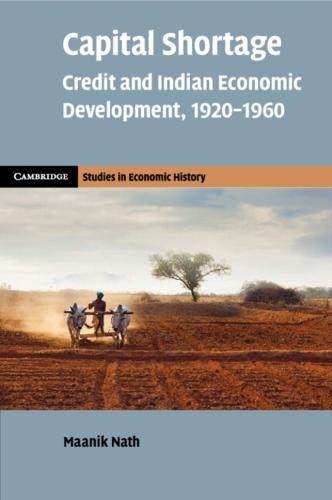
OverviewThe great majority of the population in colonial and postcolonial India lived in the countryside and were poor. Many were unable to find gainful work outside agriculture and remained dependent on a livelihood that provided only subsistence, and a precarious one. Seeking the roots of persistent poverty, Maanik Nath finds that the pervasive high cost and shortage of capital affected the peasant's ability to invest in land. The productivity of land, as a result, remained small and changed little. Bridging economic theory and historical evidence, Capital Shortage shows that climate, law, policy design, and interactions between these factors, perpetuated a stubborn cycle of low investment and widespread deprivation over several decades. These findings can be tested against credit and development in preceding and succeeding periods as well as positioned in comparative global context. Full Product DetailsAuthor: Maanik Nath (Universiteit Utrecht, The Netherlands)Publisher: Cambridge University Press Imprint: Cambridge University Press ISBN: 9781009359047ISBN 10: 1009359045 Pages: 247 Publication Date: 08 May 2025 Audience: General/trade , General Format: Paperback Publisher's Status: Active Availability: Manufactured on demand We will order this item for you from a manufactured on demand supplier. Table of Contents1. Introduction; 2. Agriculture, commerce and governance in the Longue Durée; 3. Climate and credit; 4. Courts and credit; 5. Regulating moneylenders; 6. Regulating cooperatives; 7. Credit after 1960; 8. Conclusion; Epilogue: risk and regulation across colonial India.ReviewsAuthor InformationMaanik Nath is Assistant Professor in Economic and Social History at Utrecht University. Tab Content 6Author Website:Countries AvailableAll regions |
||||