Overview
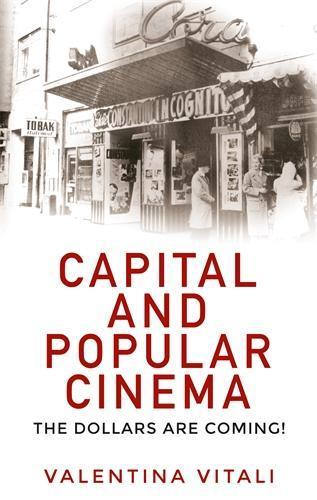
Popular cinema has mostly been discussed from a 'cult' perspective that celebrates uncritically its 'transgressive' qualities. Capital and popular cinema responds to the need for a more solid academic approach by situating 'low' film genres in their economic and culturally-specific contexts and by exploring the interconnections between those contexts, the immediate industrial-financial interests sustaining the films, and the films' aesthetics. Through the examination of three different cycles in film production - the Italian giallo of Mario Bava, the Mexican films of Fernando Mendez, and the Hindi horror cinema of the Ramsay Brothers - Capital and popular cinema proposes a comparative approach that accounts for the whole of a national film industry's production ('popular' and 'canonic'), and is applicable to the study of film genres globally. Based on new research, Capital and popular cinema will be of interest to undergraduate and post-graduate students, researchers and scholars of cult and exploitation cinema, genre cinema, national cinema, film and media theory, and area studies. -- .
Full Product Details
Author: Valentina Vitali
Publisher: Manchester University Press
Imprint: Manchester University Press
Dimensions:
Width: 13.80cm
, Height: 1.70cm
, Length: 21.60cm
Weight: 0.445kg
ISBN: 9780719099656
ISBN 10: 071909965
Pages: 232
Publication Date: 07 April 2016
Audience:
General/trade
,
General
Format: Hardback
Publisher's Status: Active
Availability: Manufactured on demand

We will order this item for you from a manufactured on demand supplier.
Reviews
'Capital and Popular Cinema ... makes a convincing case for a more politically engaged form of film studies: For the study of films cannot be reduced to the chronicling of films and cinema. It emerged as a radical, intellectual endeavour to figure out how, precisely, industrial cultural artefacts condition our everyday lives, and, with that aesthetic understanding, to arrive at a clearer sense of where we may want to be heading. (p. 167) The comparative model at the heart of the book also responds to the acknowledged need to reshape national film historiography in order to interrogate the impact of transnational flows and exchanges. Given the importance of the distinct national contexts of Italy, Mexico and India within Vitali's model, however, this is not an approach to the transnational that downplays the importance of the nation state but rather positions the national within a comparative framework. Indeed, the book concludes with a discussion of possible future case studies on Spain, Germany, Turkey and Nigeria so it is clear that this is a project that takes seriously Paul Willemen's call for a truly comparative film studies, and has considerable potential for further development beyond this initial monograph.' The Year's Work in Critical and Cultural Theory -- .
'Capital and Popular Cinema . makes a convincing case for a more politically engaged form of film studies: For the study of films cannot be reduced to the chronicling of films and cinema. It emerged as a radical, intellectual endeavour to figure out how, precisely, industrial cultural artefacts condition our everyday lives, and, with that aesthetic understanding, to arrive at a clearer sense of where we may want to be heading. (p. 167) The comparative model at the heart of the book also responds to the acknowledged need to reshape national film historiography in order to interrogate the impact of transnational flows and exchanges. Given the importance of the distinct national contexts of Italy, Mexico and India within Vitali's model, however, this is not an approach to the transnational that downplays the importance of the nation state but rather positions the national within a comparative framework. Indeed, the book concludes with a discussion of possible future case studies on Spain, Germany, Turkey and Nigeria so it is clear that this is a project that takes seriously Paul Willemen's call for a truly comparative film studies, and has considerable potential for further development beyond this initial monograph.' The Year's Work in Critical and Cultural Theory -- .
Author Information
Valentina Vitali is Reader in Film Studies at the University of East London