Overview
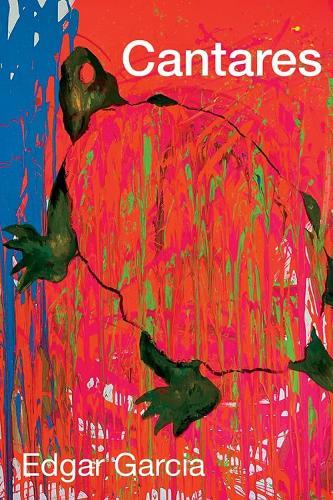
Poems and micro-essays intertwine in this poetically attuned adaptation of the mid-sixteenth century Nahuatl-language Cantares Mexicanos Cantares is a multipart engagement with the poetics and history of the colonial and Indigenous Americas, oscillating between poetry and essay in a structure of repetitions derived from Mesoamerican poetics. Edgar Garcia reimagines the Cantares Mexicanos, a sixteenth-century anthology of Nahuatl songs from Central Mexico, and brings these songs to life not just as historical documents, but as music, to give presence of thought to their historical layers and complexities. His adaptations evoke the sound and texture of the sixteenth century, blending Indigenous and Baroque traditions, exploring themes of translation, adaptation, race, and historical memory. The collection moves between poetry and scholarship—between poems and micro-essays. The essays provide commentary and historical context about the colonial soundscape of Central Mexico. At the same time, the poems emphasize the songs' sonic, spiritual, and poetic dimensions. The Cantares emerge from a time of cultural collision—after the arrival of the Castilians but still rooted in older, Indigenous worldviews. These songs are not nostalgic or idealized; they reflect crisis, survival, and creativity. Garcia's work draws inspiration from the Popol Vuh, the K'iche' Maya creation story, which begins in colonial darkness and still insists on the possibility of light. Through these adaptations, Cantares becomes a meditation on history, imagination, and the power of art to endure and create in the face of loss. [sample poem, includes poem and mini essay] CRISIS Is there dragon fruit or humming jade for little birds in shady colonnades? Is there any multitude for the displaced and dead retinues? Subdued, like mountain ruins in diamond lakes, they say: ""It sort of hurts to speak. I think I have a sore throat. You're probably sick. Mask up if you go out."" I see them thus in masks: prattling hummingbirds, barking geese, quetzals in the guise of old lords, whippoorwills in white sheets. They cover the city in search of things to eat. Ancient landscapes hardly exist any longer. They've retreated to a future time. History comes at you that way in a world made by the hands and minds of countless bodies now dead. Ghostly heralds, and it's not only humans. Our sidewalks are made of mineralized animal bone; the air is the sighed carbon dioxide of trees long gone. When the Cantares were put to paper in the mid-sixteenth century in colonial New Spain their world—the world of the Mexicas, Texcocans, Tlaxcalans, Huexotzincos, Azcapotzalcans, Tarascans, and others, many dead who took with them the knowledge of their world—must have felt absent from their cities, whose streets were then an emotional compression of memory, forgetting, imagination, and wish. Some called to the old gods, others to the new, or even both at once, while still others addressed the crisis directly with acts of magic. The songs themselves, the Cantares, were understood in this spectrum of liability. Those who helped to circulate them, singers and the patrons of singers, could be imprisoned or killed for promulgating the wrong gods and wrong magic. The songs were as potent with the touch of these gods and this magic as an idol, ceremonial bundle, or ritual act. They were like ghosts uprooted waiting to be planted again.
Full Product Details
Author: Edgar Garcia
Publisher: Wesleyan University Press
Imprint: Wesleyan University Press
ISBN: 9780819502384
ISBN 10: 0819502383
Pages: 136
Publication Date: 07 April 2026
Audience:
Professional and scholarly
,
Professional & Vocational
Format: Paperback
Publisher's Status: Forthcoming
Availability: Not yet available

This item is yet to be released. You can pre-order this item and we will dispatch it to you upon its release.
Reviews
""EDGAR GARCIA is associate professor of English at the University of Chicago, where he is affiliated with the Program in Creative Writing. He is the author of Emergency: Reading the Popol Vuh in a Time of Crisis, Skins of Columbus: A Dream Ethnography, and Signs of the Americas: A Poetics of Pictography, Hieroglyphs, and Khipu.""--Langdon Hammer, American Scholar ""Edgar Garcia comes to these songs as a poet and a literary scholar. His translations are far from literal renderings. Instead, as responses and adaptations, they attempt to capture the homeless, unsettled spirit of the Cantares by combining touches of formal, courtly diction, rhymed stanza patterns, and contemporary imagery and references. The effect is provocatively anachronistic. Rather than treat the Cantares as precious shards in a museum case, Garcia is asking: What might these poems, so many of them songs of melancholy and dejection put to paper in a period of civilizational crisis, have to say to us in our era of war and disease, in which people crowd this nation's southern border, fleeing barely imaginable poverty and violence?""--, reviewing a previous edition or volume
""Edgar Garcia comes to these songs as a poet and a literary scholar. His translations are far from literal renderings. Instead, as responses and adaptations, they attempt to capture the homeless, unsettled spirit of the Cantares by combining touches of formal, courtly diction, rhymed stanza patterns, and contemporary imagery and references. The effect is provocatively anachronistic. Rather than treat the Cantares as precious shards in a museum case, Garcia is asking: What might these poems, so many of them songs of melancholy and dejection put to paper in a period of civilizational crisis, have to say to us in our era of war and disease, in which people crowd this nation's southern border, fleeing barely imaginable poverty and violence?""--Langdon Hammer, American Scholar ""Garcia's Cantares is a rendering of the Cantares Mexicanos which opens a portal between the past of the original and the present of the translator, allowing the ancient to sing in the now. In this elucidating and stunning collection, these Nahual songs which were, in the words of Garcia, ""ghosts uprooted waiting to be planted again,"" are reincarnated in new weird, wild, and wonderful existences.""--Chloe Garcia Roberts, author of Fire Eater: A Translator's Theology ""Edgar Garcia's Cantares is a revelation of precision and transhistorical periplum. In Garcia's translative reinterpretations of the Cantares Mexicanos, sonorous parallelisms flower between Mesoamerican epistrophy and oneiric gnosis, between prose meditation and prosodic flight. Garca has given us a rangy, spellbinding Cantares for today's age.""--Jose-Luis Moctezuma, author of Black Box Syndrome ""Edgar Garcia's fourth book confirms his exceptional trajectory as a paradigm-shifting thinker and poet. Cantares is at once visionary, lyric, vexing, delightful, dream-wide, archival, cosmic and convivial, inviting its readers into a counter-catastrophe of sightline, flightline, counter-thought and counter-song.""--Joyelle McSweeney, author of The Necropastoral
Author Information
EDGAR GARCIA is associate professor of English at the University of Chicago, where he is affiliated with the Program in Creative Writing. He is the author of Emergency: Reading the Popol Vuh in a Time of Crisis, Skins of Columbus: A Dream Ethnography, and Signs of the Americas: A Poetics of Pictography, Hieroglyphs, and Khipu.