Overview
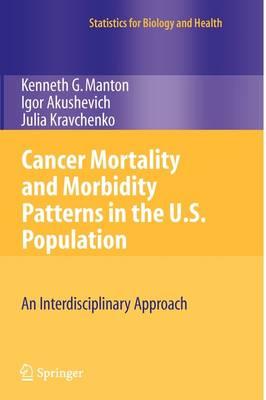
The purpose of this book is to examine the etiology of cancer in large human populations using mathematical models developed from an inter-disciplinary perspective of the population epidemiological, biodemographic, genetic and physiological basis of the mechanisms of cancer initiation and progression. In addition an investigation of how the basic mechanism of tumor initiation relates to general processes of senescence and to other major chronic diseases (e.g., heart disease and stroke) will be conducted.
Full Product Details
Author: K.G. Manton ,
Igor Akushevich ,
Julia Kravchenko
Publisher: Springer-Verlag New York Inc.
Imprint: Springer-Verlag New York Inc.
Edition: 1st ed. Softcover of orig. ed. 2009
Dimensions:
Width: 15.50cm
, Height: 2.40cm
, Length: 23.50cm
Weight: 0.718kg
ISBN: 9781441926807
ISBN 10: 1441926801
Pages: 455
Publication Date: 29 November 2010
Audience:
Professional and scholarly
,
Professional & Vocational
Format: Paperback
Publisher's Status: Active
Availability: Out of print, replaced by POD

We will order this item for you from a manufatured on demand supplier.
Reviews
The description and modeling of cancer mortality and morbidity deserve this important book. Several facets of the epidemiology of cancer are explored and documented. After a general assessment of the presence of cancer in the U.S. population !the heart of the book focuses on the methods for analyzing cancer, notably in age, time, race, and space. !There is a useful glossary of medical and statistical terms. !This book is essential not only to modelers of cancer mortality and morbidity, but it also serves as a good entry to anyone interested in classical tools of demographic epidemiology. (Mathematical Population Studies, 17:65-66, 2010) The title is no lie: this is an interdisciplinary book from cover to cover. Its aim is to provide a broad education to a wide-ranging audience!on some of the tools used in cancer studies and some of those studies' results. The authors have different areas of expertise and have worked to make sure that the book continually reflects all relevant disciplines. There are chapters that are primarily about the tools (mathematical and statistical models, both on a cellular and on a population level) and those that are primarily about the results (e.g., known risk factors, observed trends, and prevention strategies), but both types of chapters contain something from the other areas. Furthermore, these chapter s are intermingled, rather that segregated into two parts, emphasizing to me that the tools and the results are both just parts of the whole. Chapters where models are described do not shy away from using equations, including vector notation, to present the models, but the mathematical details of their derivation and analysis are appropriately omitted. Numerous plots, figures, and tables show results of analyses, and interpretations are given that are medical in nature but again not excessively technical. A 40-page glossary at the end defines both mathematical and medical terms in a relatively plain language. I believe that this book would be useful as an introduction to cancer studies for many people with expertise in one but not all relevant areas. It also serves as a summary of what is known about cancer so far! (Biometrics, Summer 2009, 65, 1001)
The description and modeling of cancer mortality and morbidity deserve this important book. Several facets of the epidemiology of cancer are explored and documented. After a general assessment of the presence of cancer in the U.S. population !the heart of the book focuses on the methods for analyzing cancer, notably in age, time, race, and space. !There is a useful glossary of medical and statistical terms. !This book is essential not only to modelers of cancer mortality and morbidity, but it also serves as a good entry to anyone interested in classical tools of demographic epidemiology. (Mathematical Population Studies, 17:65-66, 2010) The title is no lie: this is an interdisciplinary book from cover to cover. Its aim is to provide a broad education to a wide-ranging audience!on some of the tools used in cancer studies and some of those studies' results. The authors have different areas of expertise and have worked to make sure that the book continually reflects all relevant disciplines. There are chapters that are primarily about the tools (mathematical and statistical models, both on a cellular and on a population level) and those that are primarily about the results (e.g., known risk factors, observed trends, and prevention strategies), but both types of chapters contain something from the other areas. Furthermore, these chapter s are intermingled, rather that segregated into two parts, emphasizing to me that the tools and the results are both just parts of the whole. Chapters where models are described do not shy away from using equations, including vector notation, to present the models, but the mathematical details of their derivation and analysis are appropriately omitted. Numerous plots, figures, and tables show results of analyses, and interpretations are given that are medical in nature but again not excessively technical. A 40-page glossary at the end defines both mathematical and medical terms in a relatively plain language. I believe that this book would be useful as an introduction to cancer studies for many people with expertise in one but not all relevant areas. It also serves as a summary of what is known about cancer so far! (Biometrics, Summer 2009, 65, 1001)