Full Product Details
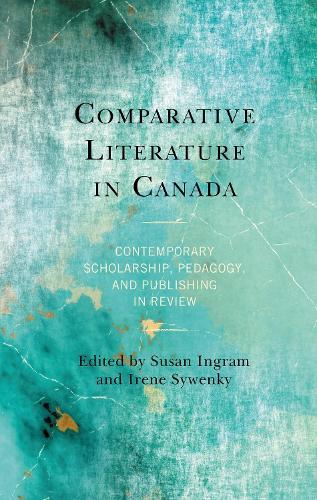
Author: Susan Ingram ,
Irene Sywenky ,
Karin Beeler ,
Stan Beeler
Publisher: Bloomsbury Publishing Plc
Imprint: Lexington Books
Dimensions:
Width: 16.00cm
, Height: 2.60cm
, Length: 23.10cm
Weight: 0.585kg
ISBN: 9781793611840
ISBN 10: 179361184
Pages: 274
Publication Date: 05 November 2019
Audience:
Professional and scholarly
,
Professional & Vocational
Format: Hardback
Publisher's Status: Active
Availability: Manufactured on demand

We will order this item for you from a manufactured on demand supplier.
Reviews
Comparative analysis provides insights not only into literatures, but also into the distinct institutional histories and configurations within and between countries. Canadian Comparative Literature presents a wealth of information on everything unique to complit in Canada. From its number of B.A.-granting programs, to pioneering comparisons of settler-colonial with Indigenous literatures, to experiments with alternative forms of critical composition, this volume reveals the many reasons we have to pay increased attention to the work of Canadian comparatists.--Thomas O. Beebee, Penn State University This comprehensive and well-organized volume is a must-read for all scholars of comparative literature around the world. It presents a very strong case for Canadian comparative literature, indeed all comparative literature, in its focus on the problematics of multilingualism and multiculturalism, critical theory, indigenous and settler colonial writing, and its continental and hemispheric orientation, showing a path forward for a comparative study of literature with the potential to decolonize mainstream literary studies. Its criticism of U.S.-dominant comparative literature is trenchant and timely, as is its reflections on the pedagogical and institutional practices of comparative literature in the digital age. To read this book in juxtaposition with similar books from the U.S. is to be reminded of how US-centric and English-centric much of American Comparative Literature has been. I recommend this to those soul-searching American comparatists and to all other comparatists around the world.--Shu-mei Shih, University of California, Los Angeles; University of Hong Kong A revelation. These eye-opening essays showcase fresh, distinctively Canadian perspectives on translation and the plurilingual present, on the linked crises of the humanities, graduate education, scholarly publication and libraries. The volume reenvisions our discipline, Canadian-style, as staunchly plurilingual, in sustained dialogue with multicultural experience, reflecting postcolonial perspectives, and committed to restorative justice. Compulsory reading for all comparatists, especially those below the 49th parallel.--Katie Trumpener, Yale University
Comparative analysis provides insights not only into literatures, but also into the distinct institutional histories and configurations within and between countries. Canadian Comparative Literature presents a wealth of information on everything unique to complit in Canada. From its number of B.A.-granting programs, to pioneering comparisons of settler-colonial with Indigenous literatures, to experiments with alternative forms of critical composition, this volume reveals the many reasons we have to pay increased attention to the work of Canadian comparatists.--Thomas O. Beebee, Penn State University A revelation. These eye-opening essays showcase fresh, distinctively Canadian perspectives on translation and the plurilingual present, on the linked crises of the humanities, graduate education, scholarly publication and libraries. The volume reenvisions our discipline, Canadian-style, as staunchly plurilingual, in sustained dialogue with multicultural experience, reflecting postcolonial perspectives, and committed to restorative justice. Compulsory reading for all comparatists, especially those below the 49th parallel.--Katie Trumpener, Yale University This comprehensive and well-organized volume is a must-read for all scholars of comparative literature around the world. It presents a very strong case for Canadian comparative literature, indeed all comparative literature, in its focus on the problematics of multilingualism and multiculturalism, critical theory, indigenous and settler colonial writing, and its continental and hemispheric orientation, showing a path forward for a comparative study of literature with the potential to decolonize mainstream literary studies. Its criticism of U.S.-dominant comparative literature is trenchant and timely, as is its reflections on the pedagogical and institutional practices of comparative literature in the digital age. To read this book in juxtaposition with similar books from the U.S. is to be reminded of how US-centric and English-centric much of American Comparative Literature has been. I recommend this to those soul-searching American comparatists and to all other comparatists around the world.--Shu-mei Shih, University of California, Los Angeles; University of Hong Kong
This comprehensive and well-organized volume is a must-read for all scholars of comparative literature around the world. It presents a very strong case for Canadian comparative literature, indeed all comparative literature, in its focus on the problematics of multilingualism and multiculturalism, critical theory, indigenous and settler colonial writing, and its continental and hemispheric orientation, showing a path forward for a comparative study of literature with the potential to decolonize mainstream literary studies. Its criticism of U.S.-dominant comparative literature is trenchant and timely, as is its reflections on the pedagogical and institutional practices of comparative literature in the digital age. To read this book in juxtaposition with similar books from the U.S. is to be reminded of how US-centric and English-centric much of American Comparative Literature has been. I recommend this to those soul-searching American comparatists and to all other comparatists around the world.--Shu-mei Shih, University of California, Los Angeles; University of Hong Kong A revelation. These eye-opening essays showcase fresh, distinctively Canadian perspectives on translation and the plurilingual present, on the linked crises of the humanities, graduate education, scholarly publication and libraries. The volume reenvisions our discipline, Canadian-style, as staunchly plurilingual, in sustained dialogue with multicultural experience, reflecting postcolonial perspectives, and committed to restorative justice. Compulsory reading for all comparatists, especially those below the 49th parallel.--Katie Trumpener, Yale University Comparative analysis provides insights not only into literatures, but also into the distinct institutional histories and configurations within and between countries. Canadian Comparative Literature presents a wealth of information on everything unique to complit in Canada. From its number of B.A.-granting programs, to pioneering comparisons of settler-colonial with Indigenous literatures, to experiments with alternative forms of critical composition, this volume reveals the many reasons we have to pay increased attention to the work of Canadian comparatists. --Thomas O. Beebee, Penn State University
A revelation. These eye-opening essays showcase fresh, distinctively Canadian perspectives on translation and the plurilingual present, on the linked crises of the humanities, graduate education, scholarly publication and libraries. The volume reenvisions our discipline, Canadian-style, as staunchly plurilingual, in sustained dialogue with multicultural experience, reflecting postcolonial perspectives, and committed to restorative justice. Compulsory reading for all comparatists, especially those below the 49th parallel.--Katie Trumpener, Yale University This comprehensive and well-organized volume is a must-read for all scholars of comparative literature around the world. It presents a very strong case for Canadian comparative literature, indeed all comparative literature, in its focus on the problematics of multilingualism and multiculturalism, critical theory, indigenous and settler colonial writing, and its continental and hemispheric orientation, showing a path forward for a comparative study of literature with the potential to decolonize mainstream literary studies. Its criticism of U.S.-dominant comparative literature is trenchant and timely, as is its reflections on the pedagogical and institutional practices of comparative literature in the digital age. To read this book in juxtaposition with similar books from the U.S. is to be reminded of how US-centric and English-centric much of American Comparative Literature has been. I recommend this to those soul-searching American comparatists and to all other comparatists around the world.--Shu-mei Shih, University of California, Los Angeles; University of Hong Kong Comparative analysis provides insights not only into literatures, but also into the distinct institutional histories and configurations within and between countries. Canadian Comparative Literature presents a wealth of information on everything unique to complit in Canada. From its number of B.A.-granting programs, to pioneering comparisons of settler-colonial with Indigenous literatures, to experiments with alternative forms of critical composition, this volume reveals the many reasons we have to pay increased attention to the work of Canadian comparatists.--Thomas O. Beebee, Penn State University
Author Information
Susan Ingram is associate professor in the Department of Humanities at York University. Irene Sywenky is associate professor of comparative literature at the University of Alberta.