Overview
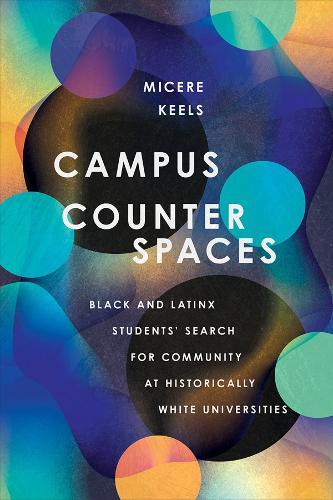
Frustrated with the flood of news articles and opinion pieces that were skeptical of minority students' ""imagined"" campus microaggressions, Micere Keels, a professor of comparative human development, set out to provide a detailed account of how racial-ethnic identity structures Black and Latinx students' college transition experiences. Tracking a cohort of more than five hundred Black and Latinx students since they enrolled at five historically white colleges and universities in the fall of 2013 Campus Counterspaces finds that these students were not asking to be protected from new ideas. Instead, they relished exposure to new ideas, wanted to be intellectually challenged, and wanted to grow. However, Keels argues, they were asking for access to counterspaces-safe spaces that enable radical growth. They wanted counterspaces where they could go beyond basic conversations about whether racism and discrimination still exist. They wanted time in counterspaces with likeminded others where they could simultaneously validate and challenge stereotypical representations of their marginalized identities and develop new counter narratives of those identities. In this critique of how universities have responded to the challenges these students face, Keels offers a way forward that goes beyond making diversity statements to taking diversity actions.
Full Product Details
Author: Micere Keels
Publisher: Cornell University Press
Imprint: Cornell University Press
Dimensions:
Width: 15.20cm
, Height: 1.80cm
, Length: 22.90cm
Weight: 0.454kg
ISBN: 9781501747908
ISBN 10: 1501747908
Pages: 240
Publication Date: 15 January 2020
Recommended Age: From 18 years
Audience:
General/trade
,
General
Format: Paperback
Publisher's Status: Active
Availability: To order

Stock availability from the supplier is unknown. We will order it for you and ship this item to you once it is received by us.
Reviews
The authors bring an important, specific focus to a number of populations that are often left less considered. The book is well written and engaging, drawing on data that were clearly gathered with great care-the interviews are moving, intimate, and reflect a crucial rapport and trust. -- Elizabeth Lee, Assistant Professor in the Sociology Department at Ohio University, author of Class and<I> Campus Life</I> This is an excellent book that offers a significant contribution to the existing literature. A sense of the trajectory of Latinx and Black students' transitions is a new contribution that is needed in the field. -- Rachelle Winkle-Wagner, Associate Professor in the Department of Educational Leadership and Policy Analysis at the University of Wisconsin-Madison, author of <I>The Unchosen Me</I>
This is an excellent book that offers a significant contribution to the existing literature. A sense of the trajectory of Latinx and Black students' transitions is a new contribution that is needed in the field. -- Rachelle Winkle-Wagner, Associate Professor in the Department of Educational Leadership and Policy Analysis at the University of Wisconsin-Madison, author of <I>The Unchosen Me</I> The authors bring an important, specific focus to a number of populations that are often left less considered. The book is well written and engaging, drawing on data that were clearly gathered with great care-the interviews are moving, intimate, and reflect a crucial rapport and trust. -- Elizabeth Lee, Assistant Professor in the Sociology Department at Ohio University, author of Class and<I> Campus Life</I>
Through her exploration of counterspaces specifically in the context of Black and Latinx student experiences, Keels offers realistic steps that practitioners can implement both within historically White institutions and across them. Within Keels' framework, there is incredible potential for discussions on how colleges might re-examine current diversity policies and practices in the face of current social unrest across American institutions. (Journal of Higher Education Policy and Management)
Through her exploration of counterspaces specifically in the context of Black and Latinx student experiences, Keels offers realistic steps that practitioners can implement both within historically White institutions and across them. Within Keels' framework, there is incredible potential for discussions on how colleges might re-examine current diversity policies and practices in the face of current social unrest across American institutions. * Journal of Higher Education Policy and Management *
Author Information
Micere Keels is Associate Professor in Comparative Human Development at the University of Chicago. She is also the founding director of the Trauma Responsive Educational Practices project.