|
|
|||
|
||||
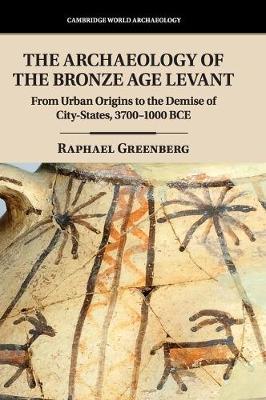
OverviewFull Product DetailsAuthor: Raphael Greenberg (Tel-Aviv University)Publisher: Cambridge University Press Imprint: Cambridge University Press Dimensions: Width: 18.30cm , Height: 2.30cm , Length: 25.90cm Weight: 1.030kg ISBN: 9781107111462ISBN 10: 1107111463 Pages: 426 Publication Date: 07 November 2019 Audience: College/higher education , Professional and scholarly , Tertiary & Higher Education , Professional & Vocational Format: Hardback Publisher's Status: Active Availability: Manufactured on demand We will order this item for you from a manufactured on demand supplier. Table of Contents1. Introduction; 2. Villages and the growth of social power in the Early Bronze I; 3. Urbanism and its demise in the Early Bronze II and III; 4. The Intermediate Bronze Age – entering the orbit of Syria; 5. Villages, manors, and integrated city-states of the Middle Bronze Age; 6. The Late Bronze Age – under Egypt's heel; 7. Conclusion – the legacy of the Bronze Age Levant.Reviews'... It is the geographic characteristics of this region that shaped the Levant and its cultures, creating a uniquely Levantine idiom. Its diverse landscapes, microregions and climates, and lack of unifying geographic features tended to suppress the ability to accumulate great amounts of surplus or wealth (which, in turn, would have required the development of large bureaucracies). These tendencies also encouraged exploitation of the region by imperial powers. The result is the resilience, creativity, and flexibility to adapt to new situations as narrated in Greenberg's masterly, nuanced, and engaging account of the Bronze Age Levant.' Ann E. Killibrew, Journal of Eastern Mediterranean Archaeology and Heritage Studies '… It is the geographic characteristics of this region that shaped the Levant and its cultures, creating a uniquely Levantine idiom. Its diverse landscapes, microregions and climates, and lack of unifying geographic features tended to suppress the ability to accumulate great amounts of surplus or wealth (which, in turn, would have required the development of large bureaucracies). These tendencies also encouraged exploitation of the region by imperial powers. The result is the resilience, creativity, and flexibility to adapt to new situations as narrated in Greenberg's masterly, nuanced, and engaging account of the Bronze Age Levant.' Ann E. Killibrew, Journal of Eastern Mediterranean Archaeology and Heritage Studies Author InformationRaphael Greenberg is associate professor of archaeology at Tel-Aviv University. Specializing in the study of early urban formations, economies and institutions, he currently heads the Tel Bet Yerah excavations near the Sea of Galilee and is co-founder of Emek Shaveh - a non-profit organization that monitors the political role of archaeology in Jerusalem and beyond. Tab Content 6Author Website:Countries AvailableAll regions |
||||