|
|
|||
|
||||
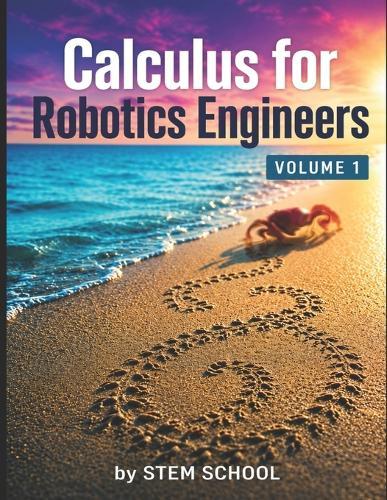
OverviewRobots move, react, and adapt-but behind every smooth motion lies powerful mathematics. This book opens the door to calculus in a way that feels practical, intuitive, and directly connected to real robotic systems. Calculus for Robotics Engineers introduces calculus as the practical engineering language of changing systems, showing how robots move, sense, calculate, and respond in the real world. This volume builds the foundation from motion functions to velocity, differentiation, acceleration, dynamics, integration, and distance estimation. Students learn how position changes into velocity, how velocity changes into acceleration, how acceleration creates real force and torque demands, and how integration converts velocity data into distance, angle, and motion estimates. Through mobile robots, robotic arms, drones, conveyors, encoders, sensors, and embedded control examples, the book connects mathematics directly with machine behavior, motor selection, odometry, sensor error, payload effects, and practical troubleshooting. This volume is designed to help engineering students understand calculus not as abstract theory, but as a working tool for designing, analyzing, testing, and improving real robotic systems. If you want to understand how robots think in motion-and build the confidence to apply calculus in real engineering scenarios-this book provides a clear and engaging path forward. Full Product DetailsAuthor: Stem SchoolPublisher: Independently Published Imprint: Independently Published Volume: 4 Dimensions: Width: 21.60cm , Height: 1.30cm , Length: 27.90cm Weight: 0.576kg ISBN: 9798196598357Pages: 244 Publication Date: 12 May 2026 Audience: General/trade , General Format: Paperback Publisher's Status: Active Availability: Available To Order We have confirmation that this item is in stock with the supplier. It will be ordered in for you and dispatched immediately. Table of ContentsReviewsAuthor InformationTab Content 6Author Website:Countries AvailableAll regions |
||||