Overview
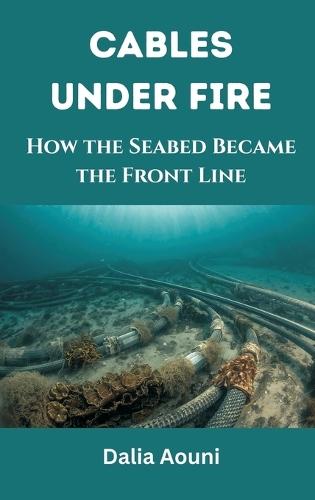
Most people picture the internet as signals in the air, not glass threads on the seabed. Yet those hidden lines decide whether your payments clear, your calls connect, and your governments coordinate. When they are damaged, by accident or design, there is no obvious backup and very little public debate. This book walks you through that neglected world of submarine cables and undersea internet infrastructure. It explains how routes are chosen, why landing stations cluster where they do, and how a single cut can ripple across borders. Drawing on the language of critical national infrastructure, it shows how cables have quietly become frontline assets in an era of rivalry, coercion and digital geopolitics. Along the way, you will learn to read a global cable map with a more critical eye and to spot where your own life touches these fibres. For readers interested in defence, technology policy, risk, or simply how things really work, this is an infrastructure security book with its attention firmly on the physical layer. It unpacks maritime security and data, explores the logic of internet resilience, and sets out how subsea cable sabotage fits into wider patterns of pressure and signalling. By the end, you will not think of the seabed as empty space again. You will see it as a crowded, contested arena whose quiet stability underpins almost everything else.
Full Product Details
Author: Dalia Aouni
Publisher: Vij Books
Imprint: Vij Books
Dimensions:
Width: 15.20cm
, Height: 1.90cm
, Length: 22.90cm
Weight: 0.517kg
ISBN: 9788199802643
ISBN 10: 8199802642
Pages: 260
Publication Date: 10 March 2026
Audience:
General/trade
,
General
Format: Hardback
Publisher's Status: Active
Availability: In Print

This item will be ordered in for you from one of our suppliers. Upon receipt, we will promptly dispatch it out to you. For in store availability, please contact us.
Author Information
Dalia Aouni writes at the point where technology, security and everyday life intersect. Her work focuses on the physical foundations of the digital world, from cable routes and landing stations to ship movements and repair logistics. Rather than treating connectivity as an abstract cloud, she is interested in the pipes, fibres and contracts that make it possible, and in how they respond under political and environmental stress. Growing up around port cities that once hosted telegraph lines and early radio stations, she developed a lasting curiosity about how empires and alliances shape communications infrastructure. That historical thread runs through her writing, linking nineteenth-century cables and codebooks to today's debates over national security and data sovereignty. In this book, she sets out to give readers clear language and practical mental models for thinking about seabed networks: who builds them, who relies on them and who might seek to disrupt them. Her aim is not to alarm, but to help readers see an invisible system clearly enough to ask better questions about its future.