Overview
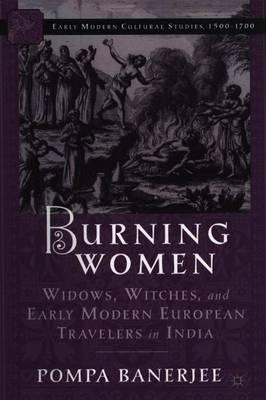
Pompa Banerjee explores early modern accounts and images of burning women bringing together travellers' accounts on sati in India with the burning of witches in EM Europe, a link that contemporary observers studiously repressed. Ultimately, she's interested in how these practices speak to issues of the punishment of women and ideological debates about the proper behaviour of wives and widows.
Full Product Details
Author: P. Banerjee
Publisher: Palgrave USA
Imprint: Palgrave Macmillan
Edition: 2003 ed.
Dimensions:
Width: 14.00cm
, Height: 2.20cm
, Length: 21.60cm
Weight: 0.528kg
ISBN: 9781403960184
ISBN 10: 1403960186
Pages: 278
Publication Date: 06 February 2003
Audience:
College/higher education
,
Professional and scholarly
,
Postgraduate, Research & Scholarly
,
Professional & Vocational
Format: Hardback
Publisher's Status: Active
Availability: Out of print, replaced by POD

We will order this item for you from a manufatured on demand supplier.
Reviews
Burning Women makes an important contribution to the fields of early modern studies, post-colonial theory, and gender studies. Banerjee's approach is novel and innovative--one that reveals the Eurocentric limits of the existing early modern archive. Her analysis of the overlapping discourses of Hindu widow burning and European witchburning and ideologies of wifely conduct within European representations offers a fresh and original perspective on the ideological struggles of the period. --Jyotsna G. Singh, Michigan State University <br> This lucid and engaging study of sixteenth and seventeenth-century European accounts of widow-burning in India begins by asking a provocative question: why did these writers fail to connect widowburning in India with witch-burning in Europe? Taking this silence as a starting point for her probing analysis, Pompa Banerjee traces the diverse cultural assumptions that made it possible for Europeans to read the spectacle of widowburning as the produc
Burning Women makes an important contribution to the fields of early modern studies, post-colonial theory, and gender studies. Banerjee's approach is novel and innovative--one that reveals the Eurocentric limits of the existing early modern archive. Her analysis of the overlapping discourses of Hindu widow burning and European witchburning and ideologies of wifely conduct within European representations offers a fresh and original perspective on the ideological struggles of the period. --Jyotsna G. Singh, Michigan State University This lucid and engaging study of sixteenth and seventeenth-century European accounts of widow-burning in India begins by asking a provocative question: why did these writers fail to connect widowburning in India with witch-burning in Europe? Taking this silence as a starting point for her probing analysis, Pompa Banerjee traces the diverse cultural assumptions that made it possible for Europeans to read the spectacle of widowburning as the product of an alien, possibly devil-worshipping culture and as a compelling display of heroic self-sacrifice. Burning Women introduces the reader to a rich array of fascinating materials and expands our notions of the boundaries of early modern studies. --Deborah Willis, University of California, Riverside
Burning Women makes an important contribution to the fields of early modern studies, post-colonial theory, and gender studies. Banerjee's approach is novel and innovative--one that reveals the Eurocentric limits of the existing early modern archive. Her analysis of the overlapping discourses of Hindu widow burning and European witchburning and ideologies of wifely conduct within European representations offers a fresh and original perspective on the ideological struggles of the period. --Jyotsna G. Singh, Michigan State University <br> This lucid and engaging study of sixteenth and seventeenth-century European accounts of widow-burning in India begins by asking a provocative question: why did these writers fail to connect widowburning in India with witch-burning in Europe? Taking this silence as a starting point for her probing analysis, Pompa Banerjee traces the diverse cultural assumptions that made it possible for Europeans to read the spectacle of widowburning as the product of
Author Information
POMPA BANERJEE is Assistant Professor of English at University of Colorado, Denver and author of a number of articles on east-west connections in the early modern period.