Overview
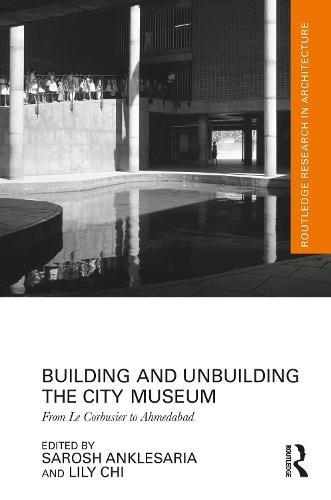
Sanskar Kendra stands as one of Le Corbusier's lesser-known architectural achievements, a cultural center designed for post-independence Ahmedabad that now faces an uncertain future. This book examines Sanskar Kendra both as a physical artifact and as a site of broader cultural debates. Originally conceived as a Citizens' Cultural Center to serve India's emerging modern society, the building was intentionally designed as an alternative to colonial and European museum models. Today, however, the abandoned structure seems increasingly disconnected from the rapidly changing city growing around it. Through detailed analysis of the project's ambitious beginnings and the debates surrounding its potential demolition, the collection explores themes ranging from concrete construction techniques to questions about who gets included—and excluded—from public cultural spaces. The essays bring together local and international perspectives on pressing contemporary issues: how we care for and maintain our built environments, what it means to create truly participatory public spaces in an age of market-driven development, and how design can serve as a tool for social change. Two of the chapters take a visual approach to these questions. Award-winning architectural photographer Randhir Singh contributes a photo essay that captures the building's current state, while another chapter presents speculative architectural designs that imagine alternative futures for Sanskar Kendra. This book concludes with renowned architect B.V. Doshi's reflections on the architect's responsibility to society. This book will appeal to scholars, educators, and students working in architectural theory, history, and design education. It's also valuable for readers interested in visual culture, urban studies, museum and curatorial studies, and South Asian studies.
Full Product Details
Author: Sarosh Anklesaria ,
Lily Chi
Publisher: Taylor & Francis Ltd
Imprint: Routledge
ISBN: 9781032973586
ISBN 10: 1032973587
Pages: 250
Publication Date: 02 April 2026
Audience:
College/higher education
,
Professional and scholarly
,
Tertiary & Higher Education
,
Professional & Vocational
Format: Hardback
Publisher's Status: Forthcoming
Availability: Not yet available

This item is yet to be released. You can pre-order this item and we will dispatch it to you upon its release.
Reviews
This volume of essays brings into critical focus the future of twentieth-century modern architecture in India. The essays illustrate the complex relationships between tangible and intangible realities that shape the spirit of our cities and inform our understanding of Indian urbanism. Brinda Somaya, Principal Architect, Somaya Sampat; A.D. White Professor-at-Large Emerita, Cornell University; Founder Trustee: The HECAR Foundation This book on Le Corbusier’s Sanskar Kala Kendra, more generally known as the Museum of Knowledge, in Ahmedabad, India, is a rare set piece of the type of interdisciplinary scholarship that brings into conversation architecture’s deeply situated nature. Mark Jarzombek, Professor of the History and Theory of Architecture, MIT Positioning Sanskar Kala Kendra metaphorically, the book expansively unpacks the disjunctures that aesthetic modernity as a proposition grappled with in a landscape where social and economic modernization remains an incomplete project—one now overrun by the tyranny of images circulating globally. Rahul Mehrotra, John T. Dunlop Professor in Housing and Urbanization, Harvard University Graduate School of Design A building as an indeterminate discourse, an architect as a provocateur, and a collection of essays thickening the brew, Building and Unbuilding the City Museum will become a critical compass in navigating the life of a civic building in shifting ideologies. Kazi Khaleed Ashraf, Architect and architectural historian A searing account of the complex process through which modern architecture is evolving into a form of archaeological knowledge. Sarosh Anklesaria and Lily Chi present a powerful framework that challenges us to reconsider whether—and how—this archaeological knowledge can be made relevant to the communities of the future. Farhan Karim, Arizona State University
This volume of essays brings into critical focus the future of twentieth-century modern architecture in India. The essays illustrate the complex relationships between tangible and intangible realities that shape the spirit of our cities and inform our understanding of Indian urbanism. Brinda Somaya, Principal Architect, Somaya Sampat; A.D. White Professor-at-Large Emerita, Cornell University; Founder Trustee: The HECAR Foundation. This book on Le Corbusier’s Sanskar Kala Kendra, more generally known as the Museum of Knowledge, in Ahmedabad, India, is a rare set piece of the type of interdisciplinary scholarship that brings into conversation architecture’s deeply situated nature. Mark Jarzombek, Professor of the History and Theory of Architecture, MIT. Positioning Sanskar Kala Kendra metaphorically, the book expansively unpacks the disjunctures that aesthetic modernity as a proposition grappled with in a landscape where social and economic modernization remains an incomplete project—one now overrun by the tyranny of images circulating globally. Rahul Mehrotra, John T. Dunlop Professor in Housing and Urbanization, Harvard University Graduate School of Design. A building as an indeterminate discourse, an architect as a provocateur, and a collection of essays thickening the brew, Building and Unbuilding the City Museum will become a critical compass in navigating the life of a civic building in shifting ideologies. Kazi Khaleed Ashraf, Architect and architectural historian. A searing account of the complex process through which modern architecture is evolving into a form of archaeological knowledge. Sarosh Ankelsaria and Lily Chi present a powerful framework that challenges us to reconsider whether—and how—this archaeological knowledge can be made relevant to the communities of the future. Farhan Karim, Arizona State University.
Author Information
Sarosh Anklesaria is an Associate Teaching Professor and Track Chair of Carnegie Mellon University’s Master of Architecture program. Educated at CEPT University, Ahmedabad (Dip.Arch.), and Cornell University (M.Arch.), he has practiced in the United States, Switzerland, and India. His research and design advance architecture at the intersection of spatial justice and ecology in the built environment—recent projects address aging modernism in South Asia and architectures of just transitions in post- and deindustrializing contexts. Lily Chi is an Associate Professor of Architectural Design, Theory, and History at Cornell University. She received her B.Arch. in Canada and her M.Phil. and Ph.D. in Architectural History and Theory at Cambridge and McGill Universities. Her current work examines the agency of built space as posed in post-war efforts to counter the effects of industrial capitalism on the urban everyday. Chi is co-editor of Seeding Urban Transformation (2026).