Overview
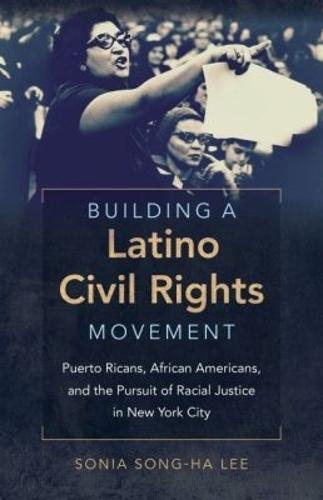
In the first book-length history of Puerto Rican civil rights in New York City, Sonia Lee traces the rise and fall of an uneasy coalition between Puerto Rican and African American activists from the 1950s through the 1970s. Previous work has tended to see blacks and Latinos as either naturally unified as """"people of color"""" or irreconcilably at odds as two competing minorities. Lee demonstrates instead that Puerto Ricans and African Americans in New York City shaped the complex and shifting meanings of """"Puerto Rican-ness"""" and """"blackness"""" through political activism. African American and Puerto Rican New Yorkers came to see themselves as minorities joined in the civil rights struggle, the War on Poverty, and the Black Power movement - until white backlash and internal class divisions helped break the coalition, remaking """"Hispanicity"""" as an ethnic identity that was mutually exclusive from """"blackness."""" Drawing on extensive archival research and oral history interviews, Lee vividly portrays this crucial chapter in postwar New York, revealing the permeability of boundaries between African American and Puerto Rican communities.
Full Product Details
Author: Sonia Song-Ha Lee
Publisher: The University of North Carolina Press
Imprint: The University of North Carolina Press
Dimensions:
Width: 15.60cm
, Height: 2.40cm
, Length: 23.40cm
Weight: 0.528kg
ISBN: 9781469629803
ISBN 10: 1469629801
Pages: 352
Publication Date: 30 July 2016
Audience:
Professional and scholarly
,
Professional & Vocational
Format: Paperback
Publisher's Status: Active
Availability: Manufactured on demand

We will order this item for you from a manufactured on demand supplier.
Reviews
Lee shows that working-class communities have the power and potential to come together and challenge the terms of their political affiliations and social circumstances.... She decisively rewrites the history of the decade and reminds us that the so-called black-white binary has been a means of social control rather than ethnographic description.-- Journal of African American History
[A] pathbreaking history of Puerto Rican activism in New York.--Choice Lee shows that working-class communities have the power and potential to come together and challenge the terms of their political affiliations and social circumstances.... She decisively rewrites the history of the decade and reminds us that the so-called black-white binary has been a means of social control rather than ethnographic description.--Journal of African American History Offers a long overdue look at Puerto Ricans' fight for civil rights in mid-century New York City.--American Historical Review An important contribution to the emerging scholarship on the long civil rights movement, as well as to more nuanced treatments of the War on Poverty.--Journal of American History
Lee shows that working class communities have the power and potential to come together and challenge the terms of their political affiliations and social circumstances ... she decisively rewrites the history of the decade and reminds us that the so-called black-white binary has been a means of social control rather than ethnographic description.-- Journal of African American History
An important contribution to the emerging scholarship on the long civil rights movement, as well as to more nuanced treatments of the War on Poverty.--Journal of American History Lee shows that working-class communities have the power and potential to come together and challenge the terms of their political affiliations and social circumstances.... She decisively rewrites the history of the decade and reminds us that the so-called black-white binary has been a means of social control rather than ethnographic description.--Journal of African American History Offers a long overdue look at Puerto Ricans' fight for civil rights in mid-century New York City.--American Historical Review [A] pathbreaking history of Puerto Rican activism in New York.--Choice
Author Information
Sonia Song-Ha Lee is assistant professor of history at Washington University in St. Louis, USA.