Overview
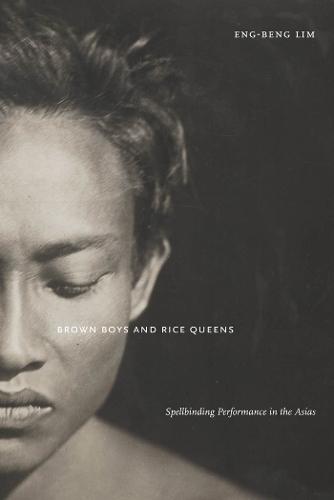
Honorable Mention for the 2015 Cultural Studies Best Book presented by the Association of Asian American Studies Winner of the 2013 CLAGS Fellowship Award for Best First Book Project in LGBT Studies A transnational study of Asian performance shaped by the homoerotics of orientalism, Brown Boys and Rice Queens focuses on the relationship between the white man and the native boy. Eng-Beng Lim unpacks this as the central trope for understanding colonial and cultural encounters in 20th and 21st century Asia and its diaspora. Using the native boy as a critical guide, Lim formulates alternative readings of a traditional Balinese ritual, postcolonial Anglophone theatre in Singapore, and performance art in Asian America. Tracing the transnational formation of the native boy as racial fetish object across the last century, Lim follows this figure as he is passed from the hands of the colonial empire to the postcolonial nation-state to neoliberal globalization. Read through such figurations, the traffic in native boys among white men serves as an allegory of an infantilized and emasculated Asia, subordinate before colonial whiteness and modernity. Pushing further, Lim addresses the critical paradox of this entrenched relationship that resides even within queer theory itself by formulating critical interventions around ""Asian performance.""
Full Product Details
Author: Eng-Beng Lim
Publisher: New York University Press
Imprint: New York University Press
Dimensions:
Width: 15.30cm
, Height: 1.90cm
, Length: 22.90cm
Weight: 0.517kg
ISBN: 9780814760895
ISBN 10: 0814760899
Pages: 255
Publication Date: 22 November 2013
Audience:
College/higher education
,
Postgraduate, Research & Scholarly
Format: Hardback
Publisher's Status: Active
Availability: Manufactured on demand

We will order this item for you from a manufactured on demand supplier.
Reviews
Brown Boys and Rice Queens skillfully exfoliates the layers of erotic, political, and cultural investments in inter-racial queer intimacies between the Western desiring male subject and the nubile Oriental boy figure brought about by colonial and diasporic encounters between Asia and the West. Lim elegantly dissects the spell-binding cultural effects of this dyad and conjures new critical perspectives about race, sexuality, and performance. A finely crafted, meticulously analyzed, and intensely provocative multi-sited research, Brown Boys and Rice Queens will be a touchstone for future works and debates in queer and performance studies. -Martin F. Manalansan IV, University of Illinois at Urbana-Champaign
Whereas most scholarship that examines this Orientalist fantasy focuses on the trope of the brown woman, Lim draws attention to the often forgotten brown boy. Lim expands upon and presses on the traditional colonial configuration of the East as an exotic, alluring locale that casts 'spells' deemed potentially seductive and also threatening to Western civility, thus requiring discipline and domination. In this respect, the majority of scholarship on the white man/Asian boy dyad has focused on the subjectivity of the colonizer. Lim, on the other hand, innovatively suggests that the dyadic encounter is mutually constitutive, where spells are cast in both directions from the East and the West. Lim shifts attention back to the Asian boy, who is typically taken as invisible and ubiquitous, in order to decipher latent legacies of colonialism still extant in queer modernity. -Amerasia Eng-Beng Lim is interested in many things, and they are all here in Brown Boys and Rice Queens ... Lim concludes that he has 'explored ... the native boy and his transmogrifications in the queer Asias attuned to Orientalism, colonial homoerotics, and dyadic performance' and that he has. Alongside Katsuhiko Suganuma's Contact Moments and Hoang Tan Nguyen's A View From the Bottom, the queer Asian male is now getting to talk back. And he is not done. -The Journal of Asian Studies Brown Boys and Rice Queens troubles the East/West binary relation that takes for granted the imperialist power of the West as absolute and the East as passive subjects to this power ... It proposes a rethinking of the meanings of native and ethnic by bridging the disparities in significance to postcolonial studies and ethnic studies. -Signs This well-organized book is a crucial addition to the growing body of scholarship on contemporary Asian performance. Lim's writing is fluid and strikes a perfect balance among personal anecdotes, archival information, and theory, which makes the book an enjoyable and an engrossing read. -Theatre Journal All in all, this book manages to cast its own spells and seductions and in its rendering of the centrality of the erotic dyad of the white man/brown boy to colonial knowledge production, Lim makes significant and indelible contributions to the histories of global performance, the Asias, queer theory and cultural colonialism. -Jack Halberstam,Emisferica Brown Boys and Rice Queens is an impressive feat that utilizes and challenges tropes in postcolonial studies, inter-Asia cultural studies, ethnic American studies, and theorizations of race and sexuality. Lim's nuanced reading exposes their blind spots and extends the theorization of these allied fields in his sophisticated analysis of Asian queer performances. This book is a significant contribution to its major fields of queer studies and performance studies. -Journal of Dramatic Theory and Criticism This book not only provides a thorough and nuanced analyses of a number of performances and movies, it also generates a new set of language for the discussion of Asian masculinity and queerness in popular culture. -International Journal of Communication Brown Boys and Rice Queens ought to be required reading for anyone working in theatre and performance studies, Asian and Asian American studies, queer studies, or at any of their complex interfaces: at once historical and theoretical; close and deep in parts of his reading, yet contextualizing and synoptic at others; charmingly playful if also soberly earnest, as he insists on what is both ludic and serious about camp, Lim manages to do what, as his book demonstrates, the most fascinating inhabitants of white man / Native boy dyad likewise accomplish: he casts a spell, and it binds. -Modern Drama Brown Boys and Rice Queens skillfully exfoliates the layers of erotic, political, and cultural investments in inter-racial queer intimacies between the Western desiring male subject and the nubile Oriental boy figure brought about by colonial and diasporic encounters between Asia and the West. Lim elegantly dissects the spell-binding cultural effects of this dyad and conjures new critical perspectives about race, sexuality, and performance. A finely crafted, meticulously analyzed, and intensely provocative multi-sited research, Brown Boys and Rice Queens will be a touchstone for future works and debates in queer and performance studies. -Martin F. Manalansan IV,University of Illinois at Urbana-Champaign
Brown Boys and Rice Queens ought to be required reading for anyone working in theatre and performance studies, Asian and Asian American studies, queer studies, or at any of their complex interfaces: at once historical and theoretical; close and deep in parts of his reading, yet contextualizing and synoptic at others; charmingly playful if also soberly earnest, as he insists on what is both ludic and serious about camp, Lim manages to do what, as his book demonstrates, the most fascinating inhabitants of white man / Native boy dyad likewise accomplish: he casts a spell, and it binds. -Modern Drama Brown Boys and Rice Queens skillfully exfoliates the layers of erotic, political, and cultural investments in inter-racial queer intimacies between the Western desiring male subject and the nubile Oriental boy figure brought about by colonial and diasporic encounters between Asia and the West. Lim elegantly dissects the spell-binding cultural effects of this dyad and conjures new critical perspectives about race, sexuality, and performance. A finely crafted, meticulously analyzed, and intensely provocative multi-sited research, Brown Boys and Rice Queens will be a touchstone for future works and debates in queer and performance studies. -Martin F. Manalansan IV,University of Illinois at Urbana-Champaign Brown Boys and Rice Queens troubles the East/West binary relation that takes for granted the imperialist power of the West as absolute and the East as passive subjects to this power ... It proposes a rethinking of the meanings of native and ethnic by bridging the disparities in significance to postcolonial studies and ethnic studies. -Signs All in all, this book manages to cast its own spells and seductions and in its rendering of the centrality of the erotic dyad of the white man/brown boy to colonial knowledge production, Lim makes significant and indelible contributions to the histories of global performance, the Asias, queer theory and cultural colonialism. -Jack Halberstam,Emisferica Brown Boys and Rice Queens is an impressive feat that utilizes and challenges tropes in postcolonial studies, inter-Asia cultural studies, ethnic American studies, and theorizations of race and sexuality. Lim's nuanced reading exposes their blind spots and extends the theorization of these allied fields in his sophisticated analysis of Asian queer performances. This book is a significant contribution to its major fields of queer studies and performance studies. -Journal of Dramatic Theory and Criticism This well-organized book is a crucial addition to the growing body of scholarship on contemporary Asian performance. Lim's writing is fluid and strikes a perfect balance among personal anecdotes, archival information, and theory, which makes the book an enjoyable and an engrossing read. -Theatre Journal Eng-Beng-Lim's Brown Boys and Rice Queens does something fresh with anthropology's usual suspects...Power relationships are finessed in a critical analysis of the racial and sexual implications of homoerotic desire between the rice queen and Asian boy coupling. -Anthropological Quarterly This book not only provides a thorough and nuanced analyses of a number of performances and movies, it also generates a new set of language for the discussion of Asian masculinity and queerness in popular culture. -International Journal of Communication Lim's book is invaluable, generatively opening spaces for survival within our field of inquiry, illuminating the already existent encounters between our disciplines, and staging the conditions that can make other encounters possible. -Women & Performance Eng-Beng Lim is interested in many things, and they are all here in Brown Boys and Rice Queens ... Lim concludes that he has 'explored ... the native boy and his transmogrifications in the queer Asias attuned to Orientalism, colonial homoerotics, and dyadic performance' and that he has. Alongside Katsuhiko Suganuma's Contact Moments and Hoang Tan Nguyen's A View From the Bottom, the queer Asian male is now getting to talk back. And he is not done. -The Journal of Asian Studies Whereas most scholarship that examines this Orientalist fantasy focuses on the trope of the brown woman, Lim draws attention to the often forgotten brown boy. Lim expands upon and presses on the traditional colonial configuration of the East as an exotic, alluring locale that casts 'spells' deemed potentially seductive and also threatening to Western civility, thus requiring discipline and domination. In this respect, the majority of scholarship on the white man/Asian boy dyad has focused on the subjectivity of the colonizer. Lim, on the other hand, innovatively suggests that the dyadic encounter is mutually constitutive, where spells are cast in both directions from the East and the West. Lim shifts attention back to the Asian boy, who is typically taken as invisible and ubiquitous, in order to decipher latent legacies of colonialism still extant in queer modernity. -Amerasia
Author Information
Eng-Beng Lim is Assistant Professor of Sexuality Studies in the Women's and Gender Studies Program at Dartmouth College.