Overview
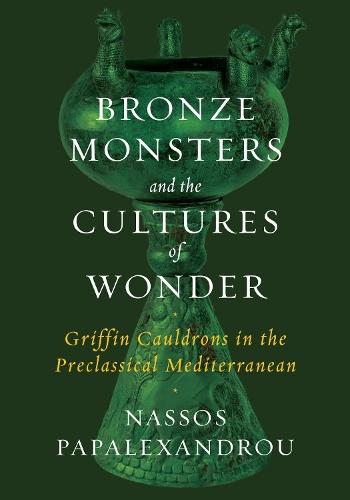
The eighth and seventh centuries BCE were a time of flourishing exchange between the Mediterranean and the Near East. One of the period's key imports to the Hellenic and Italic worlds was the image of the griffin, a mythical monster that usually possesses the body of a lion and the head of an eagle. In particular, bronze cauldrons bore griffin protomes-figurative attachments showing the neck and head of the beast. Crafted in fine detail, the protomes were made to appear full of vigor, transfixing viewers. Bronze Monsters and the Cultures of Wonder takes griffin cauldrons as case studies in the shifting material and visual universes of preclassical antiquity, arguing that they were perceived as lifelike monsters that introduced the illusion of verisimilitude to Mediterranean arts. The objects were placed in the tombs of the wealthy (Italy, Cyprus) and in sanctuaries (Greece), creating fantastical environments akin to later cabinets of curiosities. Yet griffin cauldrons were accessible only to elites, ensuring that the new experience of visuality they fostered was itself a symbol of status. Focusing on the sensory encounter of this new visuality, Nassos Papalexandrou shows how spaces made wondrous fostered novel subjectivities and social distinctions.
Full Product Details
Author: Nassos Papalexandrou
Publisher: University of Texas Press
Imprint: University of Texas Press
Dimensions:
Width: 17.80cm
, Height: 3.30cm
, Length: 25.40cm
Weight: 1.787kg
ISBN: 9781477323618
ISBN 10: 1477323619
Pages: 320
Publication Date: 23 November 2021
Audience:
Professional and scholarly
,
Professional & Vocational
Format: Hardback
Publisher's Status: Active
Availability: In Print

This item will be ordered in for you from one of our suppliers. Upon receipt, we will promptly dispatch it out to you. For in store availability, please contact us.
Reviews
Papalexandrou presents a riveting body of material, griffin cauldrons, which have never received sustained discussion as a Mediterranean-wide phenomenon of the seventh century BCE. His treatment is comprehensive, with archaeological contexts discussed in detail. In addition, he astutely looks at the depiction of cauldrons in other media and contextualizes them in terms of literary references to artwork. This is a bold and creative book, rich in its interpretations and readings. - Nathan T. Arrington, author of Ashes, Images, and Memories: The Presence of the War Dead in Fifth-Century Athens Papalexandrou has assembled a magisterial study of bronze griffin cauldrons from the early Iron Age. Approaching the cauldrons as wondrous marvels, he recreates the ancient sensory experience of encountering these magnificent bronze creations. While the griffin cauldrons have been well studied with respect to typology and dating, this book offers a sweeping set of interpretations that enriches our understanding of this period.- Marian Feldman, author of Communities of Style: Portable Luxury Arts, Identity and Collective Memory in the Iron Age Levant
Author Information
Nassos Papalexandrou is an associate professor of art history at the University of Texas at Austin. He is the author of The Visual Poetics of Power: Warriors, Youths, and Tripods in Early Greece.