|
|
|||
|
||||
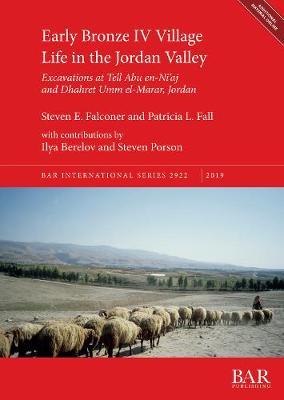
OverviewThe archaeological excavation of Tell Abu en-Ni'aj provides the foundation for an unprecedented analysis of agrarian village life during an era of the Levantine Bronze Age characterised previously in terms of urban collapse and a reversion to mobile pastoralism. Interpretation of archaeological and ecological evidence here situates the lifeways of this community amid emerging revised chronologies and reconstructions of village-based society in the third millennium BC. This reconstruction of rural life integrates evidence of regional and local environmental change, agricultural coping strategies, intramural social change, interaction with neighbouring communities and ritual ties with preceding and subsequent periods. This synthesis centred on Tell Abu en-Ni'aj suggests a strikingly revised portrait of rural society in the course of Near Eastern civilisation. Full Product DetailsAuthor: Steven E. Falconer , Patricia L. Fall , Ilya Berelov , Steven PorsonPublisher: BAR Publishing Imprint: BAR Publishing Weight: 0.925kg ISBN: 9781407316925ISBN 10: 1407316923 Pages: 200 Publication Date: 28 February 2019 Audience: Professional and scholarly , Professional & Vocational Format: Mixed media product Publisher's Status: Active Availability: Available To Order We have confirmation that this item is in stock with the supplier. It will be ordered in for you and dispatched immediately. Table of ContentsList of Figures List of Photographs List of Maps List of Tables Preface Abstract 1. The Advent and Abandonment of Levantine Urbanism Introduction The Levantine Bronze Age Traditional and Revised Views of Early Bronze IV Archaeological Inference of Early Bronze IV Society 2. Excavation Methods and Interpretive Framework Archaeological Investigations at Tell Abu en-Ni'aj Excavation Methods and Terms Spatial Analysis Classification and Analysis of Material Remains Ceramics Animal Bones Carbonised Seeds and Wood Vegetation Modelling Lithic Industries Multiple Lines of Evidence and Analyses 3. Modern and Past Environmental Dynamics in the Southern Levant The Southern Levant Modern Vegetation of the Southern Levant Modern Environmental Setting of Tell Abu en-Ni'aj Modelling Bronze Age Vegetation Methods Results Discussion Orchard Cultivation in the Southern Levant Dung Burning as a Primary Source of Carbonised Seeds at Tell Abu en-Ni'aj Charcoal Analysis and Wood Resource Use at Tell Abu en-Ni'aj and Tell el-Hayyat Results Discussion Animal Bones and Shells at Tell Abu en-Ni'aj and Dhahret Umm el-Marar Tell Abu en-Ni'aj Animal Bones Dhahret Umm el-Marar Animal Bones Dhahret Umm el-Marar Shells Tell Abu en-Ni'aj Shells 4. Community Architecture at Tell Abu en-Ni'aj Stratified Village Architecture Phase 7 Architecture Phase 6 Architecture Phase 5 Architecture Phase 4 Architecture Phase 3 Architecture Phase 2 Architecture Phase 1 Architecture Tell Abu en-Ni'aj Village Planning in Overview 5. Radiocarbon Chronology for Tell Abu en-Ni'aj Introduction Methods: Sampling of Carbonised Seeds for AMS Radiocarbon Ages Results: AMS Ages and Bayesian Modelling Tell Abu en-Ni'aj Tell el-Hayyat Discussion Comparison with Levantine Early Bronze IV Radiocarbon Evidence Comparative Evidence for the Early Bronze IV/Middle Bronze Age Transition Articulation with Emerging Bronze Age Chronologies for the Southern Levant Conclusions 6. Early Bronze IV Ceramic Typology and Chronology at Tell Abu en-Ni'aj (by Steven E. Falconer, Ilya Berelov and Patricia L. Fall) Traditions of Early Bronze IV Ceramic Chronology Tell Abu en-Ni'aj Vessel Forms and Levantine Typological Parallels Pottery Manufacturing and Exchange Stratified Ceramic Assemblages at Tell Abu en-Ni'aj Phase 7 Pottery Phase 6 Pottery Phase 5 Pottery Phase 4 Pottery Phase 3 Pottery Phase 2 Pottery Phase 1 Pottery Chronological Implications 7. Ceramic Vessel Form, Function and Style at Tell Abu en-Ni'aj Introduction Pottery Form and Function Functional Changes in the Tell Abu en-Ni'aj Assemblages Shifts in Vessel Form Frequency and Size Pottery Style Decorative Motifs Trends in Pottery Decoration Handle Types Rim Profiles Discussion 8. Stone and Metal Tool Technology at Tell Abu en-Ni'aj Chipped Stone Tools Introduction Sampling and Methods Analytical Results Discussion Ground Stone Implements Introduction Ground Stone Functional Typology and Interpretation Spatial Patterning Discussion Metal Objects Conclusions 9. Archaeobotanical Analyses of Carbonised Plant Remains from Tell Abu en-Ni'aj (by Steven Porson, Patricia L. Fall and Steven E. Falconer) Introduction Processing of Carbonised Seeds Trend Analysis Seed Classifications Barley Wheat Wild Grasses Cultivated Legumes Wild Legumes Fruits Wild Seeds Unknowns Stem Fragments Notable Absences Quantitative Results Discussion Conclusions 10. Early Bronze IV Ritual Behaviour at Tell Abu en-Ni'aj Introduction Phase 6 Animal Burials and Temple Phase 1 Shrine and Animal Interment Discussion Conclusions 11. Excavations at Dhahret Umm el-Marar and Umm el-Ba'ir Introduction Setting and Sampling of Dhahret Umm el-Marar Results Material Culture Stone Tool Technology Metal Implements Discussion Enclosure Wall Domestic Architecture and Pottery Dhahret Umm el-Marar and Early Bronze IV Settlement and Society Test Excavations at Umm el-Ba'ir Background Setting Methods Results Conclusions 12. Early Bronze IV Village Life during Urban Abandonment Revised Interpretation of Levantine Early Bronze IV Settlement and Society Evidence and Inference from Tell Abu en-Ni'aj Conclusions Bibliography The following appendices are available as an accompanying download: Appendix 1. Excavated loci at Tell Abu en-Ni'aj by excavation area and stratigraphic phase Appendix 2. Ceramics from Tell Abu en-Ni'aj Appendix 3. Archaeobotanical remains from Tell Abu en-Ni'aj Appendix 4. Chipped stone artefacts from Tell Abu en-Ni'aj, Dhahret Umm el-Marar and Umm el-Ba'ir, 1996/97 Appendix 5. Chipped stone artefacts from Tell Abu en-Ni'aj, 2000 Appendix 6. Ground stone implements from Tell Abu en-Ni'aj Appendix 7. Objects from Tell Abu en-Ni'aj and Dhahret Umm el-Marar Appendix 8. Ceramics from Dhahret Umm el-MararReviews'The quality of data presentation . is excellent. . [T]his data set represents what may perhaps be the most complete and comprehensive publication of this type of data for the EB IV and is exceptionally valuable for scholars working in this area. . [T]he authors do more than simply present the final results of their excavations; instead they provide thorough analysis and provide contextualization for these results.' Prof. Susan Cohen, Montana State University 'This research certainly has potential ramifications beyond the scope of the Southern Levant. . The discussions of methodologies employed for coping with environment might have interesting ramifications for present-day concerns re. climate change.' Dr Stefan L. Smith, Ghent University 'The data presented are of immense value, not only for a better understanding of the settlement history of the region, but also for a broader understanding of human adaptation in times of environmental change.' Dr Hermann Genz, American University of Beirut 'Highly original and deals with contemporary Levantine archaeological problems. . Although the excavation took place several decades ago, the authors are on top of the latest chronological debates in the field. . This is an excellent volume.' Prof. Thomas E. Levy, University of California, San Diego Author InformationSteve Falconer (PhD, Anthropology, University of Arizona) has practised anthropological archaeology at New York University, Arizona State University, La Trobe University and the University of North Carolina Charlotte. He co-directed (with P. Fall) the excavation and analysis of Tell el-Hayyat, Tell Abu en-Ni'aj, Dhahret Umm el-Marar and Zahrat adh-Dhra' 1 along the Jordan Rift, and Politiko-Troullia on Cyprus. Pat Fall (PhD, Geosciences, University of Arizona) is a geoscientist and biogeographer who has investigated ancient agrarian life and landscape formation in the Jordan Valley, the Dead Sea Basin, Cyprus, the Bahamas, Tonga and Samoa. She has served on the faculties of New York University, Arizona State University, La Trobe University and the University of North Carolina Charlotte. Tab Content 6Author Website:Countries AvailableAll regions |
||||