Overview
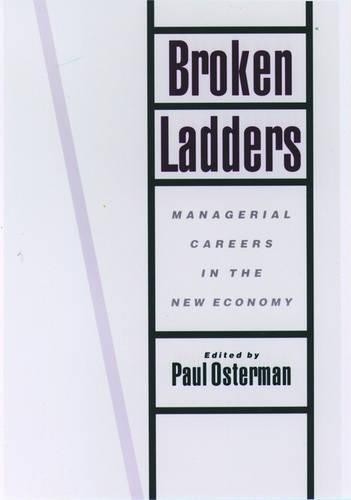
Broken Ladders: Managerial Careers in the New Economy provides the first comprehensive view of how the careers of managers in organizations are changing. Broken Ladders reports on the employment security, advancement prospects, skills, and wages of managers in a wide range of firms and industries. These cases show that one myth--that the number of managers is declining--is wrong. But the job tenure of middle managers is more precarious. They can no longer expect steady promotions up the ladder, nor can they expect life-time employment with the same firm. New organizational designs demand new skills from managers and Broken Ladders describes what these are. On another front, managerial pay has not declined at the same rate as other workers. However, the pay gap between senior and middle managers has widened. Given job insecurity and growing pay inequality firms confront a difficult dilemma: how to maintain the commitment of their managers at the same time that the employers are reducing their commitment to their employees. Broken Ladders will be of interest to scholars and students in the fields of human resources, labor economics, career development, and organizational behavior. It will also be important reading for managers and strategic planners who have to take account of the changing nature of employment.
Full Product Details
Author: Paul Osterman (Professor of Human Resources and Management, Professor of Human Resources and Management, Massachusetts Institute of Technology)
Publisher: Oxford University Press Inc
Imprint: Oxford University Press Inc
Dimensions:
Width: 16.50cm
, Height: 2.30cm
, Length: 24.10cm
Weight: 0.581kg
ISBN: 9780195093537
ISBN 10: 0195093534
Pages: 272
Publication Date: 23 January 1997
Audience:
Professional and scholarly
,
Professional & Vocational
Format: Hardback
Publisher's Status: Active
Availability: Manufactured on demand

We will order this item for you from a manufactured on demand supplier.
Reviews
.,. provides an informative analysis of how managerial employment has been altered by the forces generally reshaping work in America. --Choice<br> It is a thoughtful, informative read. --Human Resource Planning<br> .,. Provides a useful introduction to the recent trends in white-collar managerial careers. --Work and Occupations<br> Broken Ladders makes an important contribution to the study of the changing nature of careers. --Academy of Management Review<br> .,. adds to our knowledge about the inadequacies of the internal labor markets of the past, as well as to our anticipation that new kinds of labor markets will evolve in the future. --Administrative Science Quarterly<br>
.. .provides an informative analysis of how managerial employment has been altered by the forces generally reshaping work in America. --Choice It is a thoughtful, informative read. --Human Resource Planning.. .Provides a useful introduction to the recent trends in white-collar managerial careers. --Work and Occupations Broken Ladders makes an important contribution to the study of the changing nature of careers. --Academy of Management Review.. .adds to our knowledge about the inadequacies of the internal labor markets of the past, as well as to our anticipation that new kinds of labor markets will evolve in the future. --Administrative Science Quarterly