Overview
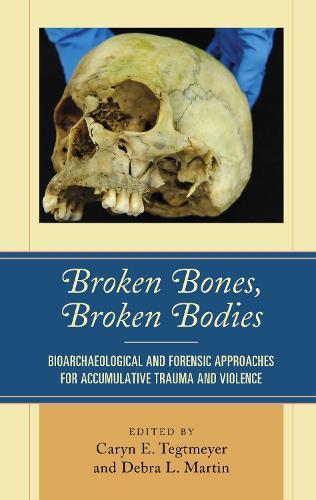
Injury recidivism is a continuing health problem in the modern clinical setting and has been part of medical literature for some time. However, it has been largely absent from forensic and bioarchaeological scholarship, despite the fact that practitioners work closely with skeletal remains and, in many cases, skeletal trauma. The contributors to this edited collection seek to close this gap by exploring the role that injury recidivism and accumulative trauma plays in bioarchaeological and forensic contexts. Case examples from prehistoric, historic, and modern settings are included to highlight the avenues through which injury recidivism can be studied and analyzed in skeletal remains and to illustrate the limitations of studying injury recidivism in deceased populations.
Full Product Details
Author: Caryn E. Tegtmeyer , Debra L. Martin , Petra Banks , Eric J. Bartelink
Publisher: Bloomsbury Publishing Plc
Imprint: Lexington Books
Dimensions:
Width: 15.90cm
, Height: 2.60cm
, Length: 23.80cm
Weight: 0.590kg
ISBN: 9781498547147
ISBN 10: 1498547141
Pages: 270
Publication Date: 14 July 2017
Audience:
Professional and scholarly
,
Professional & Vocational
Format: Hardback
Publisher's Status: Active
Availability: Manufactured on demand 
We will order this item for you from a manufactured on demand supplier.
Table of Contents
Introduction, by Caryn E. Tegtmeyer and Debra L. Martin Chapter 1: Injury Recidivism Revisited: Clinical Research, Limitations and Implications for Bioarchaeology, by Margaret Judd Part I: Prehistoric Case Studies of Injury Recidivism Chapter 2: Socializing Violence: Interpersonal Violence Recidivism at Abu Fatima (Sudan), by Sarah A. Schrader and Stuart Tyson Smith Chapter 3: Cranial Trauma and Victimization among Ancestral Pueblo Farmers of the Northern San Juan Region, by Kristin A. Kuckelman Chapter 4: Injury and Re-injury among the Ancestral Pueblo and Fremont, by Ryan P. Harrod, Alyssa Willett, Meaghan Kincaid, Aaron Woods Part II: Historic Case Studies of Injury Recidivism Chapter 5: Disease, Trauma & Stigma: Did Chronic Infection with Syphilis Influence Experiences of Trauma and Recidivistic Trauma in Post-Medieval London? by Molly K. Zuckerman, Michelle Davenport, Petra Banks, and Ryan King Chapter 6: Evaluating the Evidence for Injury Recidivism in Two Parish Communities from Industrial-era London, by Derek A. Boyd and Colleen F. Milligan Chapter 7: Sugar and Suffering: A Case Study on Injury Recidivism, Overall Health, and Structural Violence from the Holy Trinity Lutheran Church, by Sarah A. Mathena and Molly K. Zuckerman Chapter 8: The Bioarchaeology of Violence Recidivism and Labor Abuse in 19th Century Chinese by Ryan P. Harrod and John J. Crandall Chapter 9: Fractured Lives: Structural Violence, Trauma, and Recidivism in Urban and Industrialized 19th-Century-Born African Americans and Euro-Americans, by Carlina de la Cova Part III: Contemporary Case Studies of Injury Recidivism Chapter 10: An Exploration of Skeletal Evidence of Injury Recidivism in Cases of Transients and Homelessness from Northern California, by Julia R. Prince-Buitenhuys, Heather L. MacInnes, Colleen F. Milligan, and Eric J. Bartelink Chapter 11: Homicide in Sin City: Patterns of Violent Death and Injury Recidivism in Clark County, NV, by Caryn E. Tegtmeyer, Debra L. Martin, and William Gazza Chapter 12: A Life History of Skeletal Trauma: Cases from a Medical Examiner’s Office, by Jennifer C. Love and Sharon M. Derrick Conclusion, by Debra L. Martin and Caryn E. Tegtmeyer About the Contributors
Reviews
This book captures a zeitgeist in the study of human remains, reflecting the coming-together of shared research themes and ethical concerns in the disciplines of forensic anthropology and bioarcheology. These diverse studies show that regardless of time and space, the lives of injury recidivists have shared commonalities: structural violence and socio-economic inequalities. Their osteobiographies are powerful; and at times, make for heart-breaking reading. They serve to remind us that our work has impact and resonance for understanding the wider social context in which injuries are sustained, all too frequently by the most vulnerable in a community. -Rebecca Redfern, Museum of London.--Rebecca Redfern This book captures a zeitgeist in the study of human remains, reflecting the coming-together of shared research themes and ethical concerns in the disciplines of forensic anthropology and bioarcheology. These diverse studies show that regardless of time and space, the lives of injury recidivists have shared commonalities: structural violence and socio-economic inequalities. Their osteobiographies are powerful; and at times, make for heart-breaking reading. They serve to remind us that our work has impact and resonance for understanding the wider social context in which injuries are sustained, all too frequently by the most vulnerable in a community.--Rebecca Redfern, Museum of London
This book captures a zeitgeist in the study of human remains, reflecting the coming-together of shared research themes and ethical concerns in the disciplines of forensic anthropology and bioarcheology. These diverse studies show that regardless of time and space, the lives of injury recidivists have shared commonalities: structural violence and socio-economic inequalities. Their osteobiographies are powerful; and at times, make for heart-breaking reading. They serve to remind us that our work has impact and resonance for understanding the wider social context in which injuries are sustained, all too frequently by the most vulnerable in a community. -- Rebecca Redfern, Museum of London
Author Information
Debra L. Martinis professor of biological anthropology at the University of Nevada, Las Vegas. Caryn E. Tegtmeyer is a doctoral candidate in the Department of Anthropology at the University of Nevada, Las Vegas.
Tab Content 6
Author Website:
Countries Available
All regions
|