Overview
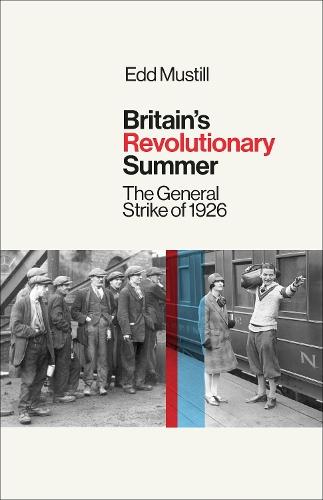
On midnight 30 April 1926, coalowners lock out a million miners. In response, British workers across the country down their tools. The General Strike has begun. The government feared the country teetered on the brink of revolution. Trade union leaders thought they’d be shot by the end of the week. For nine days, trains, buses and trams stopped running. By 8 May, London’s food supply had dwindled to just 48 hours’ worth. From day one, the government launched the largest strike-breaking operation in British history, recruiting over 300,000 volunteers, and mobilising the army. Nine thousand people were arrested. On the strike’s centenary, Edd Mustill tells the story of why millions of workers came out on strike, and why the government did anything it could to quash them. The 1920s in Britain were anything but a quiet decade.
Full Product Details
Author: Edd Mustill
Publisher: Oneworld Publications
Imprint: Oneworld Publications
Dimensions:
Width: 13.50cm
, Height: 2.50cm
, Length: 21.60cm
ISBN: 9781836430681
ISBN 10: 183643068
Pages: 336
Publication Date: 09 April 2026
Audience:
General/trade
,
General
Format: Paperback
Publisher's Status: Forthcoming
Availability: Not yet available

This item is yet to be released. You can pre-order this item and we will dispatch it to you upon its release.
Reviews
'A refreshing, vivid account of nine of the most important days in the history of the British labour movement. Mustill puts the reader right in the centre of the action: with the working-class communities who lived and breathed the strike.' Nadia Whittome MP 'Wealthy, efficient and enjoying broad support, Britain's ruling class in the 1920s was unrivalled for its efficiency and foresight. At the same time, the British working class was the largest, best organised and most conscious of its class solidarity. The General Strike of 1926 was an almost pure test of power and will between these two mighty forces. With narrative flair, cool passion, and a telling eye for detail, Edd Mustill tells the story of this legendary duel, those extraordinary nine days in May when all eyes worldwide turned to the class struggle on Britain's shores.' Marc Mulholland, author of The Murderer of Warren Street ‘Drawing on an expansive range of existing accounts, as well as previously undisclosed archival material, this book magnificently explores the multidimensional dynamics of what was a remarkable historical class confrontation between capital and labour. Reassessing both the sheer scale of government and state counter-mobilisation against the miners and their supporters, and the ultimate capitulation of the TUC General Council in calling off the General Strike, it also counters the narrative of British “moderation” by providing compelling evidence of the inspiring spirit of grassroots militancy, initiative and revolt – albeit unable to prevent the miners being left isolated and defeated.’ Ralph Darlington, author of Labour Revolt in Britain 1910–1914 'A reliable, honest and comprehensive history. The bibliography alone runs to eight pages, including local histories and memoirs as well as archival, newspaper and general histories. A fascinating and outstanding work. Highly recommended.' Mike Jackson, cofounder of Lesbians and Gays Support the Miners
'A refreshing, vivid account of nine of the most important days in the history of the British labour movement. Mustill puts the reader right in the centre of the action: with the working-class communities who lived and breathed the strike.' Nadia Whittome MP 'Wealthy, efficient and enjoying broad support, Britain's ruling class in the 1920s was unrivalled for its efficiency and foresight. At the same time, the British working class was the largest, best organised and most conscious of its class solidarity. The General Strike of 1926 was an almost pure test of power and will between these two mighty forces. With narrative flair, cool passion, and a telling eye for detail, Edd Mustill tells the story of this legendary duel, those extraordinary nine days in May when all eyes worldwide turned to the class struggle on Britain's shores.' Marc Mulholland, author of The Murderer of Warren Street ‘Drawing on an expansive range of existing accounts, as well as previously undisclosed archival material, this book magnificently explores the multidimensional dynamics of what was a remarkable historical class confrontation between capital and labour. Reassessing both the sheer scale of government and state counter-mobilisation against the miners and their supporters, and the ultimate capitulation of the TUC General Council in calling off the General Strike, it also counters the narrative of British “moderation” by providing compelling evidence of the inspiring spirit of grassroots militancy, initiative and revolt – albeit unable to prevent the miners being left isolated and defeated.’ Ralph Darlington, author of Labour Revolt in Britain 1910–1914 'A reliable, honest and comprehensive history. The bibliography alone runs to eight pages, including local histories and memoirs as well as archives, newspapers and general histories. A fascinating and outstanding work. Highly recommended.' Mike Jackson, cofounder of Lesbians and Gays Support the Miners
'A refreshing, vivid account of nine of the most important days in the history of the British labour movement. Mustill puts the reader right in the centre of the action: with the working-class communities who lived and breathed the strike.' Nadia Whittome MP 'Wealthy, efficient and enjoying broad support, Britain's ruling class in the 1920s was unrivalled for its efficiency and foresight. At the same time, the British working class was the largest, best organised and most conscious of its class solidarity. The General Strike of 1926 was an almost pure test of power and will between these two mighty forces. With narrative flair, cool passion, and a telling eye for detail, Edd Mustill tells the story of this legendary duel, those extraordinary nine days in May when all eyes worldwide turned to the class struggle on Britain's shores.' Marc Mulholland, author of The Murderer of Warren Street ‘Drawing on an expansive range of existing accounts, as well as previously undisclosed archival material, this book magnificently explores the multidimensional dynamics of what was a remarkable historical class confrontation between capital and labour. Reassessing both the sheer scale of government and state counter-mobilisation against the miners and their supporters, and the ultimate capitulation of the TUC General Council in calling off the General Strike, it also counters the narrative of British “moderation” by providing compelling evidence of the inspiring spirit of grassroots militancy, initiative and revolt – albeit unable to prevent the miners being left isolated and defeated.’ Ralph Darlington, author of Labour Revolt in Britain 1910–1914 'A reliable, honest and comprehensive history. The bibliography alone runs to eight pages, including local histories and memoirs as well as archival, newspaper and general histories. A fascinating and outstanding work. Highly recommended.' Mike Jackson, cofounder of Lesbians and Gays Support the Miners
'Wealthy, efficient and enjoying broad support, Britain's ruling class in the 1920s was unrivalled for its efficiency and foresight. At the same time, the British working class was the largest, best organised and most conscious of its class solidarity. The General Strike of 1926 was an almost pure test of power and will between these two mighty forces. With narrative flair, cool passion, and a telling eye for detail, Edd Mustill tells the story of this legendary duel, those extraordinary nine days in May when all eyes worldwide turned to the class struggle on Britain's shores.' Marc Mulholland, author of The Murderer of Warren Street ‘Drawing on an expansive range of existing accounts, as well as previously undisclosed archival material, this book magnificently explores the multidimensional dynamics of what was a remarkable historical class confrontation between capital and labour. Reassessing both the sheer scale of government and state counter-mobilisation against the miners and their supporters, and the ultimate capitulation of the TUC General Council in calling off the General Strike, it also counters the narrative of British “moderation” by providing compelling evidence of the inspiring spirit of grassroots militancy, initiative and revolt – albeit unable to prevent the miners being left isolated and defeated.’ Ralph Darlington, author of Labour Revolt in Britain 1910–1914
'Wealthy, efficient and enjoying broad support, Britain's ruling class in the 1920s was unrivalled for its efficiency and foresight. At the same time, the British working class was the largest, best organised and most conscious of its class solidarity. The General Strike of 1926 was an almost pure test of power and will between these two mighty forces. With narrative flair, cool passion, and a telling eye for detail, Edd Mustill tells the story of this legendary duel, those extraordinary nine days in May when all eyes worldwide turned to the class struggle on Britain's shores.' Marc Mulholland, author of The Murderer of Warren Street
Author Information
Edd Mustill is a trade unionist and labour historian. He is the author of The Sheffield Workers’ Committee: Rank and file trade unionism during the First World War and the editor of The Global Labour Movement: An Introduction. He lives in Sheffield.