Overview
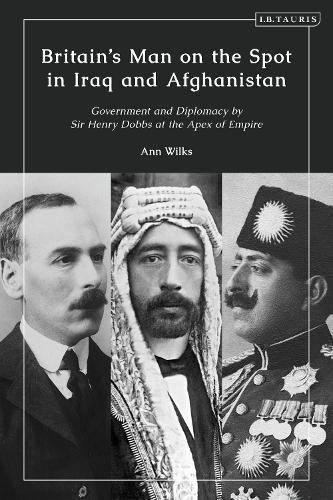
The newly discovered papers and colourfully-written letters of Anglo-Irish Sir Henry Dobbs, which form the backbone of this book, reveal his importance in the development of the modern Middle East. An influential civil servant and Britain’s longest serving High Commissioner in Iraq at a time when the British empire was facing increasing challenges to its once dominant position, he describes the difficulties of governing first in India then in the formerly Ottoman Mesopotamia during WW1. Here, Dobbs had to devise administrative systems while often at odds with his superior, Sir Percy Cox. In the discussions that followed the Third Afghan War, Dobbs manoeuvred between the different views in London and Delhi with great dexterity to negotiate alone with the Amir of Afghanistan the enduring 1921 Anglo-Afghan treaty. Having accepted from the League of Nations the responsibility for taking the newly-created Iraq to sustainable independence in the aftermath of WW1, the cash-strapped British government came under great domestic pressure to abandon it. Key to British support continuing was Iraqi acceptance of the controversial 1922 treaty with Britain. This Dobbs achieved by disregarding the unhelpful approach recommended by London and, risking his career, he pressed on with his own wholly unauthorised tactics. In other initiatives, Dobbs ensured that Mosul province remained within Iraq. Dobbs consistently pressed for Iraq’s early independence – granted in 1932, the first territory in the former Ottoman Empire to gain it. An early advocate of self-determination Dobbs was frequently at odds with the more traditional imperial approach of his superiors. He always endeavoured to balance the aspirations and needs of overseas communities for whom he was responsible with the interests of Britain which he represented.
Full Product Details
Author: Ann Wilks
Publisher: Bloomsbury Publishing PLC
Imprint: I.B. Tauris
Dimensions:
Width: 15.40cm
, Height: 1.20cm
, Length: 23.20cm
Weight: 0.300kg
ISBN: 9780755651283
ISBN 10: 0755651286
Pages: 208
Publication Date: 29 May 2025
Audience:
Professional and scholarly
,
College/higher education
,
Professional & Vocational
,
Tertiary & Higher Education
Format: Paperback
Publisher's Status: Active
Availability: Manufactured on demand

We will order this item for you from a manufactured on demand supplier.
Reviews
"""Scholarship on the modern history of the Near and Middle East seems always to be relevant, and this book is no exception. Based upon new archival research and the judicious use of published material, Ann Wilks has written a revealing biographical study of an indispensable 'man-on-the-spot' during the high point of the British Empire"" --C. Brad Faught, Tyndale University, Canada ""Wilks has masterfully reassembled Dobbs' career from these letters, supplementing them with papers from the official record and the relevant secondary scholarship. The result is a tautly written study that ably situates its protagonist and his career in the context of this period of remarkable change"" --Benjamin Fortna, Professor, The University of Arizona, USA ""Sir Henry Dobbs was a key figure in establishing British interests in Mesopotamia after World War One and in negotiating the Anglo-Afghan treaty of 1921. This remarkable book, based on a recently discovered trove of family correspondence reveals what an able officer, able to speak the local languages, could do to further British imperial interests. Dobbs' letters, which are quoted frequently, bring a sense of immediacy to the story and show how the man on the spot could make a real difference"" --Francis Robinson, Professor, Royal Holloway, UK ""Henry Dobbs has for too long been overshadowed in Britain's 'moment' in the Middle East. Ann Wilks restores this fascinating and complex character to his rightful place among the framers of the modern states of Iraq and Afghanistan. Essential reading for understanding the origins of two of the most troubled states in West Asia today"" --Eugene Rogan, Professor, University of Oxford, UK"
Scholarship on the modern history of the Near and Middle East seems always to be relevant, and this book is no exception. Based upon new archival research and the judicious use of published material, Ann Wilks has written a revealing biographical study of an indispensable ‘man-on-the-spot’ during the high point of the British Empire * C. Brad Faught, Tyndale University, Canada * Wilks has masterfully reassembled Dobbs’ career from these letters, supplementing them with papers from the official record and the relevant secondary scholarship. The result is a tautly written study that ably situates its protagonist and his career in the context of this period of remarkable change * Benjamin Fortna, Professor, The University of Arizona, USA * Sir Henry Dobbs was a key figure in establishing British interests in Mesopotamia after World War One and in negotiating the Anglo-Afghan treaty of 1921. This remarkable book, based on a recently discovered trove of family correspondence reveals what an able officer, able to speak the local languages, could do to further British imperial interests. Dobbs’ letters, which are quoted frequently, bring a sense of immediacy to the story and show how the man on the spot could make a real difference * Francis Robinson, Professor, Royal Holloway, UK * Henry Dobbs has for too long been overshadowed in Britain’s ‘moment’ in the Middle East. Ann Wilks restores this fascinating and complex character to his rightful place among the framers of the modern states of Iraq and Afghanistan. Essential reading for understanding the origins of two of the most troubled states in West Asia today * Eugene Rogan, Professor, University of Oxford, UK * This is one of the most important books on early 20th century diplomacy in the Middle East to have appeared in some time. * Asian Affairs *
Scholarship on the modern history of the Near and Middle East seems always to be relevant, and this book is no exception. Based upon new archival research and the judicious use of published material, Ann Wilks has written a revealing biographical study of an indispensable ‘man-on-the-spot’ during the high point of the British Empire * C. Brad Faught, Tyndale University, Canada * Wilks has masterfully reassembled Dobbs’ career from these letters, supplementing them with papers from the official record and the relevant secondary scholarship. The result is a tautly written study that ably situates its protagonist and his career in the context of this period of remarkable change * Benjamin Fortna, Professor, The University of Arizona, USA * Sir Henry Dobbs was a key figure in establishing British interests in Mesopotamia after World War One and in negotiating the Anglo-Afghan treaty of 1921. This remarkable book, based on a recently discovered trove of family correspondence reveals what an able officer, able to speak the local languages, could do to further British imperial interests. Dobbs’ letters, which are quoted frequently, bring a sense of immediacy to the story and show how the man on the spot could make a real difference * Francis Robinson, Professor, Royal Holloway, UK * Henry Dobbs has for too long been overshadowed in Britain’s ‘moment’ in the Middle East. Ann Wilks restores this fascinating and complex character to his rightful place among the framers of the modern states of Iraq and Afghanistan. Essential reading for understanding the origins of two of the most troubled states in West Asia today * Eugene Rogan, Professor, University of Oxford, UK * This is one of the most important books on early 20th century diplomacy in the Middle East to have appeared in some time. * Asian Affairs * [T]his book reminds us of the difference which individuals made to the outcome of policy struggles through their character and their commitment to the well-being of the countries in which they served. It should be read by all interested in the evolution of the contemporary conflicts in the Middle East and by anyone interested in the debates about … administration in the British Empire. * The Brown Book, Lady Margaret Hall *
Author Information
Ann Wilks, CBE, is an independent historian and former Senior Civil Servant. She has published articles in The British Journal of Middle Eastern Studies and the Royal Asiatic Society Journal.