Overview
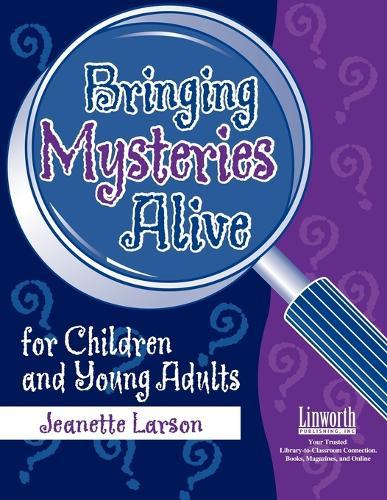
Kids love mysteries, and you will love promoting learning and literacy with this guide to the mystery genre! This book presents an introduction and a guide to using the various types of mysteries, including true crime, detective stories, ghosts and gothics, suspense, and many, many more! Engage learners and teach concepts within all subject areas! Content is ideal for public librarians as well as school librarians.
Full Product Details
Author: Jeanette Larson
Publisher: Bloomsbury Publishing Plc
Imprint: Linworth Publishing, Incorporated
Edition: Annotated edition
Dimensions:
Width: 21.40cm
, Height: 1.00cm
, Length: 27.40cm
Weight: 0.363kg
ISBN: 9781586830120
ISBN 10: 1586830120
Pages: 144
Publication Date: 01 January 2004
Recommended Age: From 7 to 17 years
Audience:
Professional and scholarly
,
College/higher education
,
Professional & Vocational
,
Tertiary & Higher Education
Format: Paperback
Publisher's Status: Active
Availability: Manufactured on demand

We will order this item for you from a manufactured on demand supplier.
Reviews
<p> A mystery fan herself, Larson provides a wealth of information that will both inspire and inform sleuths and novices alike. School media specialists, teachers and public librarians all know that mysteries are a favorite reading choice for many children. But the genre is so broad, and contains so many sub-categories that it is often overwhelming when a child generically asks for a good mystery book. A framework and guidelines for answering that, and many other questions can be found within this book. The history and appeal of mysteries, as well as the types of mysteries are defined with both classic and contemporary examples. Series mysteries are also examined both in terms of their appeal and merits. The two chapters focus on making curriculum connections with mysteries and programming ideas are particularly creative. There are many ideas for writing, research and art activities along with patterns and examples for many projects. Included are also suggestions for further reading and Web resources as well as ways to bring community members involved in real life investigation into programs and classrooms to further the learning experience. Along with the extensive annotated bibliography are a webliography and a listing of film and video resources for programming use. This is a useful resource for both programming as well as collection development. Recommended. - <p>Library Media Connection
A mystery fan herself, Larson provides a wealth of information that will both inspire and inform sleuths and novices alike. School media specialists, teachers and public librarians all know that mysteries are a favorite reading choice for many children. But the genre is so broad, and contains so many sub-categories that it is often overwhelming when a child generically asks for a good mystery book. A framework and guidelines for answering that, and many other questions can be found within this book. The history and appeal of mysteries, as well as the types of mysteries are defined with both classic and contemporary examples. Series mysteries are also examined both in terms of their appeal and merits. The two chapters focus on making curriculum connections with mysteries and programming ideas are particularly creative. There are many ideas for writing, research and art activities along with patterns and examples for many projects. Included are also suggestions for further reading and Web resources as well as ways to bring community members involved in real life investigation into programs and classrooms to further the learning experience. Along with the extensive annotated bibliography are a webliography and a listing of film and video resources for programming use. This is a useful resource for both programming as well as collection development. Recommended. - <strong>Library Media Connection</strong>
"""A mystery fan herself, Larson provides a wealth of information that will both inspire and inform sleuths and novices alike. School media specialists, teachers and public librarians all know that mysteries are a favorite reading choice for many children. But the genre is so broad, and contains so many sub-categories that it is often overwhelming when a child generically asks for a “good mystery book.” A framework and guidelines for answering that, and many other questions can be found within this book. The history and appeal of mysteries, as well as the types of mysteries are defined with both classic and contemporary examples. Series mysteries are also examined both in terms of their appeal and merits. The two chapters focus on making curriculum connections with mysteries and programming ideas are particularly creative. There are many ideas for writing, research and art activities along with patterns and examples for many projects. Included are also suggestions for further reading and Web resources as well as ways to bring community members involved in real life investigation into programs and classrooms to further the learning experience. Along with the extensive annotated bibliography are a webliography and a listing of film and video resources for programming use. This is a useful resource for both programming as well as collection development. Recommended."" - Library Media Connection"
<p> A mystery fan herself, Larson provides a wealth of information that will both inspire and inform sleuths and novices alike. School media specialists, teachers and public librarians all know that mysteries are a favorite reading choice for many children. But the genre is so broad, and contains so many sub-categories that it is often overwhelming when a child generically asks for a good mystery book. A framework and guidelines for answering that, and many other questions can be found within this book. The history and appeal of mysteries, as well as the types of mysteries are defined with both classic and contemporary examples. Series mysteries are also examined both in terms of their appeal and merits. The two chapters focus on making curriculum connections with mysteries and programming ideas are particularly creative. There are many ideas for writing, research and art activities along with patterns and examples for many projects. Included are also suggestions for further reading
Author Information
Jeanette Larson is a retired youth services manager from Pflugerville, TX.