Overview
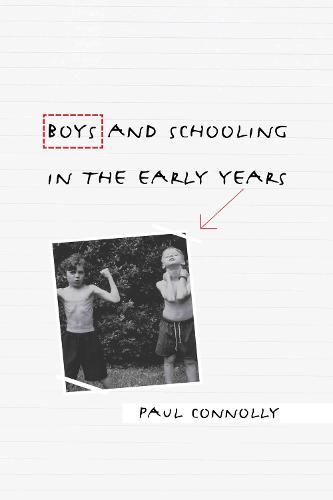
There has been a massive spotlight on the increasing gap in educational achievement between boys and girls, and the debate surrounding boys' underachievement has not been limited to the UK - it's a worldwide concern. Given the importance the Government has placed on early years care and early intervention programmes, it's particularly surprisingly that until now such little attention has been given to how and when boys start to underachieve in the early years, and what can be done to reverse any early patterns of development. Boys and Schooling in the Early Years draws upon original research to examine the specific issues affecting boys and education in the first three years of schooling, and uses this research as a basis from which to explore the implications for teachers and early years professionals working with young boys.
Full Product Details
Author: Paul Connolly (Queens University, Belfast)
Publisher: Taylor & Francis Ltd
Imprint: Routledge
Dimensions:
Width: 13.80cm
, Height: 1.90cm
, Length: 21.60cm
Weight: 0.476kg
ISBN: 9780415298407
ISBN 10: 0415298407
Pages: 264
Publication Date: 01 July 2004
Audience:
College/higher education
,
Professional and scholarly
,
Tertiary & Higher Education
,
Professional & Vocational
Format: Hardback
Publisher's Status: Active
Availability: In Print

This item will be ordered in for you from one of our suppliers. Upon receipt, we will promptly dispatch it out to you. For in store availability, please contact us.
Reviews
<p>'This book is a welcome antidote to those offering teaching tips on raising boys' achievement ... [and] is accessible and clearly written ... It is of particular importance in that it is one of the few books that directly explores how predominant approaches to early years pedagogy forecloses opportunities to confront gender-stereotypical behaviours.' - International Journal of Early Years Education <p>'Paul Connolly's book appears as a welcome and refreshing addition to the burgeoning literature on the subject. It is to be hoped that teachers will take up his suggestion for working with young boys in the 'Critical Gender Zone', working in school and with parents to challenge dominant forms of masculinity that limit engagement and learning.' - ECR Book Reviews <p>'His (Connolly's) work is a model of well structured clearly reported research.' <p>- Elaine Millard, Senior Lecturer, School of Education, University of Sheffield
<p>'This book is a welcome antidote to those offering teaching tips on raising boys' achievement ... [and] is accessible and clearly written ... It is of particular importance in that it is one of the few books that directly explores how predominant approaches to early years pedagogy forecloses opportunities to confront gender-stereotypical behaviours.' - International Journal of Early Years Education<p>'Paul Connolly's book appears as a welcome and refreshing addition to the burgeoning literature on the subject. It is to be hoped that teachers will take up his suggestion for working with young boys in the 'Critical Gender Zone', working in school and with parents to challenge dominant forms of masculinity that limit engagement and learning.' - ECR Book Reviews<p>'His (Connolly's) work is a model of well structured clearly reported research.'<p>- Elaine Millard, Senior Lecturer, School of Education, University of Sheffield
"'This book is a welcome antidote to those offering ""teaching tips"" on ""raising boys' achievement"" ... [and] is accessible and clearly written ... It is of particular importance in that it is one of the few books that directly explores how predominant approaches to early years pedagogy forecloses opportunities to confront gender-stereotypical behaviours.' - International Journal of Early Years Education 'Paul Connolly's book appears as a welcome and refreshing addition to the burgeoning literature on the subject. It is to be hoped that teachers will take up his suggestion for working with young boys in the 'Critical Gender Zone', working in school and with parents to challenge dominant forms of masculinity that limit engagement and learning.' - ECR Book Reviews 'His (Connolly's) work is a model of well structured clearly reported research.' - Elaine Millard, Senior Lecturer, School of Education, University of Sheffield 'This book is a welcome antidote to those offering ""teaching tips"" on ""raising boys' achievement"" ... [and] is accessible and clearly written ... It is of particular importance in that it is one of the few books that directly explores how predominant approaches to early years pedagogy forecloses opportunities to confront gender-stereotypical behaviours.' - International Journal of Early Years Education 'Paul Connolly's book appears as a welcome and refreshing addition to the burgeoning literature on the subject. It is to be hoped that teachers will take up his suggestion for working with young boys in the 'Critical Gender Zone', working in school and with parents to challenge dominant forms of masculinity that limit engagement and learning.' - ECR Book Reviews 'His (Connolly's) work is a model of well structured clearly reported research.' - Elaine Millard, Senior Lecturer, School of Education, University of Sheffield"
Author Information
Paul Connolly is Reader in Education at Queen's University, Belfast.