Overview
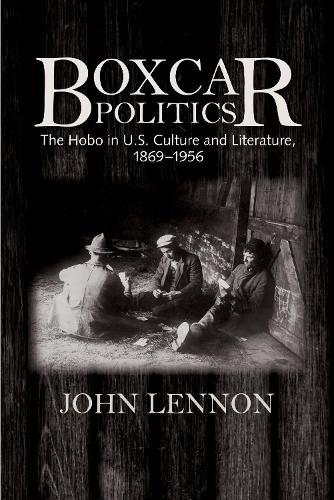
The hobo is a figure ensconced in the cultural fabric of the United States. Once categorized as a member of a homeless army who ought to be jailed or killed, the hobo has evolved into a safe, grandfatherly exemplar of Americana. Boxcar Politics reestablishes the hobo’s political thorns. John Lennon maps the rise and demise of the political hobo from the nineteenth-century introduction of the transcontinental railroad to the Federal Aid Highway Act of 1956. Intertwining literary, historical, and theoretical representations of the hobo, he explores how riders and writers imagined alternative ways that working-class people could use mobility to create powerful dissenting voices outside of fixed hierarchal political organizations. Placing portrayals of hobos in the works of Jack London, Jim Tully, John Dos Passos, and Jack Kerouac alongside the lived reality of people hopping trains (including hobos of the IWW, the Scottsboro Boys, and those found in numerous long-forgotten memoirs), Lennon investigates how these marginalized individuals exerted collective political voices through subcultural practices.
Full Product Details
Author: John Lennon
Publisher: University of Massachusetts Press
Imprint: University of Massachusetts Press
Dimensions:
Width: 15.20cm
, Height: 1.70cm
, Length: 23.50cm
Weight: 0.369kg
ISBN: 9781625341204
ISBN 10: 1625341202
Pages: 232
Publication Date: 14 October 2014
Audience:
Professional and scholarly
,
Professional & Vocational
Format: Paperback
Publisher's Status: Active
Availability: Temporarily unavailable

The supplier advises that this item is temporarily unavailable. It will be ordered for you and placed on backorder. Once it does come back in stock, we will ship it out to you.
Reviews
By advancing a more nuanced account of the range of political possibilities on offer in the U.S. hobo subculture, Lennon certainly develops the coordinates for a significant contribution to Americanist literary and cultural studies.--Mark Simpson, author of Trafficking Subjects: The Politics of Mobility in Nineteenth-Century America One shining achievement of this book is the way Lennon expertly weaves the story of Scottsboro into the narrative of hobo history and the history of transience and its representations in Great Depression America. The author treats the central issues of race and gender, as well as class, with great clarity and intelligence.--Todd DePastino, author of Citizen Hobo: How a Century of Homelessness Shaped America Lennon provides a unique discussion of the 1931 case of the Scottsboro nine as he presents both black men accused of rape and the white women who denounced them as representative of little-discussed subgroups within the larger hobo narrative, which has largely been the story of white males.--Journal of American History Insightful . . . this is a well-researched and well-written study. It is of use to anyone interested in American labor history, the history of U.S. transportation, and the Great Depression. It also contains nuanced insights into a wide array of fiction, music, and film concerned with the depiction of the American Hobo. Boxcar Politics is a valuable and recommended study.--American Studies Lennon's book reminds us how pervasive the hobo figure was in American life, surfacing not only to beg at the backdoor or work the fruit harvest, but also in the latest literary journal.--Grand Prarie Union News
By advancing a more nuanced account of the range of political possibilities on offer in the U.S. hobo subculture, Lennon certainly develops the coordinates for a significant contribution to Americanist literary and cultural studies.--Mark Simpson, author of Trafficking Subjects: The Politics of Mobility in Nineteenth-Century America One shining achievement of this book is the way Lennon expertly weaves the story of Scottsboro into the narrative of hobo history and the history of transience and its representations in Great Depression America. The author treats the central issues of race and gender, as well as class, with great clarity and intelligence.--Todd DePastino, author of Citizen Hobo: How a Century of Homelessness Shaped America Lennon provides a unique discussion of the 1931 case of the Scottsboro nine as he presents both black men accused of rape and the white women who denounced them as representative of little-discussed subgroups within the larger hobo narrative, which has largely been the story of white males.--Journal of American History Insightful . . . this is a well-researched and well-written study. It is of use to anyone interested in American labor history, the history of U.S. transportation, and the Great Depression. It also contains nuanced insights into a wide array of fiction, music, and film concerned with the depiction of the American Hobo. Boxcar Politics is a valuable and recommended study.--American Studies Lennon's book reminds us how pervasive the hobo figure was in American life, surfacing not only to beg at the backdoor or work the fruit harvest, but also in the latest literary journal.--Grand Prarie Union News
By advancing a more nuanced account of the range of political possibilities on offer in the U.S. hobo subculture, Lennon certainly develops the coordinates for a significant contribution to Americanist literary and cultural studies.--Mark Simpson, author of Trafficking Subjects: The Politics of Mobility in Nineteenth-Century AmericaOne shining achievement of this book is the way Lennon expertly weaves the story of Scottsboro into the narrative of hobo history and the history of transience and its representations in Great Depression America. The author treats the central issues of race and gender, as well as class, with great clarity and intelligence.--Todd DePastino, author of Citizen Hobo: How a Century of Homelessness Shaped AmericaLennon provides a unique discussion of the 1931 case of the Scottsboro nine as he presents both black men accused of rape and the white women who denounced them as representative of little-discussed subgroups within the larger hobo narrative, which has largely been the story of white males.--Journal of American HistoryInsightful . . . this is a well-researched and well-written study. It is of use to anyone interested in American labor history, the history of U.S. transportation, and the Great Depression. It also contains nuanced insights into a wide array of fiction, music, and film concerned with the depiction of the American Hobo. Boxcar Politics is a valuable and recommended study.--American StudiesLennon's book reminds us how pervasive the hobo figure was in American life, surfacing not only to beg at the backdoor or work the fruit harvest, but also in the latest literary journal.--Grand Prarie Union News
Author Information
John Lennon is assistant professor of English at the University of South Florida.