Overview
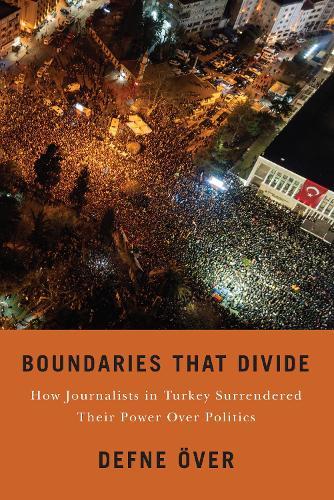
Turkey presents a striking example of the most recent wave of global authoritarian turns. The two-decade-long transition in the country's political system also transformed its media environment. As mainstream journalists gradually yielded their places to sycophants, much more willing to praise the government in their news, the mainstream media that once oversaw—however imperfectly—political decisions started devoting its full service to cheerleading the government. Simultaneously, a new sphere of critical journalism began to emerge, with mainstream media journalists joining their fellows in the peripheries of the media. Considering the transformation of Turkey's news media as the decay of a democratic institution, this book asks, How does the media break down under the rule of an elected government? Drawing on fieldwork and in-depth interviews, the book traces the ruling AKP's manipulation of social divides to consolidate power and journalists' navigation of the resulting climate of fear, hope, doubt, and anger. The book shows how Turkey's news media surrendered its power over politics as some journalists embraced disinformation as a path to heightened status, others turned to self-censorship for protection, and still others resisted capture through continuous but fragmented efforts. The book portrays journalists as central actors in media decay, while also revealing that resilience to decay emerges where rising demand for ""news"" meets the contentious mobilization of journalists. Although focused on Turkey, the book's insights extend far beyond, offering urgent lessons about the future of journalism in an age of populism, polarization, and institutional erosion.
Full Product Details
Author: Defne Över
Publisher: Rutgers University Press
Imprint: Rutgers University Press
Dimensions:
Width: 15.60cm
, Height: 1.50cm
, Length: 23.50cm
Weight: 0.400kg
ISBN: 9781978844179
ISBN 10: 1978844174
Pages: 222
Publication Date: 14 April 2026
Audience:
College/higher education
,
Professional and scholarly
,
General/trade
,
Tertiary & Higher Education
,
Professional & Vocational
Format: Paperback
Publisher's Status: Forthcoming
Availability: Not yet available

This item is yet to be released. You can pre-order this item and we will dispatch it to you upon its release.
Reviews
""Över's compelling examination of the declining watchdog role of the media in Turkey explains why and how journalists forfeit their role as a fourth estate and become complicit in authoritarian turns. This is a must-read for journalists and anyone interested in understanding these dynamics in countries around the world."" --Jennifer Earl ""professor of sociology and criminal justice at the University of Delaware"" ""A key part of the erosion of democracy is the collapse of media independence, something we should all worry about. Boundaries That Divide is a focused, chilling examination of how this happened in Turkey, a leader in the process."" --James M. Jasper ""author of The Art of Moral Protest: Culture, Biography, and Creativity in Social Movements"" ""Över offers a detailed account of Turkey's political and journalistic transformations between 2007 and 2016. Drawing on interviews with journalists and analysis of pivotal political events, the book examines the erosion of journalistic autonomy through the lens of professional relationships, group identities, and emotional dynamics. A useful guide for anyone interested in the sociology of journalism."" --Bilge Yesil ""author of Talking Back to the West: How Turkey Uses Counter-Hegemony to Reshape the Global Communica""
""A key part of the erosion of democracy is the collapse of media independence, something we should all worry about. Boundaries That Divide is a focused, chilling examination of how this happened in Turkey, a leader in the process."" --James M. Jasper ""author of The Art of Moral Protest: Culture, Biography, and Creativity in Social Movements"" ""Över offers a detailed account of Turkey's political and journalistic transformations between 2007 and 2016. Drawing on interviews with journalists and analysis of pivotal political events, the book examines the erosion of journalistic autonomy through the lens of professional relationships, group identities, and emotional dynamics. A useful guide for anyone interested in the sociology of journalism."" --Bilge Yesil ""author of Talking Back to the West: How Turkey Uses Counter-Hegemony to Reshape the Global Communica"" ""Över's compelling examination of the declining watchdog role of the media in Turkey explains why and how journalists forfeit their role as a Fourth Estate and become complicit in authoritarian turns. This is a must-read for journalists and anyone interested in understanding these dynamics in countries around the world."" --Jennifer Earl ""professor of sociology and criminal justice at the University of Delaware""
""A key part of the erosion of democracy is the collapse of media independence, something we should all worry about. Boundaries That Divide is a focused, chilling examination of how this happened in Turkey, a leader in the process."" - James M. Jasper, author of The Art of Moral Protest: Culture, Biography, and Creativity in Social Movements ""Över's compelling examination of the declining watchdog role of the media in Turkey explains why and how journalists forfeit their role as a fourth estate and become complicit in authoritarian turns. This is a must-read for journalists and anyone interested in understanding these dynamics in countries around the world."" - Jennifer Earl, professor of sociology and criminal justice at the University of Delaware ""Över offers a detailed account of Turkey's political and journalistic transformations between 2007 and 2016. Drawing on interviews with journalists and analysis of pivotal political events, the book examines the erosion of journalistic autonomy through the lens of professional relationships, group identities, and emotional dynamics. A useful guide for anyone interested in the sociology of journalism."" - Bilge Yesil, author of Talking Back to the West: How Turkey Uses Counter-Hegemony to Reshape the Global Communication Order
Author Information
Defne Över is an assistant professor of sociology at Texas A&M University in College Station.