|
|
|||
|
||||
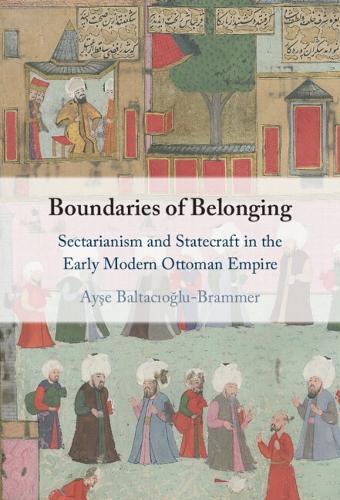
OverviewExamining sectarian divergence in the early modern Middle East, this study provides a fresh perspective on the Sunni–Shi'i division. Drawing on Ottoman Turkish, Persian, and European sources, Ayşe Baltacıoğlu-Brammer explores the paradox of an Ottoman state that combined rigid ideological discourses with pragmatic governance. Through an analysis of key figures, events, periods, and policies, Boundaries of Belonging reveals how political, economic, and religious forces intersected, challenging simplistic sectarian binaries. Baltacıoğlu-Brammer provides a comprehensive historical account of Ottoman governance during the long sixteenth century, focusing on its relationship with non-Sunni Muslim subjects, particularly the Qizilbash. As both the founders of the Safavid Empire and the largest Shiʿi-affiliated group within the Ottoman realm, the Qizilbash occupied a crucial yet often misunderstood position. Boundaries of Belonging examines their role within the empire, challenging the notion that they were merely persecuted outsiders by highlighting their agency in shaping imperial policies, negotiating their status, and influencing the Ottoman–Safavid rivalry in Anatolia, Kurdistan, and Iraq, and western Iran. Full Product DetailsAuthor: Ayşe Baltacıoğlu-Brammer (New York University)Publisher: Cambridge University Press Imprint: Cambridge University Press ISBN: 9781009640787ISBN 10: 100964078 Pages: 416 Publication Date: 19 March 2026 Audience: General/trade , General Format: Hardback Publisher's Status: Active Availability: Manufactured on demand We will order this item for you from a manufactured on demand supplier. Table of ContentsReviewsAuthor InformationAyşe Baltacıoğlu-Brammer is an historian of the Ottoman Empire and an assistant professor at New York University. Her research explores imperial governance, religious mobility, and identity formation, offering new perspectives on the interconnected histories of the Middle East. Her work has been supported by fellowships and grants from sources including the Institute for Advanced Study at Princeton and the Bradley Foundation. Tab Content 6Author Website:Countries AvailableAll regions |
||||