Overview
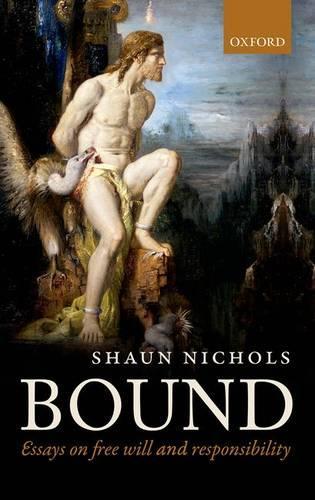
The problem of free will arises from ordinary, commonsense reflection. Shaun Nichols examines these ordinary attitudes from a naturalistic perspective. He offers a psychological account of the origins of the problem of free will. According to his account the problem arises because of two naturally emerging ways of thinking about ourselves and the world, one of which makes determinism plausible while the other makes determinism implausible. Although contemporary cognitive science does not settle whether choices are determined, Nichols argues that our belief in indeterminist choice is grounded in faulty inference and should be regarded as unjustified. However, even if our belief in indeterminist choice is false, it's a further substantive question whether that means that free will doesn't exist. Nichols argues that, because of the flexibility of reference, there is no single answer to whether free will exists. In some contexts, it will be true to say 'free will exists'; in other contexts, it will be false to say that. With this substantive background in place, Bound promotes a pragmatic approach to prescriptive issues. In some contexts, the prevailing practical considerations suggest that we should deny the existence of free will and moral responsibility; in other contexts the practical considerations suggest that we should affirm free will and moral responsibility. This allows for the possibility that in some contexts, it is morally apt to exact retributive punishment; in other contexts, it can be apt to take up the exonerating attitude of hard incompatibilism.
Full Product Details
Author: Shaun Nichols (University of Arizona)
Publisher: Oxford University Press
Imprint: Oxford University Press
Dimensions:
Width: 14.40cm
, Height: 1.80cm
, Length: 22.20cm
Weight: 0.382kg
ISBN: 9780199291847
ISBN 10: 0199291845
Pages: 200
Publication Date: 08 January 2015
Audience:
College/higher education
,
Undergraduate
,
Postgraduate, Research & Scholarly
Format: Hardback
Publisher's Status: Active
Availability: To order

Stock availability from the supplier is unknown. We will order it for you and ship this item to you once it is received by us.
Reviews
It should be added as course material for philosophy classes. * Kai Chen, Ethical Perspectives * ...Nichols work is an invaluable asset, bringing together recent work in psychology and experimental philosophy and analyzing them in the context of the free will debate. * William Simkulet, Metapsychology Online Reviews * What is manifestly true is that this book is worth the careful attention of anyone interested in moral psychology, moral responsibility, or the methodological issues that constrain philosophical debates. At the heart of Nichols' theory is a picture of moral responsibility as a deeply human practice, one that plays an important moral and practical role in our lives. * Manuel R. Vargas, Notre Dame Philosophical Reviews Online * Few philosophy books are as diversely valuable to the discipline as this engaging volume on free will ... scholars at the highest levels will be seriously interested in Nichols's techniques, which rely on experimental philosophy to analyze the psychological motivations for the inferences and positions in the classic free will debate. The prose is lucid, the book is well organized, and the science and philosophy are seamlessly integrated ... Essential. * Choice *
Few philosophy books are as diversely valuable to the discipline as this engaging volume on free will ... scholars at the highest levels will be seriously interested in Nichols's techniques, which rely on experimental philosophy to analyze the psychological motivations for the inferences and positions in the classic free will debate. The prose is lucid, the book is well organized, and the science and philosophy are seamlessly integrated ... Essential. * Choice * What is manifestly true is that this book is worth the careful attention of anyone interested in moral psychology, moral responsibility, or the methodological issues that constrain philosophical debates. At the heart of Nichols' theory is a picture of moral responsibility as a deeply human practice, one that plays an important moral and practical role in our lives. * Manuel R. Vargas, Notre Dame Philosophical Reviews Online * ...Nichols work is an invaluable asset, bringing together recent work in psychology and experimental philosophy and analyzing them in the context of the free will debate. * William Simkulet, Metapsychology Online Reviews * It should be added as course material for philosophy classes. * Kai Chen, Ethical Perspectives * bound advances the discussion in novel and intriguing ways. The result is another valuable contribution from one of the best empirally informed and experimental philosophers around. * Joshua May, Australasian Journal of Philosophy *
Few philosophy books are as diversely valuable to the discipline as this engaging volume on free will ... scholars at the highest levels will be seriously interested in Nichols's techniques, which rely on experimental philosophy to analyze the psychological motivations for the inferences and positions in the classic free will debate. The prose is lucid, the book is well organized, and the science and philosophy are seamlessly integrated ... Essential. Choice What is manifestly true is that this book is worth the careful attention of anyone interested in moral psychology, moral responsibility, or the methodological issues that constrain philosophical debates. At the heart of Nichols' theory is a picture of moral responsibility as a deeply human practice, one that plays an important moral and practical role in our lives. Manuel R. Vargas, Notre Dame Philosophical Reviews Online ...Nichols work is an invaluable asset, bringing together recent work in psychology and experimental philosophy and analyzing them in the context of the free will debate. William Simkulet, Metapsychology Online Reviews
bound advances the discussion in novel and intriguing ways. The result is another valuable contribution from one of the best empirally informed and experimental philosophers around. * Joshua May, Australasian Journal of Philosophy * It should be added as course material for philosophy classes. * Kai Chen, Ethical Perspectives * ...Nichols work is an invaluable asset, bringing together recent work in psychology and experimental philosophy and analyzing them in the context of the free will debate. * William Simkulet, Metapsychology Online Reviews * What is manifestly true is that this book is worth the careful attention of anyone interested in moral psychology, moral responsibility, or the methodological issues that constrain philosophical debates. At the heart of Nichols' theory is a picture of moral responsibility as a deeply human practice, one that plays an important moral and practical role in our lives. * Manuel R. Vargas, Notre Dame Philosophical Reviews Online * Few philosophy books are as diversely valuable to the discipline as this engaging volume on free will ... scholars at the highest levels will be seriously interested in Nichols's techniques, which rely on experimental philosophy to analyze the psychological motivations for the inferences and positions in the classic free will debate. The prose is lucid, the book is well organized, and the science and philosophy are seamlessly integrated ... Essential. * Choice *
What is manifestly true is that this book is worth the careful attention of anyone interested in moral psychology, moral responsibility, or the methodological issues that constrain philosophical debates. At the heart of Nichols' theory is a picture of moral responsibility as a deeply human practice, one that plays an important moral and practical role in our lives. Manuel R. Vargas, Notre Dame Philosophical Reviews Online
Author Information
Shaun Nichols is Professor of Philosophy at the University of Arizona. He is the author of Sentimental Rules: On the Natural Foundations of Moral Judgment (OUP, 2004) and co-author (with Stephen Stich) of Mindreading (OUP, 2003). He is editor of The Architecture of the Imagination (OUP, 2006) and co-editor of Experimental Philosophy (with Joshua Knobe; OUP, 2008; 2014). He has also published over 100 articles at the intersection of philosophy and psychology.