Overview
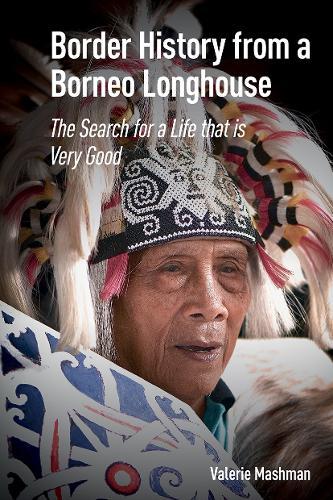
A headman of a remote Kelabit longhouse in Borneo is wrestling with recent changes caused by logging and roadbuilding. During this time of tension, he tells three historical narratives defining what makes the good life. His stories of history celebrate pioneering heroes who led through warfare and migrations, who interact with the Brooke state and initiate peace-making, and who journey to seek local Christian missionaries. This microhistory highlights the resilience of values in the face of transformative change, values providing a cultural structure for the Kelabit to redefine and adapt whilst maintaining their identity as a community.,This work is relevant to Austronesian studies, Southeast Asian history, oral history, the anthropology of value, sociality and ethnic identity, Christian conversion, and issues of borderlands, decolonization, and indigeneity. It is of interest to readers concerned with the history of transnational peoples of Borneo, including the Kelabit, Sa'ban, Kenyah, Ngurek, Penan, and the Lun Dayeh.
Full Product Details
Author: Valerie Mashman
Publisher: Taylor & Francis Ltd
Imprint: Routledge
Weight: 0.510kg
ISBN: 9781041176299
ISBN 10: 1041176295
Pages: 274
Publication Date: 01 December 2025
Audience:
Professional and scholarly
,
Professional & Vocational
Format: Paperback
Publisher's Status: Active
Availability: Manufactured on demand

We will order this item for you from a manufactured on demand supplier.
Reviews
""Border History is a valuable addition to Borneo Studies... Mashman's commentary adds important cultural and historical detail and highlights alternative renderings of the stories, such as colonial and other accounts of the same events and individuals. Rather than diminishing Melian's narratives, such contextual analysis enriches them, underscoring the very human hopes, fears, and dilemmas that underlay their telling."" Liana Chua, University of Cambridge, Asian Studies Review ""Rather than simply relate stories, Mashman analyses the narratives to explore Kelabit ideas of identity; of belonging to lun tauh (our people); of what is regarded as making a person lun doo' (a good person). In short, Mashman examines the Kelabit way of being in and perceiving the world... A short review cannot do full justice to Mashman's work. Suffice to say, it should be read by all Borneo and wider Austronesian scholars, and has much to offer anthropologists in general."" Mary Hawkins, University of Sydney, Oceania, Vol. 95, Issue 2 (2025)
Author Information
Valerie Mashman is an Associate Research Fellow at the Institute of Borneo Studies, Universiti Malaysia Sarawak. Her research interests in the field of anthropology examine issues of oral history and narratives, peace-making, values and social change, indigeneity, gender and material culture with a particular focus on indigenous peoples of Borneo.