|
|
|||
|
||||
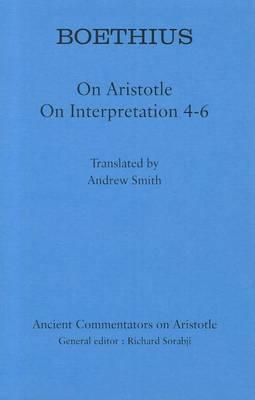
OverviewBoethius (c. 480-c. 525) was a Christian philosopher and author of many translations and works of philosophy, most famously the Consolations of Philosophy which were probably written when he was under house arrest, having been accused of treason by King Theoderic the Great. He was subsequently executed. On Interpretation is the second part of the Organon, as Aristotle's collected works on logic are known; it deals comprehensively and systematically with the relationship between logic and language. In his first six chapters, Aristotle defines name, verb, sentence, statement, affirmation and negation. Boethius preserves lost interpretations by two of the greatest earlier interpreters, Alexander and Porphyry, and the defence of the work's authenticity against criticism. He records the idea of Porphyry that Aristotelians believe in three types of name and verb, written, spoken and mental, in other words a language of the mind. Boethius' commentary formed part of his project to bring knowledge of Plato and Aristotle to the Latin-speaking world. It had great influence, remaining the standard introduction to On Interpretation throughout the Latin Middle Ages. Full Product DetailsAuthor: Andrew SmithPublisher: Bloomsbury Academic Imprint: Bloomsbury Academic ISBN: 9781306724692ISBN 10: 1306724694 Pages: 160 Publication Date: 01 January 2014 Audience: General/trade , General Format: Electronic book text Publisher's Status: Active Availability: Available To Order We have confirmation that this item is in stock with the supplier. It will be ordered in for you and dispatched immediately. Table of ContentsReviewsAuthor InformationTab Content 6Author Website:Countries AvailableAll regions |
||||