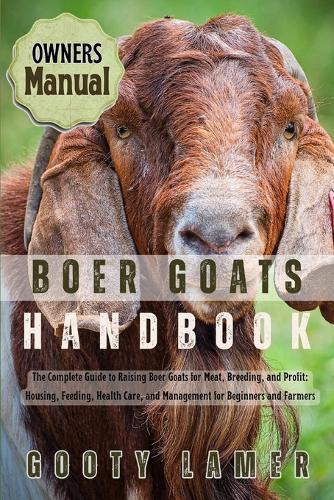
Overview
History, Origin, and Breed Characteristics That Make Boer Goats Unique The Allure of Boer Goats Boer goats are among the most popular and recognizable goat breeds in the world today. Their strong build, distinctive markings, rapid growth, and gentle temperament have made them highly valued not just for meat production-which is their primary historical use-but increasingly as companion animals and pets. Whether you're a hobby farmer, homesteader, or someone seeking a unique and engaging pet, the Boer goat brings a wealth of personality, practicality, and purpose. This chapter explores the rich history and origin of Boer goats, how they became one of the world's premier goat breeds, and what characteristics make them stand out from other goats. Understanding their background will give you a deeper appreciation of this fascinating animal and a solid foundation for successful and responsible goat keeping. Origins of the Boer Goat South African Beginnings The Boer goat originated in South Africa in the early 1900s, developed by Dutch farmers (known as ""Boers,"" which is Afrikaans for ""farmers""). These settlers needed a hardy, fast-growing goat that could thrive in South Africa's harsh and variable environments. By selectively breeding indigenous goats with imported European and Indian goats, such as the Nubian, they created a new breed that met their needs exceptionally well. From the outset, the goal was to produce a meat goat with excellent carcass quality, resistance to disease, and adaptability to arid climates. The breeders focused on hardiness, prolific breeding, and rapid weight gain-qualities still highly prized in Boer goats today. Name and Recognition The breed name ""Boer"" is a direct reference to its South African Dutch farmer developers. Boer goats quickly earned a reputation for their outstanding meat-producing capabilities and were soon recognized across Africa for their efficiency. As the breed gained fame, Boer goats began to be exported to other countries. By the late 20th century, Boer goats had made their way into Australia, New Zealand, Canada, the United States, and parts of Europe. Each country developed its own breeding programs, often refining certain traits, but the core genetic characteristics remained consistent worldwide. The Global Spread of Boer Goats Introduction to the United States Boer goats were introduced to the United States in the early 1990s, and they revolutionized the meat goat industry almost overnight. Prior to their arrival, goat meat was a niche market in the U.S., mostly confined to ethnic communities. Boer goats helped change this by providing a high-yield, desirable meat source and by improving the genetics of existing domestic goat herds. American breeders quickly adopted Boer goats not only for commercial meat production but also for 4-H programs, breeding competitions, and increasingly-as people became more familiar with them-for use as pets. Impact Worldwide In countries like Australia and Brazil, Boer goats became a cornerstone of meat goat production. Their rapid weight gain, muscular frames, and low-maintenance characteristics made them ideal for large-scale operations and small farms alike. Boer goats also gained a foothold in regions with arid or rugged terrain, where their resilience made them especially valuable. Today, Boer goats are considered the standard meat goat breed worldwide. However, beyond their value as livestock, many owners are discovering how well Boer goats can adapt to a domestic setting, forming bonds with humans and integrating into family or farm life as pets. Physical Characteristics of Boer Goats Boer goats have several distinctive physical traits that make them easy to identify and appreciate. These features not only contribute to their aesthetic appeal but also to their functionality and durability as a breed. Size and Build
Full Product Details
Author: Gooty Lamer
Publisher: Independently Published
Imprint: Independently Published
Dimensions:
Width: 15.20cm
, Height: 1.30cm
, Length: 22.90cm
Weight: 0.336kg
ISBN: 9798290373454
Pages: 246
Publication Date: 01 July 2025
Audience:
General/trade
,
General
Format: Paperback
Publisher's Status: Active
Availability: Available To Order

We have confirmation that this item is in stock with the supplier. It will be ordered in for you and dispatched immediately.