Overview
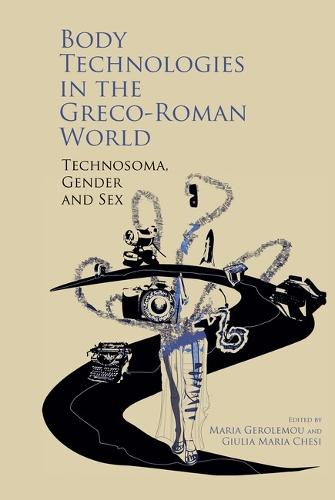
A collection of papers that introduces the notion of the technosoma (techno body) into discussions on the representations of the body in classical antiquity. By applying the category of the technosoma to the ‘natural’ body, this volume explicitly narrows down the discussion of the technical and the natural to the physiological body. In doing so, the present collection focuses on body technologies in the specific form of beautification and body enhancement techniques, as well as medical and surgical treatments. The volume elucidates two main points. Firstly, ancient techno bodies show that the categories of gender and sexuality are at the core of the intersection of the natural and the technical, and intersect with notions of race, age, speciesism, class and education, and dis/ability. Secondly, the collection argues that new body technologies have in fact a very ancient history that can help to address the challenges of contemporary technological innovation. To this end, the volume showcases the intersection of ‘natural’ bodies with technology, gender, sexuality and reproduction. On the one hand, techno bodies tend to align with normative ideas about gender, and sexuality. On the other hand, body modification and/or enhancement techniques work hand in hand with economic and political power and knowledge, thus they often produce techno bodies that are shaped according to individual needs, i.e. according to a certain lifestyle. Consequently, techno bodies threaten to alter traditional ideas of masculinity, femininity, male and female sexuality and beauty.
Full Product Details
Author: Maria Gerolemou (Lecturer in Greek Language and Culture) ,
Giulia Maria Chesi (Lecturer in Greek Literature)
Publisher: Liverpool University Press
Imprint: Liverpool University Press
ISBN: 9781836245223
ISBN 10: 183624522
Pages: 304
Publication Date: 02 September 2025
Audience:
Professional and scholarly
,
Professional & Vocational
Format: Paperback
Publisher's Status: Active
Availability: In Print

This item will be ordered in for you from one of our suppliers. Upon receipt, we will promptly dispatch it out to you. For in store availability, please contact us.
Reviews
‘Apetrechado de dois índices, um onomástico e outro de passagens relevantes, este é um utilíssimo volume para o estudante ou especialista que se interessa pela transformação do corpo na Antiguidade (e as implicações morais e sociais que certas metamorfoses implicam) que não prescinde de uma lente atenta ao zeitgeist post-contemporâneo. De qualidade assinalável, não deve ficar esquecido na prateleira ou nas transferências do computador.’ ‘Equipped with two indexes, one onomastic and the other of relevant passages, this is an extremely useful volume for students or specialists interested in the transformation of the body in Antiquity (and the moral and social implications of certain metamorphoses) who cannot do without a lens attentive to the post-contemporary zeitgeist. Of remarkable quality, it should not be forgotten on the shelf or in computer downloads.’ Sílvia Catarina Pereira Diogo, Cadmo - Journal for Ancient History Translated from Portuguese ‘The volume is informative and offers many interesting glimpses of technosomatic boundary blurring in ancient Greek and Roman contexts.’ Colin Webster, Technology and Culture
‘Apetrechado de dois índices, um onomástico e outro de passagens relevantes, este é um utilíssimo volume para o estudante ou especialista que se interessa pela transformação do corpo na Antiguidade (e as implicações morais e sociais que certas metamorfoses implicam) que não prescinde de uma lente atenta ao zeitgeist post-contemporâneo. De qualidade assinalável, não deve ficar esquecido na prateleira ou nas transferências do computador.’ ‘Equipped with two indexes, one onomastic and the other of relevant passages, this is an extremely useful volume for students or specialists interested in the transformation of the body in Antiquity (and the moral and social implications of certain metamorphoses) who cannot do without a lens attentive to the post-contemporary zeitgeist. Of remarkable quality, it should not be forgotten on the shelf or in computer downloads.’ Sílvia Catarina Pereira Diogo, Cadmo - Journal for Ancient History Translated from Portuguese
Author Information
Maria Gerolemou is Lecturer in Greek Language and Culture, Department of Classics and Ancient History, University of Exeter. Her previous publications include (ed. with G. Kazantzidis) Body and Machine in Classical Antiquity (Cambridge University Press 2023) and (ed with T. Bur and I. Ruffell) Technological Animation in Classical Antiquity (Oxford University Press 2023). Giulia Maria Chesi is Lecturer in Greek Literature, Department of Classics, Humboldt-Universität zu Berlin. Her previous publications include (with F. Spiegel) Classical Literature and Posthumanism (Bloomsbury 2020).