Overview
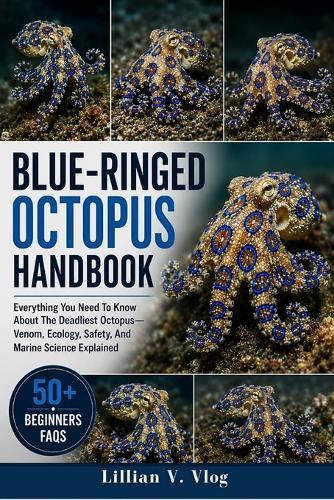
INTRODUCTION TO THE BLUE-RINGED OCTOPUS The blue-ringed octopus is one of the most fascinating yet dangerous marine animals known to science. Despite its small size and calm appearance, it possesses one of the most potent venoms in the natural world. Found primarily in shallow tide pools and coral reefs across the Indo-Pacific region, this tiny cephalopod has gained global attention due to its striking defensive display and its ability to cause rapid paralysis in humans. Belonging to the genus Hapalochlaena, the blue-ringed octopus includes several recognized species, all of which share similar traits: compact bodies, highly intelligent behavior, and vivid blue rings that appear across their skin when threatened. These rings are not always visible; instead, they flash dramatically when the animal feels endangered, acting as a warning signal to predators and unsuspecting humans. Although it is widely feared, the blue-ringed octopus plays an important ecological role in marine environments. It helps control populations of small crustaceans and contributes to the balance of reef ecosystems. However, its venomous nature places it among the most dangerous marine animals on Earth, despite rarely being aggressive unless provoked. Overview of Species The term ""blue-ringed octopus"" does not refer to a single species but rather a group of closely related species within the genus Hapalochlaena. The most well-known members include Hapalochlaena lunulata, Hapalochlaena maculosa, Hapalochlaena fasciata, and several others that are still being studied. Each species shares common biological features, including small size-typically no larger than 12 to 20 centimeters when arms are fully extended-and a soft, sack-like body capable of squeezing into extremely tight spaces. Their coloration is generally yellowish or beige, allowing them to blend into sandy or rocky environments. However, when disturbed, they undergo a rapid transformation, displaying iridescent blue and black rings across their body. These rings are not pigments but rather a result of specialized light-reflecting cells called iridophores. When the octopus contracts its muscles, these structures become visible, producing a bright, pulsating warning pattern. This display is a classic example of aposematism, a biological strategy where bright coloration warns predators of toxicity or danger. Despite their small size, blue-ringed octopuses are highly efficient predators. They feed on crabs, shrimp, and small fish, using a combination of stealth, speed, and venom to subdue their prey. Discovery and Scientific Recognition The blue-ringed octopus was first documented by Western science in the 19th century during marine explorations in the Indo-Pacific region. Early naturalists were captivated by its striking appearance but quickly realized its danger after reports of fatal human encounters began to emerge. Indigenous coastal communities in Australia, Indonesia, and the Philippines had long been aware of the creature's danger, often treating it with caution and respect. In some cultures, it was considered a creature of warning-beautiful but deadly. Scientific classification became more precise in the 20th century as marine biologists studied its anatomy, behavior, and venom composition. Researchers discovered that the blue-ringed octopus produces a neurotoxin called tetrodotoxin, the same compound found in pufferfish and some species of newts. This toxin is produced not by the octopus itself but by symbiotic bacteria living within its salivary glands. This discovery reshaped scientific understanding of marine venom systems. Unlike many venomous animals that rely on protein-based toxins, the blue-ringed octopus uses a powerful neurotoxin that directly blocks sodium channels in nerve cells, effectively shutting down communication between the brain and muscles.
Full Product Details
Author: Lillian V Vlog
Publisher: Independently Published
Imprint: Independently Published
Dimensions:
Width: 15.20cm
, Height: 0.90cm
, Length: 22.90cm
Weight: 0.222kg
ISBN: 9798197647825
Pages: 160
Publication Date: 19 May 2026
Audience:
General/trade
,
General
Format: Paperback
Publisher's Status: Active
Availability: Available To Order

We have confirmation that this item is in stock with the supplier. It will be ordered in for you and dispatched immediately.