Overview
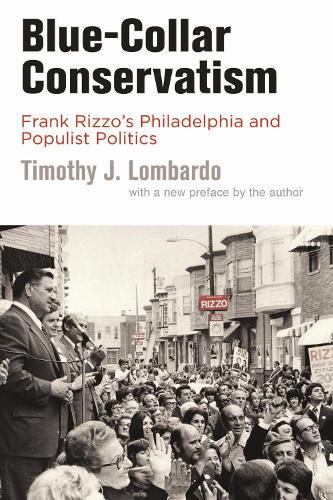
A nuanced portrait of the blue-collar, white supporters of Philadelphia's police-commissioner-turned-mayor Frank Rizzo and the populist politics that emerged, reissued with a new preface that explores how the era connects to the rise of Donald Trump The postwar United States has experienced many forms of populist politics, none more consequential than that of the blue-collar white ethnics who brought figures like Ronald Reagan to the White House. Blue-Collar Conservatism traces the rise of this little-understood, easily caricatured variant of populism by presenting a nuanced portrait of the supporters of Philadelphia Mayor Frank Rizzo. In 1971, Frank Rizzo became the first former police commissioner elected mayor of a major American city. Despite serving as a Democrat, Rizzo cultivated his base of support by calling for ""law and order"" and opposing programs like public housing, school busing, affirmative action, and other policies his supporters deemed unearned advantages for nonwhites. Out of this engagement with the interwoven politics of law enforcement, school desegregation, equal employment, and urban housing, Timothy J. Lombardo argues, blue-collar populism arose. Based on extensive archival research, and with an emphasis on interrelated changes to urban space and blue-collar culture, Blue-Collar Conservatism challenges the familiar backlash narrative, instead contextualizing blue-collar politics within postwar urban and economic crises. Historian and Philadelphia-native Lombardo demonstrates how blue-collar whites did not immediately abandon welfare liberalism but instead selectively rejected liberal policies based on culturally defined ideas of privilege, disadvantage, identity, and entitlement. While grounding his analysis in the postwar era's familiar racial fissures, Lombardo also emphasizes class identity as an indispensable driver of blue-collar political engagement. Blue-Collar Conservatism ultimately shows how this combination of factors created one of the least understood but most significant political developments in recent American history. This timely reissue features a new preface that brings the story up to the rise of Trump and discusses how the demographics and politics of Philadelphia have changed since the Rizzo era.
Full Product Details
Author: Timothy J. Lombardo
Publisher: University of Pennsylvania Press
Imprint: University of Pennsylvania Press
ISBN: 9781512829181
ISBN 10: 1512829188
Pages: 336
Publication Date: 10 February 2026
Audience:
College/higher education
,
Postgraduate, Research & Scholarly
Format: Paperback
Publisher's Status: Active
Availability: Not yet available

This item is yet to be released. You can pre-order this item and we will dispatch it to you upon its release.
Reviews
""Lombardo's ability to blend the social history of Philadelphia with the political history of Rizzo and his rivals is impressive, and it captures the significance of 1970s Philadelphia when situated within the broader story of conservatism.""-- ""Journal of Urban History"" ""The story of Philadelphia in the 1970s is a complicated one, and Lombardo tells it well in an academic book that is not overcrowded with academic jargon. H is well-researched analysis of blue-collar-conservatives, a confounding topic in recent years, is enlightening and bears on our own time as much as Rizzo's.""-- ""National Review""
Author Information
Timothy J. Lombardo is Associate Professor of History at the University of South Alabama.