Overview
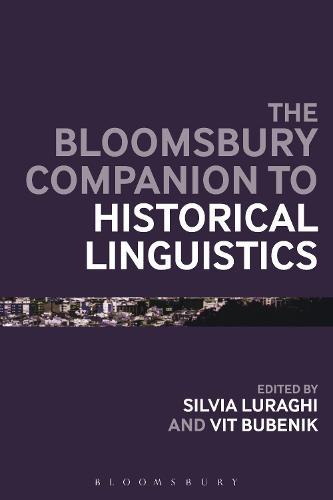
Originally published as the Continuum Companion to Historical Linguistics, this book brings together a number of leading scholars who provide a combination of different approaches to current and new issues in historical linguistics, while supplying an exhaustive and up-to-date coverage of sub-fields traditionally regarded as central to historical linguistics research. The editors aim to build a solid background for further discussion and to indicate directions for new research on relevant open questions. The book includes coverage of key terms, a list of resources, and sections on: - history of research- methodology- phonology- morphology- grammatical categories- syntax- grammaticalization- semantics - etymology- language contact- sociolinguistics- causes of language change It is a complete resource for researchers working on historical linguistics.
Full Product Details
Author: Silvia Luraghi ,
Vit Bubenik
Publisher: Bloomsbury Publishing Plc
Imprint: Bloomsbury Academic
Dimensions:
Width: 15.40cm
, Height: 3.00cm
, Length: 23.20cm
Weight: 0.760kg
ISBN: 9781441130105
ISBN 10: 1441130101
Pages: 480
Publication Date: 17 January 2013
Audience:
College/higher education
,
Postgraduate, Research & Scholarly
Format: Paperback
Publisher's Status: Active
Availability: Manufactured on demand

We will order this item for you from a manufactured on demand supplier.
Language: English
Reviews
Advanced students of linguistics and practising linguists can read this book for both profit and enjoyment. The editors have assembled an impressive list of leading experts in each subfield, each contributing a chapter: together it makes for an interesting and informative read. -- Professor Sheila Embleton, Department Of Languages, Literature & Linguistics, York University, Canada As a practising historical linguist I found much of the book fascinating reading, as it took me Into methods and geographic regions of historical linguistics which I am less familiar with, and many of the chapters provided me with a pithy but informative overview of their respective fields. -- Linguist ... this is a highly competent updated work, extremely useful in laying out different discussion topics related to the various aspects developed, as well as in completing and updating the large number of reference books currently available in historical linguistics. -- Journal Of Historical Linguistics Vol.1:2
Advanced students of linguistics and practising linguists can read this book for both profit and enjoyment. The editors have assembled an impressive list of leading experts in each subfield, each contributing a chapter: together it makes for an interesting and informative read. - Professor Sheila Embleton, Department of Languages, Literature & Linguistics, York University, Canada As a practising historical linguist I found much of the book fascinating reading, as it took me Into methods and geographic regions of historical linguistics which I am less familiar with, and many of the chapters provided me with a pithy but informative overview of their respective fields. - Linguist ... this is a highly competent updated work, extremely useful in laying out different discussion topics related to the various aspects developed, as well as in completing and updating the large number of reference books currently available in historical linguistics. - Journal of Historical Linguistics Vol.1:2
"""Advanced students of linguistics and practising linguists can read this book for both profit and enjoyment. The editors have assembled an impressive list of leading experts in each subfield, each contributing a chapter: together it makes for an interesting and informative read."" -- Professor Sheila Embleton, Department of Languages, Literature & Linguistics, York University, Canada As a practising historical linguist I found much of the book fascinating reading, as it took me Into methods and geographic regions of historical linguistics which I am less familiar with, and many of the chapters provided me with a pithy but informative overview of their respective fields. -- Linguist ... this is a highly competent updated work, extremely useful in laying out different discussion topics related to the various aspects developed, as well as in completing and updating the large number of reference books currently available in historical linguistics. -- Journal of Historical Linguistics Vol.1:2"
Author Information
Silvia Luraghi is Associate Professor of Linguistics at the University of Pavia, Italy. Vit Bubenik is Professor of Linguistics at Memorial University of Newfoundland, Canada.