Overview
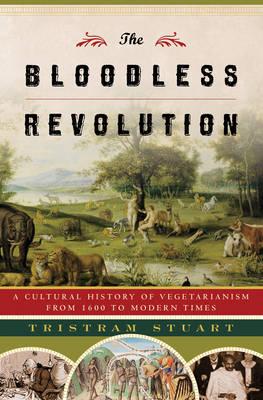
The Bloodless Revolution is a pioneering history of puritanical revolutionaries, European Hinduphiles, and visionary scientists who embraced radical ideas from the East and conspired to overthrow Western society's voracious hunger for meat. At the heart of this compelling history are the stories of John Zephaniah Holwell, survivor of the Black Hole of Calcutta, and John Stewart and John Oswald, who traveled to India in the eighteenth century, converted to the animal-friendly tenets of Hinduism, and returned to Europe to spread the word. Leading figures of the Enlightenmentamong them Rousseau, Voltaire, and Benjamin Franklingave intellectual backing to the vegetarians, sowing the seeds for everything from Victorian soup kitchens to contemporary animal rights and environmentalism. Spanning across three centuries with reverberations to our current world, The Bloodless Revolution is a stunning debut from a young historian with enormous talent and promise.
Full Product Details
Author: Tristram Stuart
Publisher: WW Norton & Co
Imprint: WW Norton & Co
Edition: New edition
Dimensions:
Width: 17.00cm
, Height: 4.30cm
, Length: 24.40cm
Weight: 1.091kg
ISBN: 9780393052206
ISBN 10: 0393052206
Pages: 656
Publication Date: 17 January 2007
Audience:
Professional and scholarly
,
Professional and scholarly
,
Professional & Vocational
,
Professional & Vocational
Format: Hardback
Publisher's Status: Out of Print
Availability: Out of stock

Reviews
An epic of non-carnivorous restraint.Stuart, a young British scholar, offers portraits of often little-known figures who would not eat anything with a mother or a face, and he blends these character studies with smart analyses of historical trends and the transmission of ideas. The earliest vegetarians in this account, from the 17th century, were mostly driven by religious ideas, though often with a strong scientific bent. For instance, Thomas Bushell, a disciple of the natural philosopher Francis Bacon, reasoned that, according to the Bible, humans lived to be 900 years old until after the Flood, when God gave them permission to eat meat, after which they started dying off at age 70; logic demanded that vegetarians therefore could live, if not to 900, to at least some greater age. To Judeo-Christian religious impulses, complicated by widespread contact with Hindu and other Indian ideas after the 17th century, were added ethical and proto-ecological arguments, with some maintaining that it was simply wrong to eat things that demonstrably had consciousness, and that creating feed for livestock was a wanton waste of natural resources. All these arguments are with us today, Stuart notes. Along the way, he identifies founding fathers of the self-help movement, including perhaps the first diet doctor in history. He looks into the ideas of Jean-Jacques Rousseau, moved by the rigor of Linnean science to argue that because women had only two breasts, as compared to, say, a wolf's many teats, our kind is likely not innately carnivorous: Breasts, writes Stuart, were not just symbols of gentle nourishment and innocence, they bore scientific testimony to humanity's original herbivorous nature. And he examines the effects of Darwinian theory on various strains of vegetarian thought, one of them the ideology propounded by Adolf Hitler, who seems to have thought that eating meat could purify him of any Jewishness flowing through his veins.Culinary and cultural history intertwined: readable, and endlessly interesting. (Kirkus Reviews)
Author Information
Tristram Stuart has been a freelance writer for Indian newspapers, a project manager in Kosovo and a prominent critic of the food industry. He has made regular contributions to television documentaries, radio and newspapers on the social and environmental aspects of food. His first book, The Bloodless Revolution—‘magnificently detailed and wide-ranging’ (New Yorker)—was published in 2007, and Waste in 2009. A graduate of Cambridge University, he lives in England, where he rears pigs, chickens and bees.