Overview
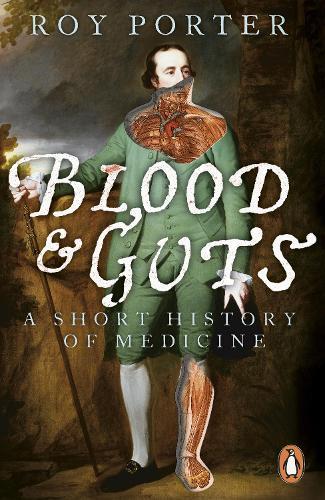
Mankind's battle to stay alive is the greatest of all subjects. This brief, witty and unusual book by Britain's greatest medical historian compresses into a tiny span a lifetime spent thinking about millennia of human ingenuity in the quest to cheat death. Each chapter sums up one of these battlefields (surgery, doctors, disease, hospitals, laboratories and the human body) in a way that is both frightening and elating. Startlingly illustrated, A SHORT HISTORY OF MEDICINE is the ideal presentfor anyone who is keenly aware of their own mortality and wants to do something about it. It is also a wonderful memorial to one of Penguin's greatest historians.
Full Product Details
Author: Roy Porter
Publisher: Penguin Books Ltd
Imprint: Penguin Books Ltd
Dimensions:
Width: 12.90cm
, Height: 1.70cm
, Length: 19.70cm
Weight: 0.199kg
ISBN: 9780141010649
ISBN 10: 0141010649
Pages: 224
Publication Date: 26 June 2003
Audience:
General/trade
,
General
Format: Paperback
Publisher's Status: Active
Availability: To order

Stock availability from the supplier is unknown. We will order it for you and ship this item to you once it is received by us.
Reviews
'Nobody will be able to put down this short history of medicine... without counting their blessings. Never have I read a book which made me so glad not to have been born before the mid-20th century.' Daily Mail
Capsule version of the late Porter's hefty and masterly medical history, The Greatest Benefit to Mankind (1998), still chock-full of astonishing facts and fascinating illustrations. While his earlier work was aimed primarily at students of medicine, like those who attended his lectures at University College London, Porter trimmed this one for the general reader before his death in 2002. His subject is Western medicine, and he begins by looking at how the diseases that afflict humanity have changed from the days of prehistoric hunter-gatherers through the rise of agricultural settlements and great cities to the Industrial Revolution and the present era of global trade. Next, he surveys healing practices from the magic of tribal shamans through the Hippocratic doctors of ancient Greece to modern-day specialists. An Olympian researcher and entertaining storyteller, Porter reveals how investigation of the body itself changed thinking about disease and laid the foundations for 19th-century clinical medicine, then examines that century's organized laboratory investigations, which led to the development of modern biomedical sciences and the pharmaceutical breakthroughs of the 20th century. Surgery, at one time performed by barbers without anesthesia, gets a separate chapter that traces its development from crude amputations to organ transplants. Porter shows hospitals evolving from charitable institutions providing the poor with refuge and care to hubs of modern medicine and the power bases of a medical elite. Along the way, we meet Iri, Keeper of the Royal Rectum in ancient Egypt, examine a diagram of the first wooden stethoscope, and learn how William Harvey worked out the circulation of blood. In conclusion, Porter notes that expectations of what modern medicine can achieve have grown alongside dissatisfaction with the impersonal, systematized delivery of health care services. Whatever the 21st century holds for medicine, he assures us, it will be different from the past. Surprisingly light and lively, for anyone interested in discovering how the healing arts became a science and a business. (38 b&w illustrations) (Kirkus Reviews)
We may grumble about our health service, but an hour or two spent with this astonishing book makes us realize just how blessed we are compared to the poor souls of a few centuries ago. Go to your GP now with a bout of depression and he'll like as not prescribe some pills. Back in the 18th century he would probably have fired a musket close to your ear to shock you out of your mood. Headachy or otherwise under the weather? In the good old days that would have called for a covering of leeches, along with a strong purgative to turn your bowels to jelly. And those were the more kindly treatments. A glance at some of the hilarious (and hair-raising) contemporary illustrations shows better than anything what the title of this book really means: leg amputations without anaesthetic, horrendous implements inserted into eye-watering places, multitudes of 'surgeons' smothering victims in the name of tender loving care. Roy Porter, whose last book this is (he died in March 2002 just after retiring as Professor of Social History at University College, London), looks at the ingenious if shocking ways Western people have coped with and treated diseases from ancient times to the present. In typical forthright style he describes the book as a study of 'the war between disease and doctors fought out on the battleground of the flesh'. The chapters are arranged into categories: disease, doctors, the body, the laboratory, therapies, surgery and the hospital. A brief history is provided of each before we get into the gory bits. This is a fascinating study written with wit and the insight of a consummate social historian. If it's entertainment and knowledge you want, this is just what the doctor ordered. (Kirkus UK)
Author Information
Roy Porter was until his retirement Professor in the Social History of Medicine at the Wellcome Institute for the History of Medicine. He last book ENLIGHTENMENT won a 2001 Wolfson Prize. Roy Porter died March 3rd 2002.