Overview
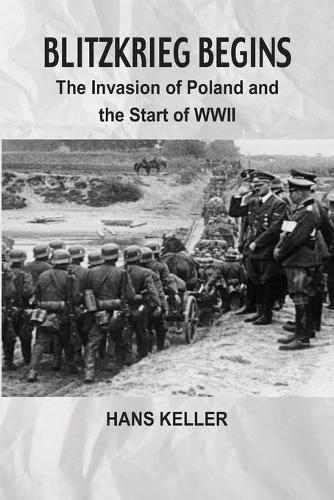
The invasion of Poland in 1939 is often reduced to a slogan about lightning war. This book slows events down, showing what blitzkrieg in practice meant for soldiers on the roads, commanders with incomplete maps, and families staring up at incoming bombers. It asks how a messy, improvised campaign turned into a polished legend that still shapes how we talk about force and speed. Drawing on battle narratives and diplomatic moves alike, the narrative follows the German-Polish campaign from the first shots near Danzig to the soviet invasion of Poland from the east. Readers see how the Molotov-Ribbentrop Pact carved the map in advance, how Stukas made Stuka dive bombing a new kind of terror, and why the Polish Bzura counterattack briefly upset German plans. Alongside generals and foreign ministers, the book keeps returning to civilian life under occupation, tracing refugees on the roads and communities caught between two regimes. For readers who want to understand the origins of World War II beyond a few famous dates, this is a clear, grounded guide. It explains why British and French guarantees mattered, why they did not save Poland, and how the phrase' invasion of Poland 1939 'became shorthand for a whole style of warfare. The result is a tightly focused history that replaces myth with detail and helps readers think more clearly about how modern wars really begin.
Full Product Details
Author: Hans Keller
Publisher: Vij Books
Imprint: Vij Books
Dimensions:
Width: 15.20cm
, Height: 1.40cm
, Length: 22.90cm
Weight: 0.327kg
ISBN: 9789347436246
ISBN 10: 9347436240
Pages: 242
Publication Date: 20 February 2026
Audience:
General/trade
,
General
Format: Paperback
Publisher's Status: Active
Availability: Not yet available

This item is yet to be released. You can pre-order this item and we will dispatch it to you upon its release.
Author Information
Hans Keller writes about the military and political history of twentieth-century Europe, with a particular focus on how ordinary people experienced large events. Over many years, he has studied campaign reports, diplomatic correspondence, and contemporary media from 1939, looking for the junctures where battlefield decisions met political calculation. Growing up with stories from older relatives about air-raid shelters, shortages, and rumours on the radio gave him an early sense that war is lived in confusion long before it is written as narrative. His work reflects a Central European perspective that pays close attention to borderlands, mixed communities, and how maps can change faster than memories. In this book, he aims to bring together operations, diplomacy, intelligence and civilian life into a single, readable account of the invasion of Poland, showing how that first campaign shaped the character of the broader conflict that followed.