Overview
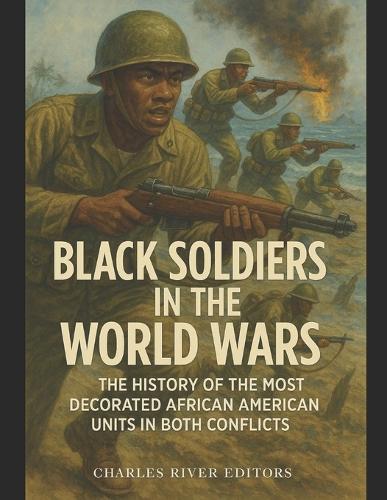
The United States has no shortage of famous military units, from the Civil War's Iron Brigade to the 101st Airborne, but one would be hard pressed to find one that had to go through as many hardships off the field as the Tuskegee Airmen, a group of African American fighter pilots who overcame Jim Crow at home and official segregation in the military to serve their country in the final years of World War II. In fact, it required a concerted effort by groups such as the National Association for the Advancement of Colored People (NAACP) and the extreme circumstances brought about by World War II that the military eventually decided to establish the ""Tuskegee Experiment."" The black crews trained at Tuskegee before being sent overseas, and even then, they faced discrimination from those who didn't trust them to do more than escort bombers flown by white pilots. However, as the men proved their worth in the heat of battle, some of the squadrons' red markings helped them earn the nickname ""Red Tails,"" and their track record was so good that eventually the white pilots of American bombers wanted to fly with them. As Tuskegee airman Roscoe Brown eloquently put it, ""They have a saying that excellence is the antidote to prejudice; so, once you show you can do it, some of the barriers will come down."" In the summer of 1942, the first group of African American recruits stepped off a bus into the pine woods of North Carolina, bound for an experiment the Marine Corps had long vowed never to attempt. Their destination - Montford Point, a hastily constructed satellite to the new Camp Lejeune - was more than a training ground. It was a compromise with democracy, a segregated doorway into an institution that had defined itself for generations by who could not enter. The Corps' exclusivity had a racial edge: unlike the Army, which had long employed segregated black regiments, and the Navy, which at least allowed African Americans to serve as stewards and messmen, the Marines had barred black men outright from 1798 into the Second World War. (Nalty 1995) Between 1942 and 1949, nearly 20,000 black men trained at Montford Point. They endured tar-paper barracks that baked in summer heat and leaked in coastal storms, learned to drill to the cadence of instructors who sometimes doubted their right to wear the uniform, and mastered skills that would carry them to the beaches and supply trails of Saipan, Iwo Jima, and Okinawa. Their story illuminated the paradox of wartime America, a republic that preached freedom abroad while policing hierarchies at home. One of the most overlooked African American combat units is the Harlem Hellfighters, also known as the 369th Infantry Regiment of the U.S. Army. Initially raised as the 15th New York (Colored) National Guard and later federalized for World War I, the regiment was ""loaned"" to the French Army, where it compiled an extraordinary combat record, with a remarkable 191 days on the line and suffering about 1,400 casualties while never yielding its sector (Morrow & Sammons, 2014, pp. 3-6; Harris, 2003, pp. 233-235). These numbers, often highlighted in museum and official summaries, became a central pillar of the unit's symbolic influence back home, and the unit's performance in battle, unique experience under French command, and their triumphant homecoming in 1919 collectively reshaped debates concerning black soldiers' loyalty, capability, and rights. As Colonel William Hayward famously told journalists, his men ""never retire,"" a sentiment that both the contemporary press and later unit histories preserved, capturing their combat ethos and the representational burdens they carried as black citizen-soldiers (Harris, 2003, pp. 5-7).
Full Product Details
Author: Charles River
Publisher: Independently Published
Imprint: Independently Published
Dimensions:
Width: 21.60cm
, Height: 0.60cm
, Length: 27.90cm
Weight: 0.286kg
ISBN: 9798261877974
Pages: 116
Publication Date: 17 December 2025
Audience:
General/trade
,
General
Format: Paperback
Publisher's Status: Active
Availability: Available To Order

We have confirmation that this item is in stock with the supplier. It will be ordered in for you and dispatched immediately.